Fifty Jin of Luggage
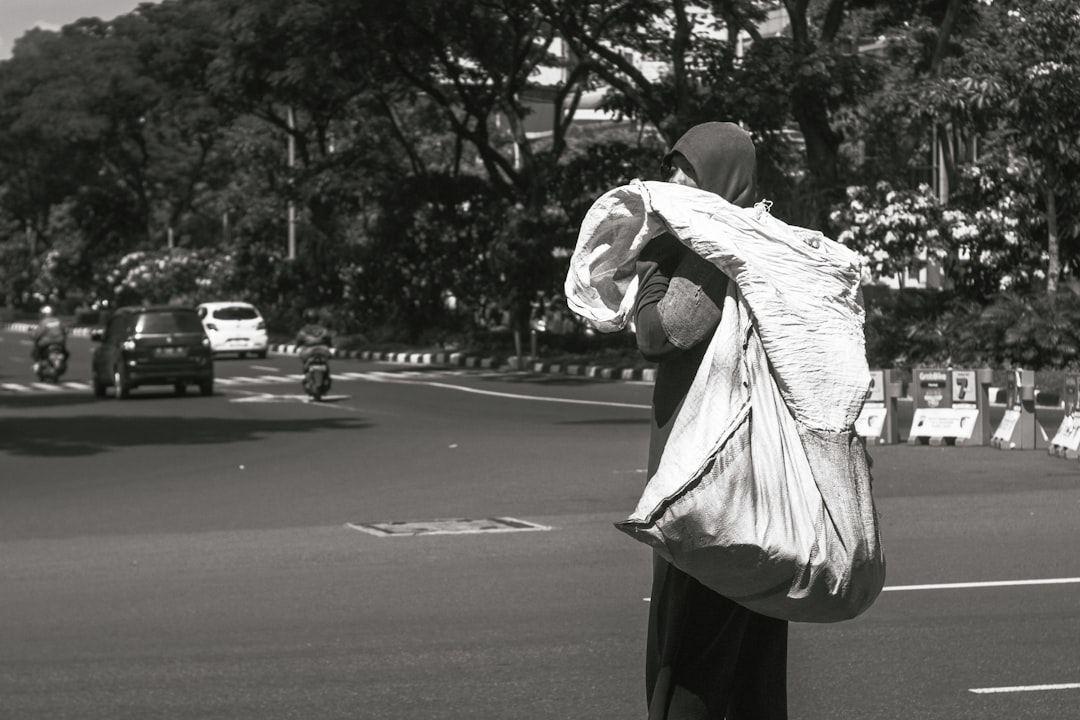
Many years later, Xiaohe would likely still remember that September morning — the fifty jin of luggage, just over fifty-five pounds, pressing down on her mother’s shoulder, her mother walking exactly the way she did when carrying a sack of new grain, freshly threshed.
The luggage had been packed the night before. An old woven bag, red and blue stripes, washed nearly white. The quilt rolled square and tight, shoeboxes wedged into the corners, a jar of pickled cowpeas wrapped in three layers of old towel — “The school cafeteria’s expensive. Eat these with your rice. Every bit saved counts.” Mother packed and muttered, as if talking to the luggage itself.
At the school gate, Xiaohe reached out to take it. “Mom, let me!”
“You just keep a good hold of your admission letter.” Mother tilted her head out of the way and swung the bag onto her shoulder. “Fifty jin. Your mother can carry fifty jin.”
And so all Xiaohe could see was her mother’s back. A great patch of sweat had bloomed through the canvas shirt, and the strap had cut into the shoulder, leaving a red crease. Something twisted in Xiaohe’s chest — she knew that red crease too well. All these years, her father’s medicine, her school fees, the lights burning in their house, all of it had pressed down on those shoulders.
These past few years, their family had seemed bitten into by something. The year her father was diagnosed with stomach cancer, Xiaohe was in her second year of high school. Surgery, chemotherapy, and the family’s savings drained away like sand in an hourglass, right before their eyes. Not long after, her mother was diagnosed with a stromal tumor too. Mother and daughter sat facing each other in the county hospital corridor, neither one able to speak first. In the end it was Mother who smiled first. “What’s there to cry about? My tumor has such a genteel name. ‘Stromal’ — from ‘stroma,’ the framework that holds a body up in the middle. Means the quality of my middle is good.”
Father laughed from his hospital bed, laughed until it pulled at his incision. From then on, that line became a rule of the house: crying, the days still pass; laughing, they pass too — so we’ll laugh our way through.
Mother kept her word. Two jobs a day: at four in the morning she went to the wholesale market to unload vegetables, came home at noon to brew Father’s medicine, spent the afternoons at the factory applying film, and did office cleaning at night, often not home until past ten. When Xiaohe got up at midnight for water, she would always see her mother sitting under the lamp, sorting pill boxes, dozing off as she sorted, her head bobbing bit by bit like a hen pecking grain. Xiaohe dared not make a sound. She swallowed her tears, went back to her room, and did two more practice papers. Fortunately the surgery had come in time; Father’s illness gradually stabilized. He was thin, but his spirit held, and on fine days he could tend a small bed of vegetables in the courtyard.
The turning point came without a sound. Officials from the town came down to the village on their rounds, entered the old house, looked up at the roof beams, and frowned. Before long, the forty-thousand-yuan subsidy for dilapidated-housing renovation was approved; relatives put in three hundred here, five hundred there, and together they raised seventy thousand to help build a two-room house of corrugated steel. The steel rooms were blazing hot in summer, but on rainy days there was no more setting out basins to catch the leaks. The subsistence allowance came through; medical insurance and medical assistance were settled one item after another. Mother told everyone she met: “These days, the state lends a hand, the relatives lend a hand, and we push a little harder ourselves — we’ll get by.”
The day the acceptance letter arrived, the postman’s loudspeaker sounded at the village entrance. Mother was at the factory. When she got the call, she wiped her hands on her apron again and again before daring to touch that piece of paper. She couldn’t read many characters, so she had Xiaohe read it aloud. One reading, and Mother said, again. By the third reading, Mother had turned her face away, and for a long while she didn’t turn back.
Before the celebration at home had even settled, a message from a stranger arrived on Xiaohe’s phone. The sender called himself Cheng Yuan, said he too had been a student who’d tested his way out of the mountains, that in his day he had walked the whole road to school on the help of others. “I read about your situation. From now on, I’ll find a way to cover your tuition.”
Xiaohe stared at the screen for a long time, then sent back two words: “Thank you.” She thought for a moment, then added a line: “But no money, please.”
Cheng Yuan didn’t believe her; a few days later he brought it up again. Xiaohe refused once more: “Your kindness I accept — it’s worth more than money. I can earn my own way. Scholarships, work-study — there are plenty of roads. If anything, tell me more about how you gritted your teeth and made it through back then. That’s what I need.”
Hundreds of miles away, Cheng Yuan read this and smiled, though his eyes went hot. He remembered that someone had once said nearly the same words to him.
Later the two of them video-called. On one end of the screen, Cheng Yuan said he could keep helping her all the way to her first job; on the other end, Xiaohe sat in the doorway of the steel-sheet house, the white shirt drying behind her billowing and filling in the wind. She said: “Brother Cheng, I hope that one day, this kindness can pass through my hands to more kids who need it.”
Cheng Yuan nodded on his end. The nod wasn’t for Xiaohe to see. It was for himself, to keep.
“What are you thinking about? We’re here.” Mother’s voice pulled Xiaohe back. Below the dormitory, Mother set the luggage down, clapped her hands clean, and tilted her head back to look at the building for a good long while. “Good. Brighter than our steel rooms.”
Making the bed, Mother placed the jar of pickled cowpeas at the corner of the desk, straight and square, as if enshrining a treasure. When Xiaohe came back from fetching hot water, she saw her mother standing at the window, looking down at her own shoulder — the red crease the strap had pressed there hadn’t faded yet.
“Does it hurt?” Xiaohe asked.
Mother tugged her collar smooth, covering the mark, and smiled. “A little weight like that? Nothing. Your father always says, the luggage of life gets lighter the longer you carry it.”
When it was time to go, Xiaohe insisted on walking her mother to the bus stop. The empty woven bag, folded square and neat, she slung over her own shoulder. Hey — strange. Fifty jin coming; going back, light as a leaf.
Mother walked ahead, her steps loose and springy, and suddenly turned her head: “Call home when you’re settled. Crying, the days pass; laughing, they pass too—”
“So we’ll laugh our way through,” Xiaohe finished.
Both of them laughed. The September sun lay on the plane trees by the school gate, and when the wind stirred, the leaves rattled and rustled, like someone clapping softly.
Xiaohe thought: she would keep that empty bag. Over the four years ahead, she would fill it up — with scholarships, with her work-study badge, with books read one by one. Until one day, it could also hold someone else’s luggage.
That would be the true weight of the road her mother had carried those fifty jin down.
(The End)
This story is adapted from real events. All names are pseudonyms.
Based on a true story