Washed Clean
Your hand reached out before your thought did.
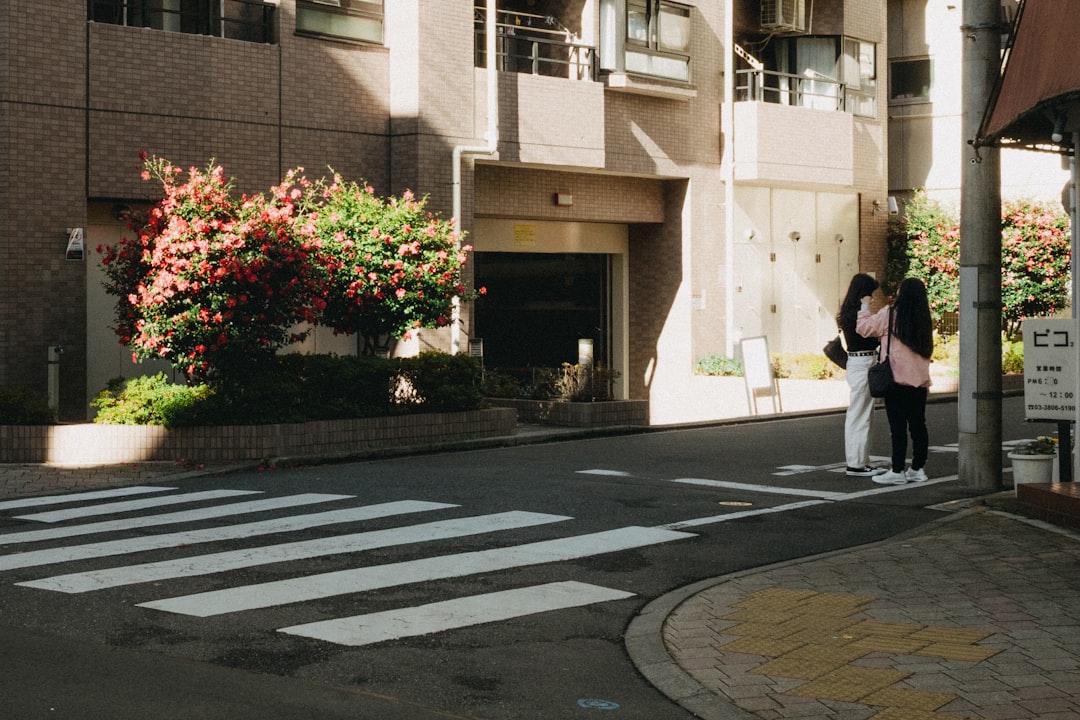
On the crosswalk, the red light still had a dozen seconds left. The white-haired old woman toppled backward like a sheet of thin paper, the back of her head striking the pavement with a muffled thud. Beside her, an electric scooter kept waiting for the light; the street trees swayed all by themselves. For a moment, you were the only one who moved.
You ran over and crouched down, slid your hands under her arms, and inched her over to the shade by the roadside, propping her half-upright against the curb of the flower bed. Her head lolled to one side, and bright red blood began to seep across the gray paving stones. The red was terribly quiet—quiet, as if it were happening to someone else.
You dialed 120. The dispatcher’s voice was young, and steady: Don’t move her head. Find something clean to cushion the back of it.
You looked around. Some people stopped, some walked around you, no one was holding anything. You thought for two seconds, then took off your school jacket, folded it layer by layer into a neat square, and slid it carefully beneath the old woman’s head.
The September morning still held the lingering heat of summer. Without the jacket, in just your short-sleeved uniform shirt, the wind felt cool on your arms. The blood soaked into the blue fabric, bit by bit, and you watched it seep without blinking.
If I hadn’t helped her, and something had happened to her, I’d feel it my whole life.
The thought made no sound. It was like a hand pressing gently on your back, holding you in place.
◆
“Sweetheart, can her family be reached?”
An auntie in a flowered shirt crouched down. She had come from across the street, her heels clicking on the pavement. The old woman’s eyes were shut, her face gray. The auntie fished an old cell phone out of her cloth bag and dialed the number saved as “Husband.” When it connected, her voice trembling slightly, she gave the address, hung up, and patted the back of your hand: “Good child, don’t be scared. The ambulance will be here any minute.”
You weren’t scared. You were just staring at that patch of blue, watching it darken, inch by inch.
The ambulance came, siren wailing. The paramedics fitted the old woman with a neck brace, swapped in a sterile pad, and lifted her onto the stretcher. You went to pick up the blood-soaked jacket from the ground, but the auntie pressed your hand down: “I’ll keep it for you—school comes first. Leave me your number. If her family wants to find you later, it’ll be easier.”
You recited a string of digits, shouldered your backpack, and ran for school. As you ran, the world snapped back to its normal speed. The red light was still red, the street trees still street trees. Nothing had changed—except that on the ground there was one less jacket, and one more phone number left behind.
◆
It was during second period that you remembered the jacket.
Your blue-and-white school jacket, your class name printed on the chest. In the pocket, half a pack of tissues, a few coins. The blood must have soaked all the way through.
You weren’t grieving over the jacket. You just couldn’t stop replaying the morning, over and over: the muffled thud, the gray paving stones, the red spreading bit by bit. The paramedics had said they’d take her for scans, and you kept wondering what those scans would show.
When the bell rang, you still hadn’t untangled it all. Your deskmate nudged you: “What’s with you today? You’re a million miles away.”
You said you were fine, just hadn’t slept well.
Some things, if you say them out loud, sound like fishing for praise. Better to swallow them and let them slowly settle into something else.
◆
After evening study hall, your homeroom teacher called you to the office.
“Someone came to the school today, just to praise you.” The teacher pulled out a phone and showed you a photo: the blue-and-white jacket spread across a car’s passenger seat, a small dark stain on it. “This auntie said she watched with her own eyes as you took off your jacket to cushion the old woman’s head and stop the bleeding. She said you wouldn’t leave your name, so she had no choice but to track you down at school.”
The teacher said that at next Friday’s flag-raising ceremony, you’d be named and commended.
You said it wasn’t necessary, it really was nothing. The teacher looked at you and suddenly smiled: “Nothing, is it? Then why did you leave your number?”
You couldn’t answer.
Back at the dorm, the moment you turned on your phone, a text came in from an unfamiliar number:
“Sweetheart, this is the auntie in the flowered shirt. Your jacket is in my car. Blood stains can’t be left alone—I’ll wash it clean and dry it thoroughly in the sun, then you can come get it. The doctor has seen the grandmother; nothing serious, she’s staying for observation. Sleep early, don’t overthink. Good child.”
You read it twice, saved the number, and labeled it: A good person.
The lights in the dormitory went out, one by one. In the dark, you thought: the grandmother is all right. Then you thought: and there’s still the jacket. And with that, you fell asleep.
◆
At Friday’s flag-raising ceremony, your name and your class were read aloud. Waves of applause rolled across the sports field. You stood in the ranks, ears burning, wishing you could shrink right into your collar.
Afterward, your deskmate nudged you: “So that’s why you were a million miles away those days?”
You said, “Mm.” And then: “The grandmother is getting better.”
◆
Sunday morning, you went to fetch the jacket.
The auntie stood at the agreed-upon corner and handed it to you with both hands. Washed spotless, sun-dried through, folded into a neat square—exactly like the square you had folded that morning, only now it carried the scent of sunshine.
“I washed it twice, dried it for two days,” the auntie said. “Blood stains can’t be left alone. Same as wounds—neither can be left to sit.”
You took it with both hands, as if receiving something far more solemn than a jacket.
The auntie said the grandmother had been discharged. Her family had called specially—the old woman was fine, just a bump on the head, and now she told everyone she met about the little girl on the crosswalk. And the old woman had insisted: the child’s jacket got dirty saving her, so they must buy her a new one as a replacement—a thick one, for winter.
You laughed and said no, really, no need—what’s a jacket?
The auntie looked at you for a moment and said: “Child, you may think it’s nothing. But all of us remember.”
◆
That jacket now hangs in your wardrobe, the same as before, and yet not the same.
That morning, you folded up a jacket you were willing to let get dirty, and slipped it under a stranger’s head. A few days later, someone washed the blood away, dried it in the sun, folded it neatly, and returned it to your hands, whole and complete.
It is still that same jacket—only washed cleaner than it was before. Just like the girl who gave help that morning and the auntie who washed the jacket afterward: before then, perfect strangers, neither having ever done anything for the other.
So that’s how some things work: you hand them over, and someone carries them back to you.
Kindness has never been a one-way street. You slip it beneath someone else’s head, and the world will wash it clean and give it back to you.
(This story is adapted from real events. All names are pseudonyms.)
Based on a true story