Keeping the Lamp Lit
“Lights out.” From the darkness, someone called it out—a small announcement of dusk for the whole dormitory.
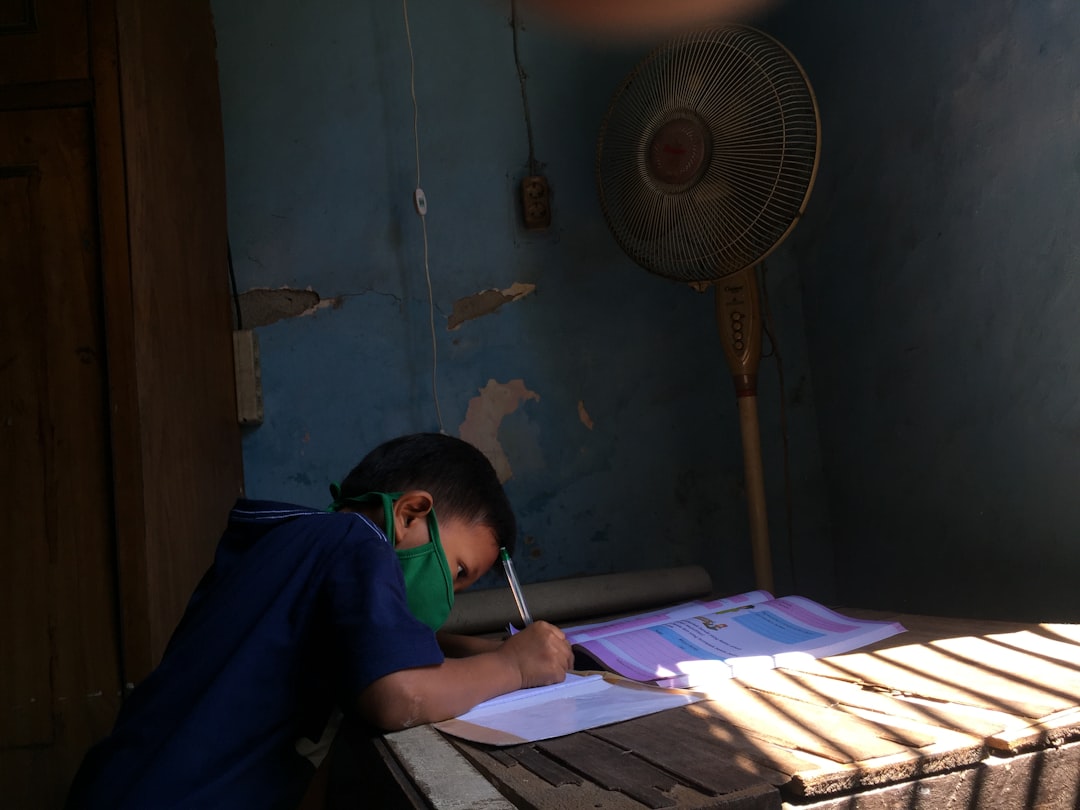
You didn’t answer. Feeling your way through the dark, you picked up that little wooden stool—it had moved into the room before you did, and now it waited for you, quietly. At the end of the corridor hung a lamp, dim and yellow, like an orange refusing to ripen. You set the stool down and spread the Book of Songs across your knees. “The reeds are thick and gray, the white dew turned to frost.” Eight characters, and you read them slowly, slowly enough that the footsteps in the corridor fell asleep one by one.
The light in the washroom was whiter, harder—it lit the tiles, the water stains, and a scroll of the Analects. “To learn and practice what one has learned.” You counted each word in your mind, the way you’d count a string of scattered pearls. In 1995, the wind off the Pearl River was damp. The southern universities turned their lights out every night, yet light always leaked through the cracks—as if left there on purpose for books that refused to sleep.
The sea carried you home.
The streets of Klang were hot. Under the arcades, crowds came and went; the medicinal fragrance of bak kut teh mingled with traffic and voices, rolling down the whole street. You walked through the crowd carrying, it seemed, a banked fire in your chest, with nowhere yet to set it down.
Someone tried to talk you out of it: “A study hall in the middle of a market? Your neighbor is a goldsmith, across the street a hawker stall—who has time to come listen about Su Dongpo?” You didn’t argue. You simply made the lamp above your door a little brighter, and then brighter still. Those who once borrowed light to read by in the dark understand this best—light never calls out to anyone. Light simply shines, waiting for the eyes that come searching for it.
Later, that door really did appear. On the day the plaque went up, an old companion from years past asked, “What will you call it?”
“Jingxue—Reverence for Learning,” you said, writing it out for him in brush and ink. “Jing as in ju jing, the reverence of the gathered heart. A heart must first hold learning in respect—only then will the words consent to speak.”
At first, the classroom often held only two or three students. You too would stare at the rows of empty chairs, lost in thought. But then you’d remember that lamp at the end of the corridor—it never asked whether anyone was passing by; it simply shone. So you ground your ink as usual, reviewed your books as usual, and pronounced every word with care. Gradually, the chairs filled up, one by one, like a mudflat after the tide, slowly dusted with stars.
The academy wasn’t large, yet it held a great deal. In calligraphy class, the ink had to be ground, a fine whisper like silkworms eating leaves at night. In tea class, the water had to be waited for, and the minutes before it boiled were just enough to tell a story of Su Dongpo—banished to Huangzhou, stripped of everything, breaking ground to plant wheat on the eastern slope, and boiling his bitter days into poems that would flow for a thousand years. In guqin class, the strings demanded slowness, slow enough that the traffic outside the window receded into some distant tide.
What Confucius said, what Zhuangzi dreamed, how Su Dongpo walked and sang through the rain—these stories went on being told, day after day, like rain off the eaves of an old house, drop by drop, falling into hearts of every age.
The people who came were a curious lot. A five-year-old, gripping the brush like a small branch, learning quiet before he learned a single character. A man in his seventies, hearing aid in place, sitting in the front row—he’d missed his chance at school when young, he said, and had come to make it up. Two ages, grandchild and grandfather, sitting in the same room: one learning how the character for “person” stands steady on its two strokes, the other asking why the Rhapsody on Red Cliff grieves before it soars. You never thought anyone was too late, nor anyone too early—beneath the lamp, no one has ever run out of time.
A blond traveler once pushed open the door, seeking shelter from the rain. You asked him to sit and refilled his cup with hot tea. He stayed for the whole lecture, and at the door, imitating the others, pressed his palms together and said “xie xie” in clumsy syllables. The walls between languages are sometimes quietly melted by the steam of a cup of tea. You came to understand, little by little: the academy was not you lighting others. It was everyone passing through, north and south, taking turns pouring oil into this one lamp.
One night you could never forget. You told how Su Dongpo walked out of the shadow of the Crow Terrace prison—banished to Huangzhou, friends scattered, letters cut off—yet still singing in the rain: “A bamboo staff, straw sandals—lighter than a horse. Who’s afraid?” The talk ended, the crowd drifted home, but one man remained standing where he was, his eyes red. You asked him softly what was wrong, and after a long while he said: “So this is how a person can live.”
The next week, he came back. Then for a semester, a school year, year after year. You counted on your fingers: fifteen years in all. He said he wasn’t learning about Su Dongpo—he was learning, the way Su Dongpo did, to catch the life that fell to him.
You said nothing. You only refilled his tea. Some seeds, once they fall into the heart, need a dozen years of days to slowly grow into a tree.
In those dozen years, the academy grew to more than thirty courses, like a single lamp branching into many wicks. Some came to learn characters, some to learn the qin, some came to learn nothing at all—only to sit a while, and breathe in the scent of ink. All were welcome. The door stood open, the lamp burned; whoever came would carry away whatever light they needed.
The night grew late. The students left one by one. One small girl, practicing her characters, had one last vertical stroke to go. She looked up, a little shy: “Teacher—is it time for lights out?”
You smiled. So many years ago, in that dormitory dark beside the Pearl River, someone had called out just like that—“Lights out.” And you had picked up your little stool and risen, to chase after whatever light the world let leak through.
“No hurry,” you said. “I’m keeping the lamp lit for you.”
The girl bowed her head and, stroke by stroke, made that last line straight. Under the lamp, the ink slowly gleamed, like a long road just finished walking.
Standing by the door, you suddenly understood: that bit of light you once chased, thirty years ago, had been traveling all along—through the corridor, across the sea, through half a life—and now it had landed in a small academy in the southern seas, on the tip of a child’s brush.
The lamp is lit. The words remain, the stories remain, and all who come and go remain, inside the light.
This story is adapted from true events; all names are pseudonyms.
Based on a true story