Hold On · Chapter Four: A Good Review Stirs Up a Storm
“Old Song, tell me honestly—is this praising me, or mocking me?”
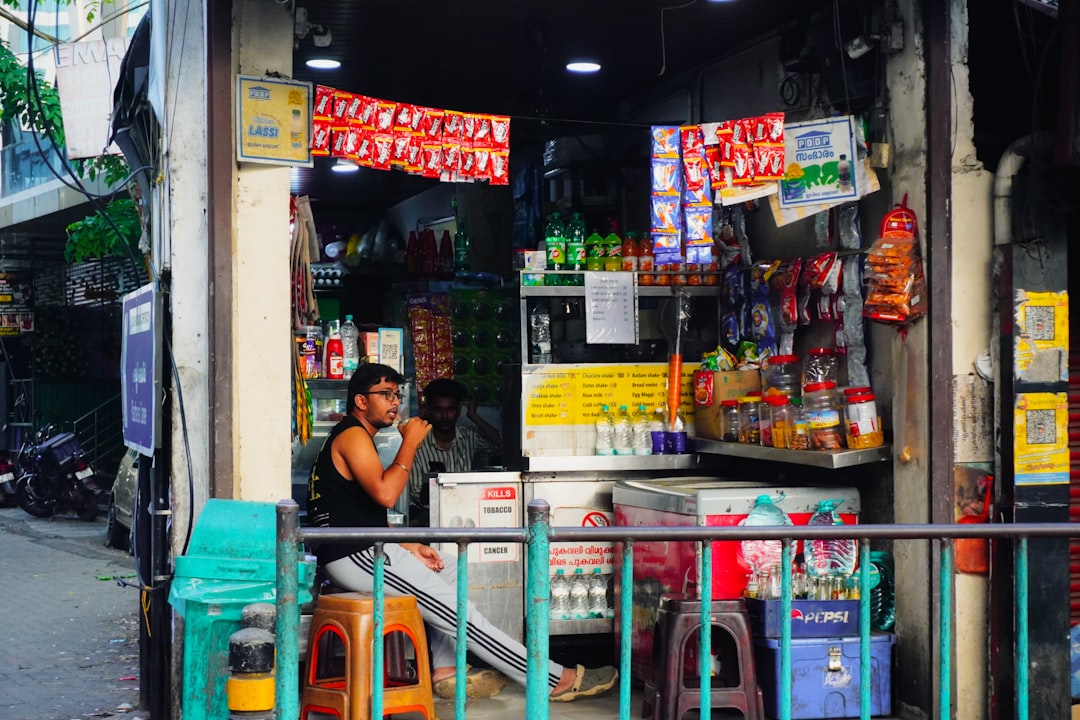
At seven in the morning, Uncle Kang next door rolled up his shutter with a clatter and slapped his phone against the glass of my newsstand, the way you’d slam down evidence in court.
My newsstand has stood here for thirty years. The newspapers I’ve sold, stacked up, would tower over a man. Nobody buys papers anymore, so I switched to selling bottled water and power banks. I keep just one daily subscription—not to read, but to smell the ink. I took the phone. It was a long review on a food-delivery app, the avatar a little moon, the username “Wanqing Needs Her Beauty Sleep.” The review was for a delivery rider: one night, faint from low blood sugar, her vision going dark at the edges, the rider braved the rain to bring her order, took a sip of the cola, frowned and said it tasted off, paid out of his own pocket at a convenience store for a big fresh bottle, and left a note: “Don’t pay me back. Just take care of yourself.” Every word warm to the touch. Then, almost as an afterthought, one light line:
“Only—the cola from that shop tastes a bit bitter.”
“It’s praise,” I said. “Praise for you, and a pat on the back for your rider too.”
Uncle Kang chuckled, his yellow teeth flashing in the morning light. But mid-laugh, his brow knotted. “Bitter? My cola comes in by the case, fresh dates and all.”
He cracked one open on the spot, tipped his head back for a big gulp, smacked his lips for a long while, and mumbled, “Maybe it’s the heat. Not cold enough.”
That morning, two delivery orders actually came in with notes saying “want to try the rider’s pick.” Uncle Kang was so pleased he threw in two extra packets of ketchup and shouted to me through the door: “Old Song, good deeds get rewarded!” Same piece of writing—first half sugar, second half a knife. That’s what I only figured out later.
By noon the next day, the wind had arrived.
First came a half-grown kid in a school uniform, phone held high, running up to my stand: “Grandpa Song, isn’t that Uncle Kang’s shop?” In the video, a big local account had reposted that long review, with a heart-stopping title: Delivery Rider Pays Out of His Own Pocket to Replace a Customer’s Cola—Because This Shop’s Cola Is Undrinkable? Spliced in was old footage from the convenience store: night, a rider with one shoulder soaked through, hauling a big bottle of cola out of the fridge. The account was called “Xiaofei Loves to Record,” and the uploader, a little too clever for his own good, had broken the sentence mid-way:
“Dashan pays out of his own pocket to swap the cola! All because this shop’s cola—”
Then three dots, left for readers to guess. And what people guessed was, without fail, the worst.
The comment section broke open like a sluice gate: “Bitter? Probably expired.” “Shops like this deserve to be exposed!” “Drop the address, everyone avoid it.” Someone pinned a photo of the storefront onto the map, a red dot stamped in like a scar.
The noon sun glared white. The delivery printer in Uncle Kang’s shop, which usually sang from dawn to dusk—“You have a new order” in one breathless chorus after another, like an announcer who never tires—that day it went mute. The oil in the wok cooled slowly, a ring of fine foam forming on the surface. Uncle Kang stood in the doorway and patted the printer, the way you’d pat an old mule that could no longer pull the mill.
Neighbors passed by. Old Man Sun, a regular, slowed his steps, hesitated, and crossed to the other side of the road. A mother yanked her child to the far side and hurried on. Nobody said a word—but the silence spoke louder than any words.
Toward evening, a young couple came, circling the storefront with their phones up, the camera pointed at the sign, and at Uncle Kang’s face. Uncle Kang didn’t know the meaning of “traffic.” He waved them in cheerfully: “Come in, come in! Cola’s on me. Taste it yourselves—you be the judge!” The girl froze a moment, then posted the clip under the title The Owner’s Losing It. It got more likes than his shop saw customers in a day.
That night, Uncle Kang dug out his June purchase receipts and checked the dates on every can in the two cases in the corner. All the dates were fine. He tasted them himself—flat, dull, stale. Those two cases had been leaning against the west wall, baking in the sun all summer long. He’d spent his whole life working with food, drank nothing but strong tea, never touched cola—he’d had no idea what the sun could do to a can of it.
“The dates aren’t expired! I’ve never sold a bad thing in my life!” His voice was loud, but his hands were shaking. He insisted on “setting the record straight,” and I held up my phone to film him for it. He’d changed into the white shirt he saved for visits, stumbled through his words, and at the end even bowed. It went up that night to forty-seven views—half of them mine, clicked over and over.
Afterward he carried the two cases out, cracked every can open, and poured them into the sink. The foam hissed and gurgled, as if crying injustice on his behalf.
On the morning of the third day, Uncle Kang tucked the receipts and the date photos, along with the bitter cola Dashan had left behind—only one sip taken—into his bag and headed out. He left the shop in my care.
Under the counter lay a blue ledger, and with time on my hands I flipped through a couple of pages. On the left, debts: Old Man Sun, living alone at the end of the lane, hamburgers chalked up to number fourteen, with small characters beside it, “No charge. Still give it to him.” On the right, losses; one page held just three words: “Rent. Scrape it together.” I shut it fast, as if I’d glimpsed someone’s scar.
Uncle Kang came back without cursing. He sat on my little folding stool and was quiet a long while before speaking.
“The station chief, surnamed Zhou, was polite. Said they’d verify things by the book, give a firm answer in three days. ‘The platform’s rules can’t be broken, but no one should be wrongly blamed either’—his exact words. The kid who filmed it, Xiaofei, stood ramrod straight, ears crimson, said he’d deleted the video but what had spread couldn’t be deleted, and he wanted to work for me to make amends. What would I curse him for? He’s not a bad kid. A woman surnamed Zhao poured me a glass of water.”
He paused.
“When Dashan got back from his runs, he took off his helmet and said just one thing: ‘Uncle Kang, I’m sorry—it was my big mouth about the cola. The shop’s clean. I’ll stake my life on it.’ Nobody at the station made a sound. Then somebody murmured that the order Dashan took that night was an emergency one. And then he put his helmet back on and left. His daughter’s waiting on money for surgery. He can’t afford to stop.”
“I set out to demand justice, but halfway there I thought—he’s got it harder than I do.” Uncle Kang stared at his half-lowered shutter. “But what about my shop? Old Song, I’m clumsy with words, nowhere to argue my case. Injustice is a bitter thing—bitterer than cola. Swallow it and it doesn’t make you burp; it just bubbles away inside you.”
At dusk, Xiaofei came to my stand to buy water, his eyes red. “Uncle Song, that footage—I shot it that night without thinking, just kept it. When the review went viral, I was so happy for Dashan I stayed up editing it together… The title was mine. Have I made a terrible mess of things?”
“You can delete words, but you can’t delete the mark they’ve left.” I twisted the cap off for him. “Deleting is mopping up; making up is just beginning. Since you love to film, film the truth from now on. The truth is an old ox—slow on its feet, but it knows the way.”
He gripped the water bottle and nodded hard.
As the sky darkened, a new comment appeared under the video that had started it all—again from “Wanqing Needs Her Beauty Sleep”:
“The words were mine. When I wrote them, I was so full of gratitude for that delivery rider that I never thought about them burning someone else. I’ve been eating this shop’s hamburgers since college—the owner braises his beef for real. Tomorrow I’ll tell the whole story, start to finish. I’m sorry.”
I handed the phone to Uncle Kang. He read it three times, his throat working, and managed only: “As long as it’s made clear. As long as it’s made clear.”
That night, the street was so quiet you could hear the meat bubbling in the braise pot. An electric scooter stopped at the shop door—it was Dashan. He went inside, and through the glass, scraps of the conversation drifted over to my stand—
“Uncle Kang, I didn’t come to comfort you. I’m actually hungry.”
”…I’ve stocked new cola. Want one?”
“Yeah.”
I couldn’t make out the rest—just two shadows sitting under the lamp, one eating with his head down, the other keeping him company. As Dashan left, he pulled his helmet on and dropped a single word, quiet, but nailed into the wood like a nail:
“Hold on.”
Past midnight, as I locked up the newsstand, the printer over there suddenly rasped to life and spat out a slip—the first order in two days. Uncle Kang, apron already on, rushed in, held the ticket up to the light and read it again and again, terrified it was a curse. In the notes column it said: “Holding off on the cola until Uncle Kang gets new stock—then I’ll be first in line. Burger with extra egg, thank you.”
That night Uncle Kang made the most careful hamburger in the whole city—bun toasted golden, patty pressed square and true, with an extra egg. He smoothed out that little receipt and slid it under the glass on the counter, straight and true.
The shop light burned past midnight. From my stand I could see that square of light, see him inside curing meat, wiping down the machines, methodical and exact—as if tomorrow he’d surely open, and the day after too.
I’ve sold newspapers for thirty years. I’ve seen plenty of wind. When the wind rises, bad news runs fastest, and sometimes rumor arrives wearing kindness’s shoes. But the truth isn’t afraid of being slow. It knows the way. A mile today, a mile tomorrow, and one day, it arrives.
Tomorrow morning, the shutter will rattle open again. And when it does, the road is still there.
This story is adapted from real events. All names are pseudonyms.
Based on a true story