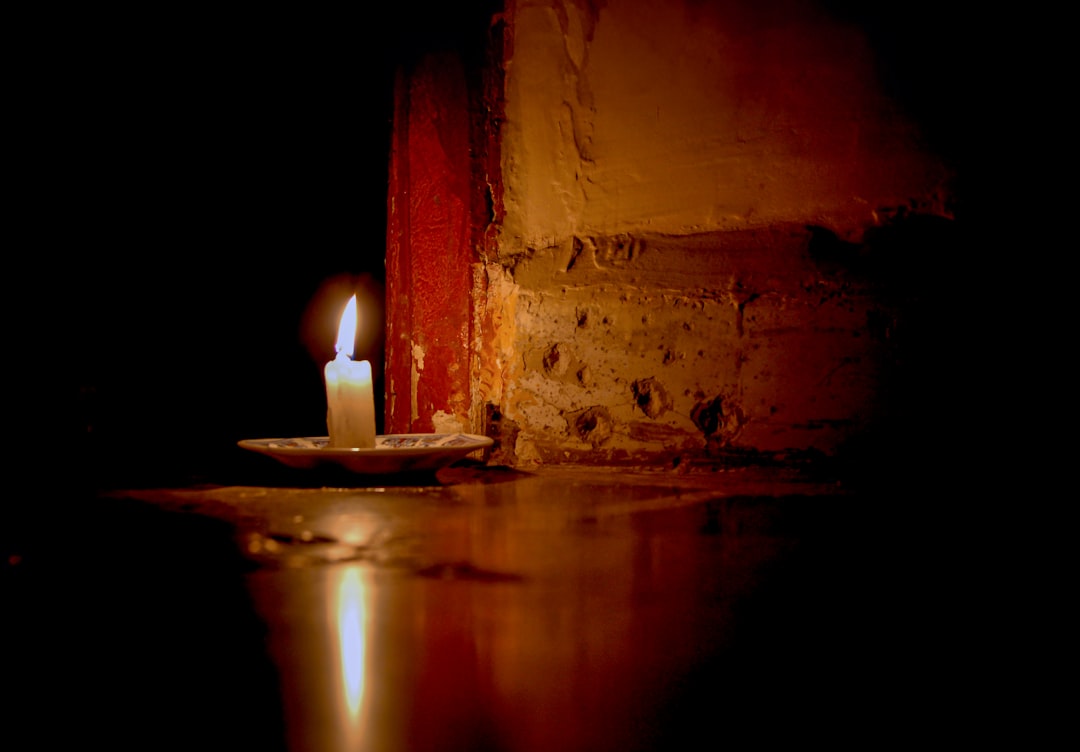
The Fire That Doesn't Smoke
“Uncle Murugan, is this the cart? This one exactly?”
The microphone was held up to my ear, the camera’s red light glowing. Everyone waiting at the bus stop turned to look. Ram stood at the front of the crowd with his arms crossed, grinning like he owned the lens, as if his face were in the frame too.
My hands still had coal dust on them; I wiped them twice on my trousers before touching the iron. The old cart stood beside the new one — one rusted, one shining.
“Yes,” I said. “The old one ran thirty years. Just this one.”
“And Meera’s design — it came from this?”
I nodded. The old cart’s iron face was cool; my palm had gone sweaty.
“Can you tell us about the first time you met her?”
“I remember,” I said. “To tell it right, you’d have to go back three years.”
“Then start three years back,” the young man said, easing the microphone closer. “Take your time.”
I cleared my throat. I didn’t need to. I had ironed the events of these three years in my mind who knows how many times — flat and smooth, without a single crease.
*
April, three years ago. The heat came early that year. My ironing cart sat under the banyan tree as always, the coal in its stove burning from morning till dark, the smoke drifting half a street on the wind.
That afternoon, a girl in a school uniform came by. Two braids, schoolbag hugged to her chest. She stood next to me — and stood there for a full quarter of an hour.
“Uncle,” she began, “how much coal does your stove burn in a day?”
“Twelve kilos.”
She pulled out a little notebook, wrote it down, asked: “How much does it cost?”
“A hundred and twenty rupees. Child, you needn’t worry yourself about buying coal.”
“I’m not buying coal.” She turned the notebook around to show me. She had drawn my cart: the wheels, the stove door, the sheet-iron chimney — stroke by stroke, lines were lines, circles were circles. “I’m doing its accounts.”
I tipped my chin toward the chimney. “The smoke bothering you? If it bothers you, I’ll move to the lane’s mouth tomorrow.”
“It’s not the smoke that bothers me.” She closed the notebook. “It’s that it burns for nothing.”
Burns for nothing. I’d never heard those words before.
I was fourteen when I apprenticed to my master, and the first thing he said was: coal is money turned solid. When someone puts their sweat-earned money in your hand, wasting coal is wasting their sweat. Thirty years, I’ve fed the fire one small handful at a time.
But the smoke? The smoke drifted upward — who ever counted its cost?
That night I didn’t sleep well.
*
This cart came down from my master. The iron was generous-bellied, held two pounds of coal, and when the stove door opened, red light would spill along the ground. Neighbors brought their clothes wrapped in flowered bedsheets: school uniforms, white shirts, saris, the trousers and tunics for festivals. Saris wanted a cotton cloth between them and the iron; uniform collars wanted a crease pressed in; shirt cuffs worn thin wanted a lighter hand. None of it needed thinking — the hands knew on their own.
Thirty years. This street’s white shirts knew my fingers better than I did.
The girl came back the next day, and the day after that. Right on time after school she’d stand in the smoke, notebook open on her knees. She asked when the iron’s face was hottest, how many hours one load of coal would burn, how to reckon overcast days, whether the monsoon killed business. I’d answer, she’d write — quick little letters, marching like ants across the page.
Once she held her hand an inch above the iron’s face to test the heat, and I slapped it away. “Hands can’t read numbers,” I said. “Hands read cloth.”
The neighbors laughed: “The government’s sent a child to inspect your stove, Uncle!”
Ram at the repair stall laughed loudest of all: “Old Mu, your smoke’s knocked learning into somebody!”
I got suspicious too. On the seventh day I couldn’t hold it in: “What do you want with all this? If there’s a fine to pay, come at me — don’t trouble the coal.”
She said her name was Meera, seventh standard. The teacher had assigned a project called “Seeing” — notice something that was wrong, and write it down.
“I saw your cart,” she said.
“So look,” I said, shaking out a wet cloth. “Look your fill, then go home and eat.”
“Uncle,” she didn’t leave, “I’ve been thinking about something. Can fire stop choking people? Can money stop being wasted?”
“How would you not waste it?”
“With the sun.”
“And when the sun goes down?”
“Store it.” Quick as that. “Panels drink sunlight all day, the electricity goes into a battery; make the iron thicker, and it holds its heat too.”
“And the monsoon?” I tipped my chin at the sky. June’s clouds come down when they please.
She had no answer. She flipped two pages of the notebook and flipped nothing up.
“I’ll go work it out,” she said.
*
That night, I did some arithmetic of my own.
If the whole street filled up with carts like hers — no coal, no banking the fire, no reading the flames or listening to the coals crackle — then what were these hands of mine? Thirty years of strength in them — what then? Where would my master’s tools find a place?
A question I never thought to ask at fourteen, a girl in a school uniform asked me at fifty-four.
For half a month after that, when she came, my answers got short. She’d step closer; I’d edge half a step away. She asked a sentence; I gave her half of one.
Once a coal spark popped and singed her cuff — burned a little hole in it. She brushed at her sleeve, said nothing, kept writing.
That little hole put out the knot of resentment in my chest.
“Does it choke you?” I asked.
“Yes.” Her eyes never left the notebook.
“Then why stand so close?”
“It has to be written down,” she said. “Written down, then you can learn how to make it not choke.”
My little selfishness, in the face of that sentence, went thin as burnt paper.
That monsoon, she actually pushed over a “cart.” Four old children’s-cycle wheels, a solar panel half again as tall as she was propped on the cart bed, and inside it a thick iron plate. The panel gleamed black in the sun; she pressed a switch, and the iron slowly warmed.
She tried pressing a pair of trousers. The iron moved through; the creases came shallow, like something half-asleep.
Ram squatted alongside, laughing until he coughed: “Having the sun press your shirts for you? Fine — first go pray for the rain to stop.”
And sure enough it rained four days straight that week. On the fifth day she came, the battery was flat as something starved half a month, the iron was lukewarm, and it couldn’t press a single hard crease.
The onlookers drifted off. Laughing as they went.
She crouched beside the cart and didn’t move for a long time, mud on the tips of her braids.
I went on pressing my clothes. When I closed up that night it was fully dark, and I banked my stove: pushed the half-burned coal deep into the chamber, shoveled ash over it, packed it down firm. In the ash heap one point glowed red — bright, then dim, like breathing.
“Uncle,” she said behind me, “what are you doing?”
“Banking the fire-seed,” I said. “Cover the ash well and the fire doesn’t die. Morning, you scrape it open, blow once, and it burns again. My master’s master did it this way.”
She stared at the ash heap a long time.
“Heat can be stored,” she said.
“Generations have banked fire this way,” I said. “Nothing rare in it.”
“Uncle,” she stood up, eyes bright, “this principle — it can be banked into iron.”
I handed her a roasted corn cob. She waved it off: “I can’t touch coal anymore, Uncle. Once, and I’d lose my will to change it.”
*
The next month, her cart bed gained a layer of “ash.” Not ash, she said — insulation. To me it looked like a padded jacket for the iron. The iron grew three fingers thick. By day the panel drank sun, the battery charged, and the heat sank inch by inch into the thick metal. Sun down, clouds low — lift the wooden cover, and the iron face was still warm.
She insisted I try it.
I pushed back. But sari over cloth through the iron — smooth; uniform collar pressed to a crease — held; only the thick iron was heavy, and the wrist wanted three parts more strength.
“Heavy,” I said.
“Wherever it’s heavy, that’s where we change it.” She wrote it down.
From that day, her drawings grew right alongside my cart. My timing for the water-sprinkle became a little copper kettle with a fine copper spout; the strength in my hands became notches on the iron handle: one notch for sari, two for cotton, three for uniform.
She even blindfolded me once. Tied a scarf around my eyes and put a scrap of cloth in my hands.
“Silk.”
Another. “Cotton.”
Another. I pinched it, turned it over. “Synthetic. Won’t bear direct iron — needs a cloth, and half a notch back.”
She pulled off the scarf and wrote it down at speed: “Synthetic, cloth underneath, half a notch back.” She called this turning craft into words. “Words don’t grow old. People age; words stay.”
At first my chest felt hollow. Thirty years of these hands, and she’d twisted them into three notches, pressed them into a few lines of text.
Later I understood. The dial knows heat; it doesn’t know people. It doesn’t know that Mrs. RamanI at the tailor’s shop keeps a silk sari that wants half a notch further back; doesn’t know a regular’s shirt cuffs have worn thin and want a lighter hand. That part still had to be my hands.
A machine can learn fire. It cannot learn people. So we’d bolt the two of them onto one cart.
*
The first thing the new cart gave off wasn’t smoke — it was white steam. At closing time the iron was still warm; lifting the cover next morning, heat rose into your face.
The first on the street to bring a stack of uniforms to “try the new” was Ram. When it was done he held a collar up to the sun and studied it a long while: “Crisper than mine.” Then, voice dropped: “Old Mu, it really doesn’t choke anymore?”
“Not a bit.”
“Ask for me too,” he said, rubbing his hands. “What does a conversion cost?”
After Ram, the two brothers from the laundry; after them, two old pressers from the next street over. Meera photocopied her drawings and handed them out, not a paisa charged. At school her teacher asked: aren’t you afraid others will learn it and take it?
“It isn’t only our corner that chokes,” Meera said.
Only the old master of South Lane kept shaking his head. Forty years he’d burned coal, his back curved like his own poker: “Can’t change now. These old bones are set.”
Meera didn’t argue. She left a copy of the drawings. “Uncle, keep them. Any day you feel like looking, look.”
Half a year later, a black gleaming panel went up in South Lane too.
Meera painted a name on the front of the cart in white: Surya. She said it meant the sun.
I said better to call it “Ash Heap” — this cart was coaxed out of an ash heap. She laughed so hard the white paint nearly ran past the line. In the end, though, she added a line of small characters on the side of the cart bed:
Murugan’s cart, Meera’s making.
The “Seeing” project came back graded — top of the class. Her deskmate had recorded the school’s leaking tap, for half a month; the boy in the back row, the plastic bags in the drain — cleaned three streets’ worth. The teacher pinned all three notebooks to the back wall of the classroom. Meera says that wall is now the liveliest wall in the whole school.
*
The first day of winter, something happened.
I was pressing a shirt the old way, and moved too fast. Thick iron has a different temper than thin: it heats slowly, holds long, keeps all its strength bottled inside. A scorch landed on the chest; the cuff went yellow half around.
The customer was a schoolteacher. He held the shirt a long time and said nothing.
My face burned hotter than the iron’s face. Meera beside me turned the dial back a notch, then stuck a small paper note on the wooden cover, letter by careful letter: THICK IRON, MOVE SLOW.
“I’ll pay.” I counted the money out.
The teacher pushed it back. “Thirty years, and this is the first time I’ve seen your cart smoke-free. This street owes it a chance. Besides —” he shook out the shirt — “I recognize this kind of mark. My first year teaching, I wrote a wrong word in chalk, and I carry the same brand on my heart.”
Meera took the shirt home anyway. Lemon juice and white vinegar; she worked at it three evenings, bit by bit. The day she returned it, the scorch had faded to a fleck like a tea stain. The teacher wore it to class as ever and told everyone its history — told it better than his lessons.
From then on, a row of paper notes lined the wooden cover: THICK IRON, MOVE SLOW. SILK, CLOTH UNDERNEATH. SYNTHETIC, HALF A NOTCH BACK. When the wind came, they rattled like a line of little flags.
When the monsoon came again, the clouds pressed down for eight days straight. Through all eight, the thick iron cooled slowly, but every morning when the cover lifted, there was still heat enough for half a morning’s work. On the ninth day the sun came out and the panel drank again. The customers queued clear to the tea stall, and nobody said “pray for the rain to stop” anymore.
*
At the town science fair, Meera brought home a certificate. She came to my cart first, lifted the cloth bag on the cart bed, and laid the certificate inside to press flat.
“The judges asked where the idea came from,” she said. “I told them: from the coal smoke on a street corner.”
The next year, a state prize. Later, an international children’s climate award — the judges flew in and stood before my old cart a long while, took over a hundred photographs. Word was there was a very famous prize, called the Earth Prize; from all the projects entered across the world, her cart had made the shortlist.
She flew for the first time to receive it. When she came back she took the guest badge off her chest and hung it on the hook of my cart bed. A plastic card, blue with white letters, her name printed on it.
“Hang it here,” she said. “Let it get some sun every day.”
The night before she left for the world congress, she came to say goodbye. On her way out she looked into the stove chamber and asked me for a pinch of stove ash, which she wrapped carefully in paper.
“What’s it for?”
“Courage,” she said.
*
Last autumn, Meera went somewhere very far away, to speak at a world climate congress. In her own words: “A whole roomful of grown-ups sitting there.”
Three days after she left, the neighbors’ television had a crowd around it. She stood on stage in a sari, and on the big screen behind her flashed a picture: my banyan tree, my cart, my chimney rusted through in places.
“Which bit is our corner?” a neighbor’s child asked, on tiptoe.
“This,” I said, pointing. “The one that’s gone in a blink.”
Ram insists he made it into the frame too — standing right at the edge, beside a utility pole. Nobody argues with him.
Her speech wasn’t long. My ears are going, so people in the front fed it to me line by line.
“Change doesn’t begin the day you grow up,” she said. “It begins the day you see. I saw my street corner. Someone else saw his beach; someone else saw trees felled by the wind. Once you see, there is still time. Once you start, it isn’t too late.”
When the applause came through the television, the people under the banyan tree clapped too. Ram clapped loudest, then whistled.
The day Meera returned, she didn’t even take her schoolbag home first — she sat down beside my cart and opened her notebook to show me. It held many new names now, one to a page, the letters still quick and small.
“People I met at the congress, or heard about,” she said. “There’s a big brother in Bombay, Kabir. At nineteen he went to the beach to clear his head, and the trash was up to his ankles. He didn’t just stand there complaining — the very next Sunday he crouched down and started picking it up. Now every Sunday, thousands pick with him. Seven years: eight million three hundred thousand kilos.”
“Eight million three hundred thousand kilos,” I said. “How much is that?”
She thought. “About our street’s coal, burning for three thousand years.”
I rubbed the calluses on my palms.
“There’s a little sister, Priya. At four years old, a great storm knocked down every tree in her yard. She started planting trees at four. Her goal was a hundred thousand; she finished early. A hundred and ten thousand in the ground now, in seventy-nine places.”
“Four?”
“Four. She says she couldn’t carry the big saplings then, so she planted the small ones first.”
“There’s a brother, Ishaan, who works on straws. He goes restaurant to restaurant, persuading them to stop handing out straws by default. Comes to twenty-six million straws never used.”
“Twenty-six million,” I said. “Laid end to end, how far?”
“From here to Bombay,” she said, “and back again with some to spare.”
I was quiet a long while. Thirty years steeped in coal smoke, and this was the first time numbers made my palms itch.
“These children,” I asked later, “don’t they wait? Wait till they’re grown to start?”
“They don’t wait.” Meera closed the notebook. “Uncle, no child is waiting to grow up.”
I wanted to say that I had waited. At fourteen I had seen that red glow in the stove chamber, seen coal burn to ash, ash banked over the fire-seed. I had seen everything — and seeing it, had come to take it for granted.
I didn’t say it. Meera pushed the notebook back into her schoolbag, then added suddenly:
“Uncle, don’t you go thinking you’re just a spectator. My name is welded into this cart, and so is yours. Take away either half, and it won’t roll.”
*
At the end of the interview, the young man asked: “Uncle, does the cart still burn coal?”
“A little, on the longest days of the monsoon,” I said. “Meera says there’s no shame in that — it’s called a transition. Changing an old thing doesn’t mean burning it out; it means burning it a little less, choking no one.”
The young man scribbled, then turned to tap the blue-and-white badge hanging on the cart bed’s hook. I took the thread back: “There’s one more thing. Put it in.”
“Go ahead.”
“From Meera — seeing is the beginning. Someone saw it on our street corner; someone saw it on a beach; someone saw it under the trees. Once you see, there is still time.”
The camera’s red light went out. The young man reached to shake my hand, took it, and laughed first himself: “Uncle, your hand is hotter than the iron.”
“Banked,” I said. “Thirty years of banking.”
*
The next morning, I pushed my cart to the banyan tree. The sun had just cleared the rooftops; the panel unfolded and caught the first light. Children ran past on their way to school, and the smallest one stopped short, pointing at my stove chamber:
“Uncle — where’s the smoke?”
“Stored away.”
He tilted his head, thought about it, nodded, and ran on.
Meera came up the street with her schoolbag on her back, two braids, writing in her notebook as she walked. She sat down in the old spot, opened the notebook — exactly as she had three years before.
I laid the first white shirt across the iron’s face and sprinkled it with water. The iron moved slowly through; the creases came out one clean line. A wisp of white steam rose and vanished in a blink.
No smoke.
For the first time in thirty years, the street’s morning held nothing but the smell of coffee, the scent of wet cloth, and the scratch of a pen nib on paper.
The corner is still this corner, the fire still this fire. Only, from today on, it doesn’t burn for nothing.
(This story is adapted from real events; all names are pseudonyms.)
Based on a true story