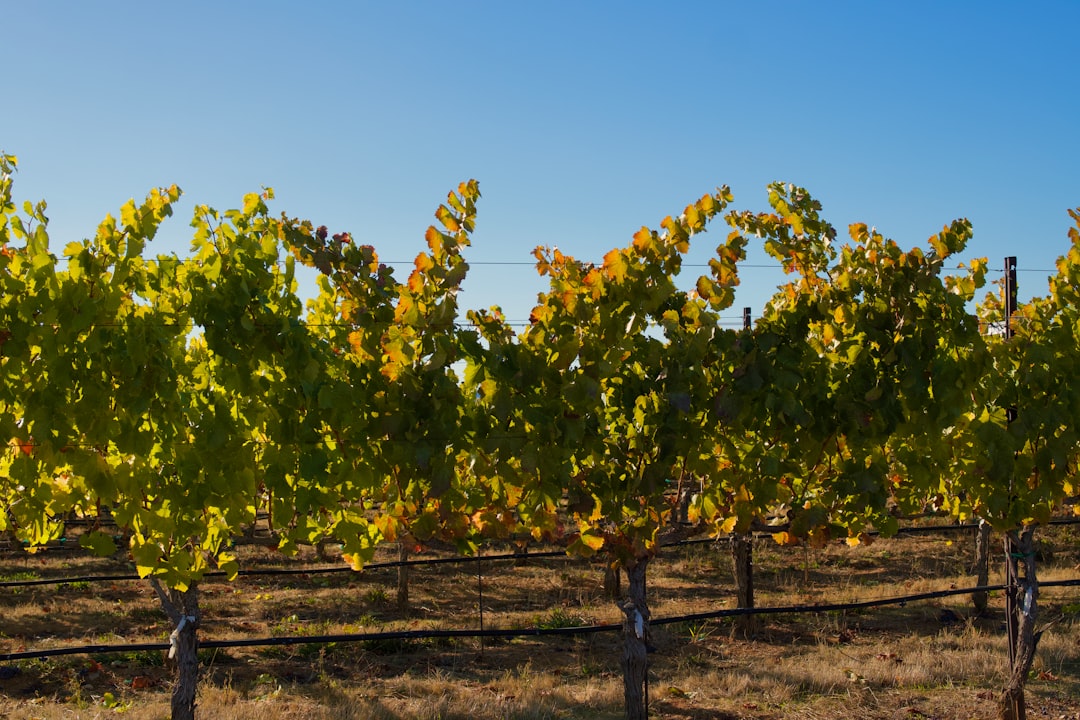
The Moon Over Grape Valley
I. The Knock at the Door
The pills are white, the water is warm. Three times a day, four pills each time—I’ve counted for six years, more meticulously than any household ledger.
Sometimes a person thinks that days are like the clusters on a grape trellis: one grape at a time, each one countable—only you never know which one will wither first.
I hadn’t taken my second dose today when someone knocked at the door.
Knock, knock, knock. Three times, neither light nor heavy, neither hurried nor slow—as if someone had walked a very long road just to knock this one knock, for me alone.
I glanced in the mirror. My eye sockets were sunken, my face the yellow of old reeds. That’s not how I looked six years ago. Six years ago, I too was someone who wound her braids atop her head and embroidered flowers all over her hem.
When the door bolt rattled, I hesitated. It wasn’t that I didn’t want to open it—I just didn’t want anyone to see me like this. But the hand is more honest than the heart; the hand had already pulled the door open.
The body knew who had come.
Big Sister Shanikhan stood at the doorway, fifty-eight years old, her voice still loud as a bell from her youth: “Is there steam on the pot? I knew there wouldn’t be!” Behind her, Gulmira held a bag of flour, and Sister Li carried a jug of clear oil and a box of mooncakes. The three of them squeezed into my little courtyard like three fluttering pigeons settling onto a fence.
They come on holidays. They come on ordinary days too. And after so many visits, I’ve made a discovery: the words I can’t say at home, I can say in front of them.
Big Sister Shanikhan plopped herself down, felt my hands first, then pried open my pill organizer, examining everything item by item: “Has this one been reported? That assistance payment I mentioned last time—I ran the red-stamped papers down for you. All that’s left is your thumbprint.”
Sister Li arranged the mooncakes on the table—five-nut ones, rose ones. Gulmira raised her phone and grinned at me: “Auntie Rayihan, the community needs it on file. Just pretend I’m a grapevine.”
I said okay.
Actually my nose stung first. For six years, my illness has been like a well, and the whole family’s ropes have been tied to its mouth. Ali drives off before dawn; Nar runs to the hospital straight from school. All the gray, despairing thoughts I’d had sitting on that threshold—I never said a word of them at home. But I did tell Big Sister Shanikhan, last winter, in this very courtyard: Sister, maybe I should stop treatment. The money goes down like water into a karez—no sound at all.
That day she didn’t lecture me. She simply tucked my pill organizer into her own pocket: “I’ll manage your medicine. Three times a day, I’ll call to make sure. You can say you’re quitting treatment if you like—only first you have to curse your own mother away.”
From that day on, my phone rang three times daily, like a school bell.
Today she sat on my bench, broke off a piece of mooncake, and pressed it into my hand. I said, Sister, this illness of mine is a bottomless pit.
She gripped my hand, her palm rough and warm: “Silly girl, however deep the well, ladle out one dipperful at a time and you’ll finally taste the wet bottom. Today, eat mooncake. Tomorrow, taste the damp.”
Tears fell, splashing onto the mooncake. I quickly took a huge bite.
So sweet. Sweet enough that I swallowed down the words I hadn’t wanted to swallow, and spoke the ones I’d never dared to:
“With all of you here, I dare to get well.”
II. The Drying House
Grandma Ayimhan is seventy-nine, keeping three earthen rooms and a drying house all by herself.
The drying house was handed down by her elders. Its lattice-brick walls are pierced with holes, row upon row; the wind enters one side, leaves the other, slowly turning the hanging clusters of seedless white grapes into sugar. On bright middays, light leaks through the holes and falls on Grandma’s white hair like sifted slivers of silver.
Grandma’s memory has begun to blur. She often forgets to turn off the lights, forgets whether she took her medicine yesterday. So Sister Li taped a calendar to her wall—one box for each day. After taking her medicine, she draws a check mark; it must be a big one, the kind visible clear across the room.
On the third afternoon before Mid-Autumn, the courtyard gate was knocked. No need to ask—it was that familiar rhythm.
Big Sister Shanikhan brought a new cotton quilt, saying the season was turning; when the mountain wind came down at night, even an unheated kang needed something to hold off the chill. Gulmira stood on a stool and changed the light bulb, and the room brightened at once. Sister Li crouched at the base of the wall, untangling the electric wires one by one. When she came to one, she frowned: “The casing’s gone stiff. It has to be replaced. I’ll bring the wire tomorrow.”
Grandma waved her off: “More money spent.”
“Spend what money?” Sister Li laughed. “The wire belongs to the community. The hands are my own.”
And that’s how Grandma’s store of words got opened up, section by section. She told of picking cotton in the fields when she was young, her two hands quick as wind; of the dutar hanging on the wall, its strings broken for over a decade, which she’d never had the heart to take down. She told the stories over and over, and the girls listened over and over, and not one of them checked the time.
“When you’re old, words get stored in your belly,” Grandma said. “Store them too long and they go hard, like a naan. When you all come, you break me open—and I’m still soft inside.”
At dusk they had to go. Grandma chased them to the gate, stuffing raisins into everyone’s pockets—a big handful each—and after stuffing them, pressing down on each pocket, like sealing it with a stamp of wax.
Only the little red-cloth bundle on top of the cabinet did she not touch.
That was saved for Mid-Autumn.
She walked them to the mouth of the alley and stood in the doorway watching. One carried her old light bulb, one had a measuring tape under her arm, one had the new quilt on her back—laughing and talking, their shadows stretched long by the setting sun. Grandma watched for a good while before realizing she was smiling.
The last time she’d stood at a door seeing someone off like this—how many years ago was it? She couldn’t remember. All she knew was that the wind was warm, and through the holes in the drying house lattice, the last thin ray of light was falling on her face.
III. The Ledger
At ten o’clock at night, the light in Shanikhan’s house was still on.
Spread on the table was the red-covered ledger. Its corners were worn round, like an old bar of soap.
The pages were ruled into columns. Name, illness, what medicine, how far along the reimbursement, where the children went to school, whether the roof leaked, what foods to avoid, what words they liked to hear. More than thirty households in the neighborhood—one page each, every page filled with her handwriting.
On Rayihan’s page, one line had been crossed out—crossed out hard enough to raise the paper’s nap. The line read: “September eleventh: she says, no more treatment.”
Beside the crossed-out words, a new line: “She doesn’t get the final say. I do.”
On Ayimhan’s page it said: “Hard of hearing—speak close to the right ear. A master cotton picker in her youth. No sour food. Naan must be broken open for her.” A final line had been added recently: “Draws big check marks on her calendar. Praise her for it.”
She’d taken on this bookkeeping duty three years ago. That was the year her husband passed. Shanikhan sat on her doorstep every day, from morning sun to evening sun. The neighborhood secretary came and crouched in front of her the whole afternoon, and finally said: Teacher Sha, we need someone to keep the books. Your handwriting is the best in the whole valley.
Whose household the first entry of flour was for, she no longer remembers. She only remembers that as she kept writing, the days on her own doorstep grew lighter.
“What the ledger records is flour and oil,” she once told someone. “But what it really records is people’s hearts. If hearts aren’t entered in the books, life runs a deficit.”
The phone rang. Gulmira, asking what time to meet tomorrow.
“Eight thirty. First Rayihan’s house, then Ayimhan’s,” Shanikhan said. “Bring Grandma a mooncake—rose filling. Her teeth aren’t good; the sweet kind melts.”
After hanging up, she flipped through the pages one by one, all the way to the last—an empty one. She smoothed its corner with her finger, then folded a tiny crease into it.
As if waiting for a name.
IV. Naan and Mooncakes
Gulmira’s original plan was: vacation, sleep, scroll her phone, sleep until the sky fell.
One phone call ruined it all. It was her elementary school head teacher: “Mira, help me take some photos. For the community files.”
And so, phone raised, she trailed along with the group, in and out of one courtyard after another.
She photographed the light on the drying house lattice, Sister Li crouching over the wires, Auntie Ma setting down two bottles of milk and running off without even coming inside. She photographed Sister Li breaking a five-nut mooncake in half and handing it over; Grandma Ayimhan took it, turned, and brought back a hot naan from beside the tandoor—also broken open, placed on the same plate. The two things lay side by side: the mooncake round, the naan round too—like one moon fallen from the sky, split in two, straining to become a single circle again.
She shot and shot, and deleted and deleted.
The lens could hold the courtyard. It could not hold the breath of that courtyard.
She noticed the order of Teacher Shanikhan’s entrances: first the pill organizer, then the rice jar, then whether the light worked, and only last the person—reading the color of their face the way an old Chinese doctor reads a pulse.
“Helping isn’t leaving things at the door and going,” Teacher Sha told her that evening. “It’s carrying that family’s life away in your own eyes—so next time, you can check it against the books.”
Gulmira scrolled her photo album to the very bottom, keeping just one: two hands, one old, one young, breaking open the same naan, white steam rising from its heart.
On some strange impulse she posted it to her feed—then set it to private three seconds later.
It wasn’t meant for anyone else to see, she thought.
Before leaving she asked: “Teacher Sha—do I count as part of the team yet?”
Teacher Shanikhan packed up the ledger without looking up: “Hold your phone steady. Eight thirty tomorrow.”
V. The Karez
The way to Ayimhan’s house passed a stretch of open channel.
The water was so clear it shone, running over the black pebbles of the channel bed with a fine, crisp sound. Teacher Shanikhan crouched down, cupped a handful, and splashed it on her face—and on the back of Gulmira’s hand.
“Cold, isn’t it?” she said. “Snowmelt from the Tianshan. It traveled dozens of kilometers underground, never seeing daylight, and only surfaced here—to water all the sweetness of our valley.”
Gulmira crouched beside her, watching a small patch of sky shivering in the water.
“Why is Grape Valley sweet?” Teacher Sha asked. Not waiting for an answer, she said it herself: “Because beneath the dark earth, there is water.”
After a while she spoke again. This time her voice dropped low, like the water at the bottom of the channel.
“Thirty years ago, I was teaching in the county town. My boy spiked a fever in the middle of the night and had a seizure. I stood below the building holding him, calling for help, and heaven didn’t answer. Then a doctor surnamed Wang from the building across the way—she just threw on her white coat and came down, said not a word, hoisted my boy on her back, and walked half a kilometer. When he got better, I brought gifts to thank her, and she said—‘Do your job well and teach with all your heart. That’s thanks enough for me.’”
The channel water flowed on beneath their feet, unhurried.
“From that year on, I understood,” Teacher Sha said, standing and brushing the dust from her knees. “A person has to learn to be like water underground. You don’t know where it comes from—but when it surfaces at your own gate, you must remember it. And afterward, flow on somewhere else.”
Gulmira stayed crouched where she was, not rising right away.
She watched that small patch of trembling sky in the water, and suddenly thought:
So sweetness has a source.
VI. Laghman Noodles and the Red Bundle
On Mid-Autumn morning, I woke before dawn.
It wasn’t the illness. It was that something was weighing on my heart.
The night before I’d told Ali: when they come tomorrow, we can’t let them leave hungry. For six years it’s all been them carrying things into our house. My hands got itchy.
The doctor had said the vein in my left arm where I had surgery is my supply line—nothing heavy on it. So I didn’t use that arm. With my right hand I kneaded the dough, stroke by stroke, the basin turning on the board, my thoughts turning with it. Strange to say, but as I kneaded, I suddenly felt I was no longer a string of pills.
I was a pair of hands. Hands can pull noodles, pick grapes, host guests.
Nar stood on a stool clipping grapes, the purple beads dropping into the basket—plop, plop—like heartbeats landing on cotton. Ali went and bought two jin of meat. By the time the sun climbed over the drying house roof, the mothers’ footsteps were already at the gate.
We’d agreed to “eat and go,” but the laghman noodles lasted until the sun slanted west. Big Sister Shanikhan slurped her noodles and declared them fragrant—more fragrant than any restaurant in town. Sister Li secretly tucked a banknote under her bowl, and Ali chased her half a kilometer to return it. She came back in hollering: “We said we were coming as relatives! Who pays money when visiting relatives?”
The whole room laughed. I laughed too. I realized I hadn’t laughed out loud in a long time; my laughing muscles were out of practice—I froze halfway through, then finished the laugh anyway.
In the afternoon they went to see Grandma Ayimhan as usual, and I went along too, walking slowly, taking my time.
Grandma had been mysterious all day. She brought over a stool, reached up to the cabinet top, and took down the little red-cloth bundle. Layer by layer she unwrapped it: a small bag of raisins, every one purple-black, hoarded through a whole autumn.
“For the girls to share.” Grandma pinched the bag opening tight and stuffed it into people’s pockets, refusing all refusal, with a strength that didn’t seem like seventy-nine. “My raisins are sweet. Eat something sweet, and life in your mouth stops being bitter.”
Gulmira’s pocket, Sister Li’s pocket, Big Sister Shanikhan’s pocket—not one was missed.
They sat with Grandma until dark. Grandma pointed at the eastern sky and said: soon, soon.
On Mid-Autumns past, Grandma said, she sat alone in the courtyard counting the roof beams. This year was different. This year, before the moon had even risen, everyone was already seated.
“This year the moon is good,” Grandma said. “Good because of the company.”
VII. The Moon
When the moon rose, all of Grape Valley could hear itself.
In Rayihan’s courtyard, the pills and the water glass sat to one side; the mooncakes came first. Her phone lit up on the table—the team’s group chat, a message from Big Sister Shanikhan: “No check-ins today. Go eat mooncake.” Dozens of replies followed, all familiar names. Rayihan started to reply with a moon emoji, deleted it, and typed a sentence instead: This time next year, I’ll still be sitting under this trellis. Before sending it, she read it over—word by word, the way one makes a resolution. Then she pressed send.
In Gulmira’s room, she created a new album. She thought a long time about the name. She saved only one photo into it—the one of two hands breaking open a naan. The album was called: Underground Water. She messaged Teacher Sha: I’m coming back next semester. The reply came almost instantly, a single word: Come. She laughed, then took out a new notebook and, imitating Teacher Sha, carefully wrote the first line: Grandma Ayimhan—hard of hearing in the right ear, speak close; no sour food; break her naan open. After writing it, she added a line: The check marks on her calendar—drawn so big.
Under the lamp in Shanikhan’s house, the ledger lay open to the last page. The folded corner she gently unfolded and smoothed. She uncapped her pen and wrote, in careful strokes, three characters: Gulmira. She thought a moment, then added a small line beneath: Good with a camera, attentive—a drop of water come back from the city. She didn’t close the book. Instead she flipped back through it, and beside each household’s name, wherever she stopped, she drew a small moon. More than thirty households; when she finished, she closed the book. More than thirty families slept on in the dark night, and on every family’s ledger hung the same moon.
Grandma Ayimhan didn’t sleep. She sat under the grape trellis in the courtyard, the new cotton quilt over her knees, warm as toast. On the wall calendar she hadn’t forgotten today’s check mark—drawn enormous, the strokes spilling out of the box. The wind came through, and the leaves on the trellis rustled like a crowd of people murmuring around her. She tilted her face up toward the moon in the sky and said:
“Next year—you’re all still coming.”
Not a question. A promise.
The moon moved to a point directly above Grape Valley.
The wind came down from the Tianshan, brushing over the lattice walls of a thousand drying houses, over the surface of the karez. The water had traveled in the dark all that way, dozens of kilometers, never seeing daylight—and on this one night, at last, it delivered the sweetness of the whole valley onto the vine, into the tandoor, onto the kang table, into people’s hearts.
Some say the moon is round, and so it resembles reunion. The people of Grape Valley don’t put it that way.
What they say is: the moon follows the water—wherever it goes, it lights that house; the heart follows the water—wherever it goes, it sweetens that home.
As long as the water still runs underground, the moon will never leave.
And as long as the moon remains, Grape Valley grows sweeter, year after year.
(The End)
This story is adapted from true events. All names are pseudonyms.
Based on a true story