Hold On · Chapter Six: She Had to Find Him
Nineteen days after it all blew up, at 7:40 in the morning, the station’s roll-up door was only half raised when a girl walked in.
“Excuse me—which one of you is Xiaofei?”
I was holding a half cup of soy milk, and my hand shook so hard I nearly choked on it.
For those nineteen days, I dreamed of being ambushed. In my dreams, the ones coming for me included old men with red armbands, people lugging cameras—and most of all, a middle-aged man in an apron, face gleaming with grease, eyes bloodshot, planting himself in front of me and asking just one question: Xiaofei, where’s my livelihood?
First, let me introduce myself. I’m Xiaofei, nineteen, eight months at the station. I was slow learning to deliver orders, fast learning to edit videos—so fast that one pair of scissors cut me and three other people straight into a pit.
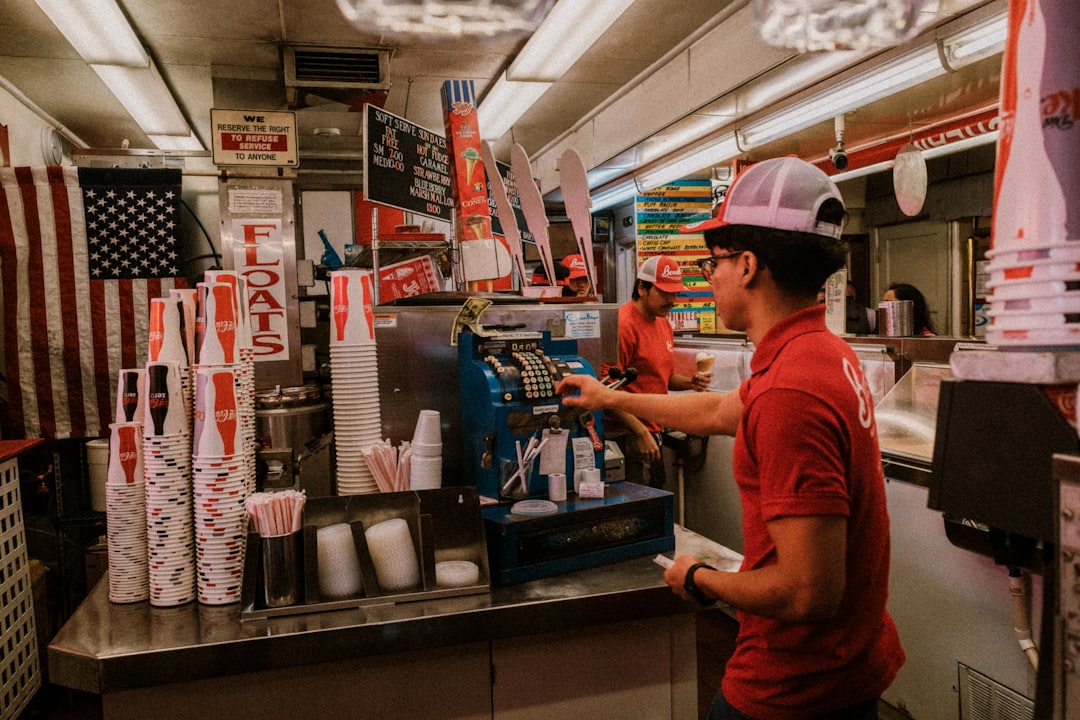
Half a month ago, late one night, I scrolled past a long five-star review. A girl wrote that her blood sugar had crashed, and she’d added a note—“Five-yuan tip, begging for priority delivery”—and a rider near the end of his shift braved the rain to bring her food, then bought a big bottle of Coke with his own money at a convenience store to swap for hers. He left a note: Don’t pay me back. Just take care of yourself.
What a lovely story. The problem was one other line in her original review: “The original Coke had gone flat sitting around, tasted bitter. I didn’t finish it.”
When I edited the video, I cut the first half of that sentence and blew up the second. Slapped on some beat-synced music, titled it Kind Rider Pays Out of Pocket to Swap a Coke—The Reason Will Make You Furious. Three hours: five hundred thousand views.
The comments flooded in, all in the same key: That store’s Coke is that bad? Avoid. Blocked. Just close already.
It was a burger-and-snack joint on the east side of the city. The owner’s surname was Kang—we called him Uncle Kang, and everyone at the station called his wife Aunt Kang. In the days after the video exploded, his orders dropped from over seventy a day to a dozen or so. He came to the station, screenshots of his lost orders fanned out one by one for Station Manager Zhou to see, then slammed his palm on the table hard enough to send the stapler flying. On his way out he stood at the door a moment, turned back, and said: “I’m not asking anyone to pay with their life. I just want my livelihood back.”
The station investigated for three days and got it sorted: the Coke had been bought by the rider himself, Chen Dashan, at the convenience store; the note was his handwriting. The restaurant had nothing to do with it, not from start to finish. Brother Chen was cleared, and some people online even apologized to him.
But Brother Chen being cleared didn’t warm Uncle Kang’s fryer. The curses came and went, came and went again, and the store went cold a little more each day. Nobody cared about that.
And then, there was that morning.
The girl at the door had dark circles under her eyes and a phone with a cracked corner held together by clear tape. She held the phone up to my face—on the screen was my video.
“I’m Lin Wanqing,” she said. “That review was mine.”
I got her a stool and poured her a glass of water. She held it in both hands, like a hot-water bottle.
She told me that for most of the past half month she’d been running between the hospital and home, her phone nothing but payment pages and work group chats. She had no idea what that video had become. The night before last, after her shift at her father’s bedside, she went back to her rented room and wanted to order from that restaurant again. The five-yuan tip—that was a debt of kindness she’d tried to repay three times by transfer, and three times Brother Chen had refused. She’d been wanting to find another way.
She opened the store page and froze. The rating had fallen from 4.8 to 3.1. The latest row of reviews was all “Coke tastes awful” and “heartless owner.” Some people couldn’t even be bothered with a picture—just two words: avoid.
She scrolled up and found her own two lines. Screenshotted, marked in red, blown up enormous.
“I stared at it for ten minutes,” she said. “Those two lines—I typed them out one word at a time. In the comments, people were cursing, saying stores like that deserved to go under. I looked at that line and my hands were shaking.”
Her team lead at work had grabbed her: If you stay silent about internet stuff, it dies down on its own. The moment you step in, the fire jumps from the store onto you. Your dad’s still lying in a hospital bed—can you carry that?
She sat in the hospital corridor past midnight. She thought of what her father used to teach her: Own the kindness you receive, own the wrong words you say—it’s all the same kind of taking responsibility.
“Those words came from my fingers,” she said, setting down the glass. “I have to take them back.”
At half past noon, Brother Chen came back from his shift. He set down his lunch box, saw her, paused for a beat, and asked nothing.
Wanqing stood up and bowed deep: “Master Chen, I’m sorry. You carried this for over ten days.”
“Carried what?” Brother Chen pressed her back onto the stool and sat down across from her, his voice low. “It got sorted out. That’s the end of it. Have you eaten?”
“I have,” she said. “I came to take my words back.”
Brother Chen took a bite of rice, and after a long moment said: “If you really feel bad, bring a message to the owner for me—his fried chicken cutlet is a proper cutlet. I picked up orders there so many times; his kitchen was never dirty in a single corner.”
Standing beside them, my nose stung. For all these days, with the internet cursing that store to the ground, he hadn’t said one bad word about anyone.
Sister Zhao came over, arms crossed. “Girl, this whole thing was words chasing words—the internet only ever wants to see half a sentence. But an apology alone won’t fix it. This needs seeing through.”
I gritted my teeth and handed over my phone. “Sister, there’s me too. I edited the video. Your original words—I cut off the head and the tail.”
I hadn’t deleted the editing project. She watched it clip by clip, slowly. When she finished, she handed the phone back. She didn’t curse me. She just said:
“All right. We’ll each own half. My words, your scissors.”
Reshooting a video, telling the story whole—that was her idea.
My legs went weak first. “Sister, if I shoot again, it’s compounding the mistake. My account’s on the line. My neck’s on the line.”
“You’re scared—I’m more scared,” she said. “But words, once they slip out, don’t climb back on their own. Someone has to chase them down and bring them home.”
Station Manager Zhou said no. He set his thermos on the table: “The station handles its own business. No more stirring things up online.”
She didn’t leave. She just stood there. Zhou refilled his tea twice, checked his watch, looked at her again, and finally set the cup down with a clack: “Three rules. Stick to the facts. No sob story. If anything goes wrong, you carry it yourselves.” Then he glared at me. “Especially you.”
Brother Chen was wiping down his scooter in the courtyard, didn’t even lift his head. “Shoot it. If you need a witness, count me in.”
As he said it, he wrung the rag in his hands over and over. We all knew why he was pushing so hard, and nobody said it out loud.
The video took two days to shoot.
Wanqing works in design; she did the captions herself. She said people in her line of work can’t stand to see words cut off head and tail. The first take, she forgot her lines, palms slick with sweat. Before the second take, she tossed the script aside: “I’ll speak from here.” She told the whole story of that night from the start: overtime, the hospital room, the blood sugar crash, the five-yuan tip for priority, the rain, the note, the big bottle of Coke. When she reached “take care of yourself,” she paused, took a sip of water, and only then finished.
I went on camera too. I said: I edited the last video. I cut the ending. I’m sorry. Then I put the cut sentence back on screen, word for word: The original Coke had gone flat sitting around, tasted bitter—the restaurant never knew. The restaurant only found out at the very end.
On the third day we went to the store to film. Uncle Kang blew up at the sight of the camera: “Filming what? This face of mine isn’t photogenic!” Aunt Kang wiped her hands on her apron and tried to pull him away. Couldn’t move him.
Wanqing walked up to the counter and bowed.
Uncle Kang turned his back. The fryer crackled and hissed. After a long while, facing the wall, he said:
“I’ve been frying chicken cutlets for twenty years. Never cheated anyone out of a single crumb.”
Aunt Kang stood to the side, wiping her eyes.
The video went up at eight in the evening. I’d wanted to post it at lunchtime for the traffic. Wanqing said evening—her father wanted to be the first to watch.
For the first two hours, the curses arrived first. Staged. The owner hired shills. The script was probably written in advance. I stared at the backend dashboard, palms sweating, refreshing every few minutes until my fingers went numb. The next day at work, a colleague even messaged Wanqing privately, urging her to delete the video, not to drag herself into it. She replied: “The words came from me. Even deleted, they’ll keep living in other people’s mouths.” When she told us this, Sister Zhao summed it up in one line: “This girl. Solid.”
The turning point was Brother Chen’s video.
He didn’t show his face. He just sat on a folding stool at the store’s entrance, back to the camera, twisting open a bottle of ice-cold Coke and handing it to someone off-screen. All you saw was his hand and half a shoulder.
He said: “The Coke swap was me. The note was me. I picked up orders at this store eleven times, and Aunt Kang gave me ice water twice. It doesn’t deserve this.”
In less time than it takes to eat a meal, “eleven orders, two glasses of ice water” was pushed to the top.
“None of the three of us did anything wrong. The fault was ours—only ever willing to hear half a sentence.”
“Tomorrow at noon, come to Uncle Kang’s. Give him back his livelihood.”
There were other comments too: Don’t turn sympathy into a new kind of cyberbullying. Nobody needs to be worshiped. Everyone just live well.
Wanqing asked me to pin that one. She said it was worth more than all the praise.
Saturday noon, I went to help set out stools at the store.
The line stretched from the counter all the way to the curb. Uncle Kang, apron on, darted back and forth, grumbling—“What’s the rush? Cutlets need a second fry to get crispy!”—the sweat on his forehead washing all the bite out of his words.
Wanqing sat in the corner. Aunt Kang tried to give her a free meal, and the two pushed back and forth until Aunt Kang gave in: “Then you have to come often! If you don’t, I’m losing out!”
Uncle Kang brought over a Coke and set it in front of her. “Half the ice. Try it.”
Wanqing took a sip. “It’s sweet.”
“Coke’s always sweet.” Uncle Kang took two steps away, then turned back to add half a sentence: ”…Sweeter next time.”
Standing at the door, it suddenly came clear to me: scissors can shear someone’s words off clean, but they can also stitch words back, stitch by stitch.
Wanqing took back her sentence. I took back my scissors. And Uncle Kang took his fryer and warmed it again, day by day.
On the way back, I asked her: “Sister, does this count as winning?”
She thought about it. “Not winning. Paying a debt.”
The wind came up through the mouth of the street, and the lights on the signboard swayed. For the first time in nineteen days, I understood: standing up for the words you’ve said isn’t caving in—
It’s treating people as people.
(End of chapter)
This story is adapted from real events. All names are pseudonyms.
Based on a true story