Hold On · Chapter 9: The Two Words, "Hold On"
September 19 — Clear
“Miss, whatever it is, eat your noodles first.”
I’ve carried this sentence in my heart for six years. Tonight, it turned over in its sleep.
I need to write down what happened today from the beginning. This afternoon I was designing the new menu for Uncle Kang’s restaurant, and when I got to the signature-dish section, I wanted someone’s handwriting for two characters: “hold on.” Everyone at the shop calls Chen Dashan “Top Bro,” and “hold on” is his catchphrase—perfect for the sign. But no matter how many times I wrote it, a dozen at least, the horizontal strokes didn’t look like horizontals, the verticals didn’t look like verticals, and the more I wrote, the more frantic I got.
Frantic, I reached for my phone, hoping to find a sample of handwriting to copy. I scrolled back through my photo album, back and back, until I hit six years ago. A photo sprang up: a bowl of plain noodles with a poached egg resting in the broth, the table corner gleaming with grease, and in the background an old wooden sign, its red paint reading two words—Hold On.
I held the phone without moving for a long time.
That was the noodle shop on the back street behind my university. The winter I failed the graduate school entrance exam, I went there often.
I enlarged the photo, then dug out of my tin box the note Chen Dashan had left that night of the cola incident: “I swapped in the big bottle of cola. Don’t pay me back. Just take care of yourself.” I laid it beside the photo under the desk lamp.
I’ve been a designer for six years; I work with letterforms every day. The horizontals start and end with a pressed pause, like two little nails; the verticals taper off with a faint flick down-left, an irrepressible little curve. The vertical stroke in “self” on the note, the vertical stroke in “hold” on the sign—written by one and the same hand.
The lamp lit up the two pieces of paper. Outside, the street-sweeping truck hissed past.
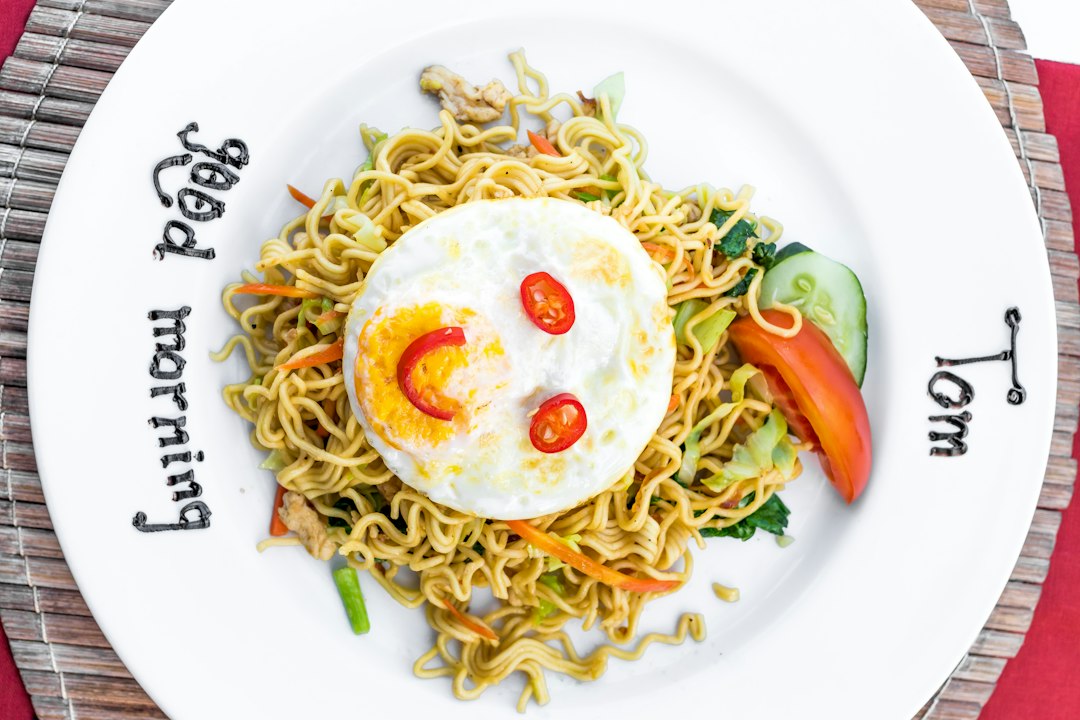
That night six years ago was just as cold. I’d missed the first-round cutoff by nine points. I didn’t dare call home, and I wandered the back street alone until just before closing time, when I went into the noodle shop and ordered the cheapest bowl of plain noodles. Two yuan fifty. When the bowl came, there was a poached egg in the broth.
I said, I didn’t order an egg.
The owner slapped the flour off his apron and said, on the house.
On the wall hung a wooden sign painted with red lacquer, bearing those very two words: Hold On. I ate my noodles through my tears and saved the egg for last, unable to bear to finish it. When he came to clear the bowl, he stood a moment and said: “Miss, whatever it is, eat your noodles first. As long as the noodles are hot, you can hold on.”
The next year, I passed.
It was never a coincidence. I’d circled for six years only to sit back down at that same table.
September 20 — Overcast
I skipped half a day of work and took the subway to the back street behind the university.
The noodle shop was gone. The space is a bubble tea place now, its glass door plastered with buy-one-get-one-free stickers. I stood outside for ten minutes, then went in and bought a cup of milk tea, didn’t even put the straw in, just squeezed it in my hand.
The mechanic next door still remembered. I said I was looking for the “Hold On Noodle Shop,” and he set down his wrench: “Old Chen, you mean.”
He said Old Chen’s craft was superb—a bowl of plain noodles that tasted like meat—but the man was stubborn. “The whole street raised prices; he alone wouldn’t. Said students don’t have money. That price was set the day he opened—the menu had yellowed.” Later his wife passed young, and he raised their daughter alone. The girl’s heart was weak from birth, and they were forever in and out of hospitals. “The shop was locked half the time. Locked, and locked, until one day it never opened again.”
What about the day it closed? I asked.
The mechanic thought for a while: “He gave all the tables and chairs away to the neighbors, took nothing for himself, just shouldered that sign from the doorway and carried it off.”
Where the sign went, he didn’t know.
I stood outside the bubble tea shop, squeezing and unsqueezing that undrunk milk tea. On my phone, my chat with Chen Dashan had sat frozen for half a month at his message—“Got the menu draft. Looks good.”—followed by a fist-salute emoji.
I typed a line: Uncle, do you remember the noodle shop on the back street?
Typed it. Deleted it.
The day he turned away the fundraiser, he’d said only one thing: I appreciate the thought, but my kid has a father. He wouldn’t even stand for a minute longer in a crowded room. That wooden “Hold On” sign—he’d carried it away, but refused to hang it anywhere anyone could see.
I couldn’t use a bowl of noodles from six years ago to knock on his door.
September 21 — Overcast
Tonight I delivered the finalized menu.
The shop was brighter than it had been last month. Uncle Kang was frying chicken; the kitchen had a new noodle pot, white steam billowing out of it in gusts. Chen Dashan stood at the stove in an apron, testing the noodles—Uncle Kang was adding a noodle station, with Old Chen at the wok. Uncle Kang whispered to me: “It’s not that I wanted a noodle station. It’s that his craft sitting idle was a waste, a sin against good food.”
Tintin was brought in after school and sat at a little table in the corner doing homework, a dog-eared storybook beside her pencil case. She made a face at me and whispered: “Auntie, my dad’s noodles are the best in the whole world.”
The first test bowl was set on the table, and Chen Dashan turned away at once to wipe down tables.
I bent my head and smelled it first. Lard, scallions, a touch of light soy sauce; the broth was clear, the noodles firm. One stir of the chopsticks—it was the taste of six years ago, not a note changed.
I ate without lifting my head. Uncle Kang leaned in: “Well? Beats my cooking, right?”
“Delicious,” I said. “Even better with an egg.”
The hand wiping the table paused, half a beat.
Uncle Kang roared with laughter: “Do you need to tell me about eggs? Farm eggs starting tomorrow!” He waved a hand. “Come on, is the signature dish named or not? I need to get the lightbox carved.”
I spread out the design. The first line of the menu was blank. I said I’d decided—“Hold On Noodles.” As for pricing, Uncle Kang had planned on eight yuan; I added a line: four yuan with a student ID. Uncle Kang smacked his lips: “Same temper as Old Chen back in the day.”—I said, yes, exactly that temper.
Then I pulled a page from my folder and pushed it across. It was the two characters I’d written out, stroke by stroke, from memory of that wooden sign: Hold On.
In the kitchen, all at once, there was only the sound of the broth rolling.
Chen Dashan stood there, looking at those two words, for a long time. The rag twisted and twisted in his hands.
“These characters,” he said, very low, “where from?”
“Six years ago,” I said. “The back street. A girl who’d failed her graduate exam ate a bowl of plain noodles, two yuan fifty, and found an extra poached egg in the bowl. She said she hadn’t ordered an egg. The owner said: on the house.”
He turned his face away and began wiping a table that was already spotless.
“The handwriting’s ugly,” he said. “Embarrassing to hang out.”
“It’s not ugly,” I said. “Those two words carried me through a year. During my second attempt at the exam, every time I thought I couldn’t go on, I’d think of that sign.”
Uncle Kang looked at him, then at me, and pulled off his apron. “I’ll go check the stove.” He ducked into the kitchen and let the curtain fall behind him.
The shop held just the two of us, and a pot of slowly simmering broth.
He spoke first, his Adam’s apple bobbing: “The egg was leftover stock. If I didn’t give it away, it’d be thrown out.”
“Uncle,” I said, “I’m not taking your calligraphy for free. For the sign design I’ll charge Uncle Kang my regular fee—that’s business. There’s only one thing I want from you. After Tintin’s surgery, bring her here for a bowl of noodles. My treat. Two eggs. One for her, one for her father.”
In the corner, Tintin’s head snapped up: “Two eggs? How many can I have?”
“They’re all yours,” I said. “Your dad’s egg, I’ll poach it separate, by the edge of the pot. No stealing it.”
Chen Dashan gripped the rag until his knuckles went white. After a long while, he said one word: “Deal.”
From the back room, Uncle Kang hollered: “If the noodles go soggy, don’t come crying to me!”
All three of us laughed.
The sky was heavily overcast when I left. He walked me to the door and said, looks like rain, head home early. I said okay. At the mouth of the alley I looked back, and he was still standing under the shop light.
Six years ago, that owner had stood the same way under the same light, watching a customer walk into the wind.
September 22 — Rain
It rained all day. The typhoon is still out at sea; it hasn’t arrived.
At the hospital, Father was in good spirits, leaning against the headboard as I told him about the shop. The nurse said his numbers had stabilized a bit. When I got to the “Hold On Noodles,” to that page of handwritten lettering, he suddenly asked: “That egg, six years ago—did you say thank you?”
I said no. I’d finished the bowl in tears and left.
Father said: “Then what you owed was never two yuan fifty. Writing this sign now—that’s you making up that thank-you. Kindness is a strange thing. If you don’t pass it back, it breaks off in your hands. Only when you pass it back can it keep walking forward.”
I sat by his bed for a long time.
On the way back the rain grew heavier. At the convenience store across from the hospital I bought a large bottle of cola. Not for low blood sugar—I haven’t had an episode in days—just to carry it in my hand and listen to it sloshing in the plastic bag the whole way home.
I put the note back in the tin box, properly this time. The two yuan fifty from six years ago—I can never repay it. I no longer need to.
One last line for tonight’s entry:
Six years ago, he handed me a bowl of noodles and said: whatever it is, eat your noodles first.
Six years later, I handed him a sign, wanting to say: whatever it is, we hold on together.
Kindness never disappears. It just takes the long way around, turns a corner somewhere in the crowd of the world, and comes back.
Tomorrow I’ll take the final menu to the shop. This time, it’s my turn to set the noodles down in front of him.
While they’re hot.
(End of chapter)
This story is adapted from real events. All names are pseudonyms.
Based on a true story