Passing the Light
Stay on one more stop, Cheng Wan thought. Ride to the last stop, and maybe by then it will be light.
But what comes after the last stop?
She’d held that question in her mouth all day. That phone call in the daytime—finally, she hadn’t picked up. Words about layoffs don’t need hearing twice. She was twenty-six, seven years in this city, twenty days of rent left. Her mother was back in the countryside, and whenever she asked, Cheng Wan always answered with three words: Doing fine.
She had packed half her luggage, then unpacked it again. Leaving meant paying a penalty; staying meant paying rent. She couldn’t bring herself to do either, so for now she could only sit, sit here in the night.
The last bus had long gone. The platform held only her, and a lightbox overhead. Inside it, a model smiled with bright teeth and red lips, smiling on the city’s behalf at the people of the night. She sat down, and her tears fell without a sound.
It was half past midnight when Old Jin swept his way to this stretch.
He had swept this road for nine years. Which streetlight had gone blind, which paving tile had curled at the corner—he kept a ledger of it all in his head. He had seen plenty of the night’s business: the drunk, the quarreling, the ones crouched on the curb crying. He never asked. Everyone in the night has their own darkness; to ask would be like lifting the corner of someone’s blanket.
The year he first came to the city, he sheltered from the rain under a bridge, soaked through, and an old man selling sugarcane broke off half a stalk and pressed it into his hands. “Sweet. Steadies the nerves.” That bit of sweetness, he remembered to this day.
So he stopped his broom, untied a pack of tissues from his handlebars—he used them to wipe his sweat, more than half a pack left—and handed it over, saying only:
“Wipe your face. Nights are cold.”
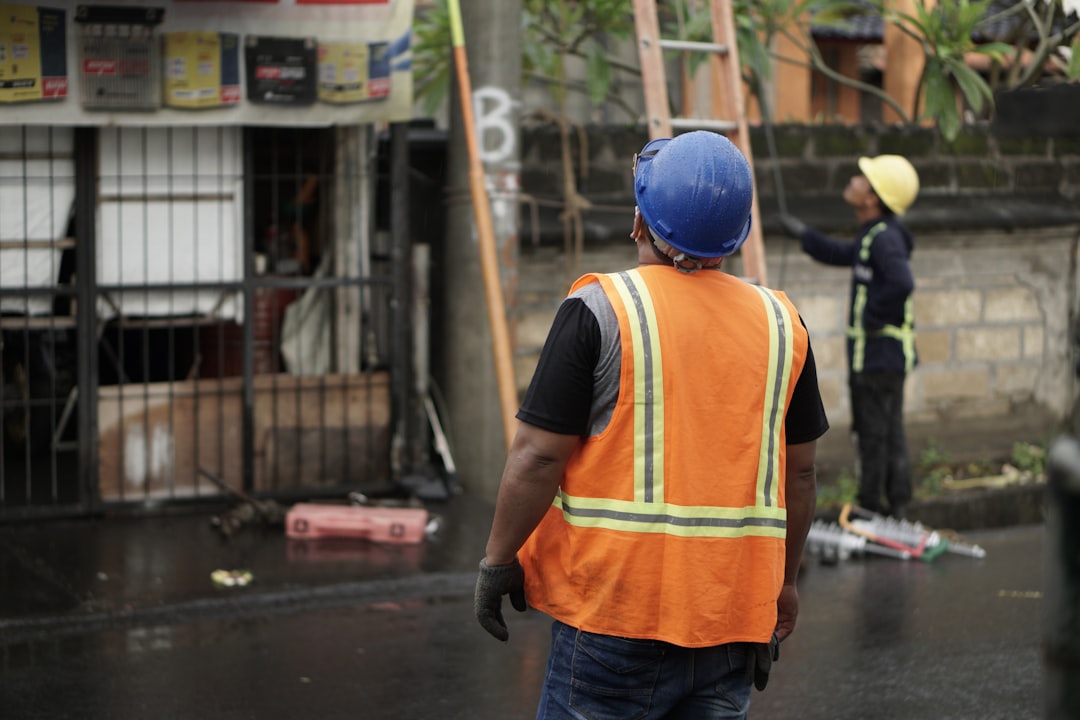
Cheng Wan took it, her throat too hoarse for a single word. Old Jin had already pushed his cart away, his orange vest flashing under the streetlights, like a small handful of fire—dimming for a stretch, then brightening again.
She made that half pack of tissues last. Once the tears were wiped dry, the night didn’t seem so long after all.
Three days later, late at night, at a small noodle shop in the south of the city.
Chen Mo propped his electric bike by the door and sat on the footplate, gnawing on two cold steamed buns under the streetlight. He didn’t know that a pair of eyes was watching him through the glass. That day he’d delivered medicine to a sixth-floor apartment; the elevator was broken, and he climbed the stairs one flight at a time. The customer complained he was late and gave him the day’s first bad review. He didn’t know if a second was coming.
Cheng Wan came out with two cups of hot soy milk and held one out to him:
“Drink it while it’s hot.”
Chen Mo froze, and only after a long moment remembered to say thank you. He had been running deliveries for two years. He’d received addresses, received urgent calls, received curses—but never before had someone called out to him through a window for anything other than picking up food.
Cheng Wan didn’t say much. She only thought: that night, someone handed her half a pack of tissues. When you’ve been given kindness, you have to pass it on. The logic was plain to the point of clumsiness, but it worked.
When the soy milk was gone, Chen Mo climbed back on his bike. The moment his headlight came on, even the day’s grievances didn’t feel so heavy. He called his mother and, as always, said: People here in the city, we’re all doing fine.
A few days later, three in the morning, outside the emergency room of the city hospital.
The order was a bowl of warm congee. The roads were bumpy after rain, and by the time it arrived the lid had cracked, half the congee spilled. Chen Mo stood under the light and looked at it, then turned and went into the convenience store, bought the same bowl with his own money, borrowed the shopkeeper’s pen, and scrawled a crooked line on a sticky note:
“The congee spilled, so I bought you another. Night shifts are hard. Drink it while it’s hot.”
When Xiaoman received it, it was the hardest hour of her shift. Her feet were swollen, a patient’s family member had just scolded her, and her stomach ached with emptiness. She lifted the lid and the steam washed over her face. She read that note for a long time, peeled it off carefully, and tucked it behind her work badge.
Past four o’clock, in the observation ward, an old man was on his IV alone. His children were three hundred li away; they wouldn’t arrive until daybreak. His hands shook; he couldn’t hold the cotton swab on the needle site. Xiaoman went over, pressed it down for him, tucked in his blanket, leaned close, and lowered her voice:
“Don’t be afraid, I’m here. It’ll be light soon.”
The old man looked up at her as if looking at a lamp.
At the end of the month, Cheng Wan took a job at an old bookstore in the east of the city. The pay wasn’t much, but what she got to tend each day was a roomful of quiet books. She thought that was a fair trade—and so, she felt, was the human heart.
That night, after working late, there she was again on the platform after the last bus, again by that lightbox—only the picture had changed. On the steps sat a young man in a wrinkled suit, his shoulders heaving, a phone clutched to his chest, crying without a sound. What he had been through, Cheng Wan didn’t know. But that kind of silence—she knew it.
She walked over and pulled a pack of tissues from her bag. These days she bought tissues two packs at a time: one for herself, and one, for whoever might need it.
She held it out and said:
“Wipe your face. Nights are cold.”
The young man looked up, his eyes red. He took it and didn’t ask why. Some things never need asking; some lamps exist precisely to find people in the dark.
Two streets away, Old Jin was sweeping fallen leaves, his orange vest swaying. Chen Mo’s headlight streamed across the bridge like a fast-traveling star. Xiaoman got off work and walked out of the hospital as the sky at the horizon turned pale as a fish’s belly. Most likely they would never meet in this lifetime. But kindness doesn’t read words—it only knows the road.
The lamps of this city go out one by one, and someone lights them again one by one. A lamp doesn’t ask where it will burn; it only keeps moving, from one pair of hands to the next.
Through the long night, the light is passed—and everyone is passing it.
This story is based on real events (drawn from a media readers’ collection on “moments when a stranger’s kindness healed you”); all characters appear under assumed names.
Based on a true story