The Warmth of a Tissue
In the inner pocket of his coat, Cheng Yu always kept one slot for a pack of tissues. The habit was three years old now. Every time the night train plunged into the undersea tunnel and the lights dimmed, he would think of that rainy evening three years ago.
He was twenty-six that night, drawing blueprints at a design firm in Kwun Tong. The breakup had no shouting, no betrayal—just two people whose roads had run together until, at some crossing, they suddenly didn’t. It was raining when she left. He carried her suitcase to the taxi stand, watched her get in, and the headlights swung away and she dissolved into the rain. He stood there a while before realizing he’d never opened his umbrella.
He worked overtime as usual, ate as usual, told his colleagues “see you tomorrow” as usual. Adults have to schedule even their breakdowns, so he made a plan—go back to his rented room, lock the door, and then, alone, take his time.
But the subway wouldn’t give him that time.
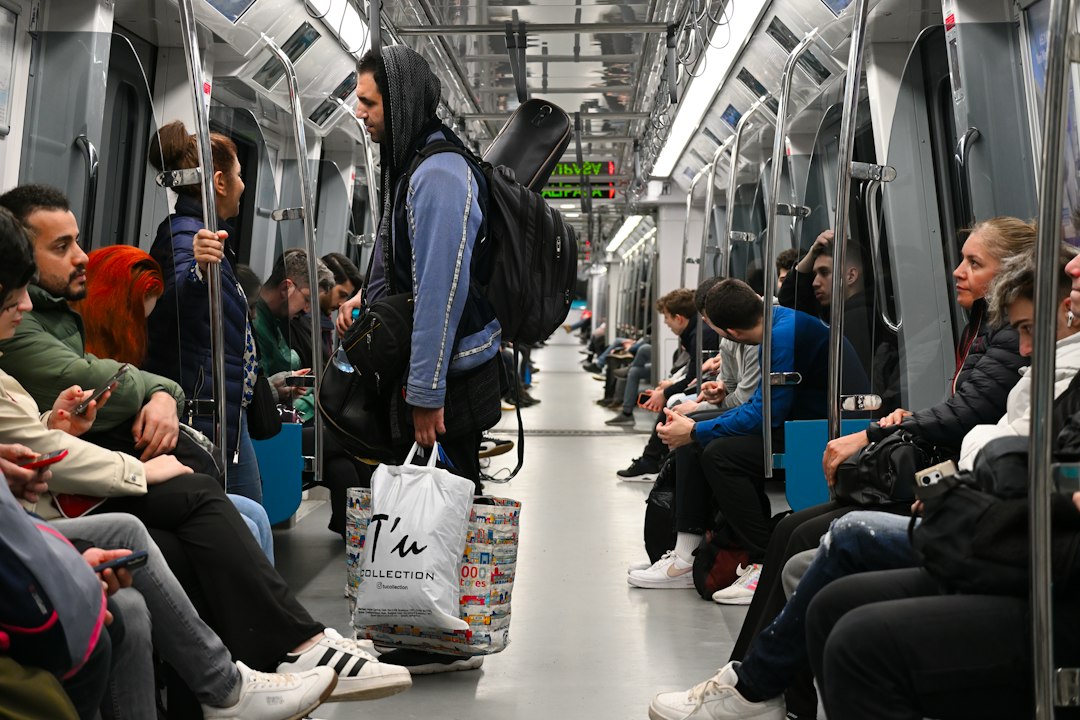
The last train pulled in, the car eerily empty. He chose a corner seat. As the train moved, the neon outside slid past window by window, as if someone were tearing the pages of these past years out of his life, one by one. At some page, the tears came without warning.
He hurriedly turned his head away. This city had taught him many rules, the first being: never lose composure in front of others. He held his voice down, shoulders shuddering, like water dripping from an eave, desperate not to be seen. But the last train was so quiet that even his suppression made noise.
The girl across the aisle looked up.
Cheng Yu would replay that moment countless times afterward. She didn’t come over. She didn’t ask “are you okay.” She didn’t wear that careful, pitying look. She simply took a sealed pack of tissues from her bag, rose, and—at a respectful step’s distance—set it gently on the seat beside him. Then she returned to her place and went back to her book.
From beginning to end, not a single word.
Cheng Yu stared at the pack. White wrapper, a tiny flower printed in one corner. He reached out, touched it, drew back, touched it again—like a child at his grandmother’s house daring, for the first time, to touch the warmth of the stove. The train entered the undersea tunnel and the lights dimmed. At last he opened the pack and pulled one out. The paper was soft, with a faint, clean coolness. Into that one sheet, he finished crying every tear he hadn’t finished crying—thoroughly, properly.
When he looked up, the girl was gone—off at some station he never knew. Doors opened and closed, crowds swapped and shuffled, and she had vanished without a sound, like rain falling into rain.
The half pack of tissues went into the inner pocket of his coat, where it stayed for years.
Life moved on. He changed jobs, moved apartments, learned to eat alone, fix light bulbs alone, go to the hospital alone. Once, late at night, he took a taxi from the hospital with red eyes. The driver glanced at him in the rearview mirror, asked nothing, just pushed the tissue box from the front seat back within his reach. He pulled one out and said thank you. The driver waved it off; old songs played on the radio.
In that moment he suddenly understood: this city is so crowded that people are separated by barely a shoulder’s width; yet sometimes, all the kindness between two people spans no more than the distance of a pack of tissues. No questions asked, no thanks required—just handed over. It doesn’t solve your problems. It only says one thing: I see you. Go ahead and cry. It’s all right.
Such warmth, in something paper-thin.
He had failed once himself. The spring before last, on the Airport Express, a girl lay slumped over the tray table, shoulders heaving. He clutched the tissues in his pocket, working out what to say that wouldn’t seem intrusive—and while he was working it out, his stop arrived. The girl got off, her figure swallowed by the crowd. The whole ride home he sat in torment, as if he owed a debt. From then on he understood: kindness has a deadline. Hesitate an inch, and fate shortens by an inch. A tissue doesn’t have to be offered gracefully. Offered at all is enough.
He began to notice all the wordless goodness hidden in this city: in a downpour, an umbrella tilting half a foot toward a stranger; on an escalator, a hand hovering guard behind an old man; and on rainy nights, a pack of tissues set down without a sound. None of it announces itself. All of it seems casual.
Last winter, again on the last train. He boarded and saw a young man sitting across the aisle—suit wrinkled, work badge still hanging at his chest, eyes rubbed raw. The man tilted his head back, throat working, fighting to hold something down. Cheng Yu knew that look too well—so well his chest tightened.
He took out a pack of tissues, rose, and—at a respectful step’s distance—set it gently on the seat beside the man, then returned to his place and looked down at his phone.
From beginning to end, not a single word.
The train entered the undersea tunnel and the lights dimmed. From behind him came the faintest sound—the wrapper tearing open, then a long-held breath finally released. He did not turn around. Some moments, turning around would only be an intrusion.
At his stop, he got off with the crowd and never glanced back at the young man.
On the platform, the night wind came surging up from the tunnel mouth. Cheng Yu thought suddenly: three years ago, on that rainy night—had the girl who handed him the tissues once had a pack handed to her the same way? And before that, who had handed one to that person? He couldn’t know, and didn’t need to. Wave pushes upon wave; no one can say where the first crest began—yet the whole sea, just like that, is set in motion.
That night on his way home, he stopped at a convenience store and bought another pack of tissues, and put it in the inner pocket of his coat.
White wrapper, the corner blank. He thought: next time, he would draw a little flower on it himself.
—Adapted from a true story. All names are pseudonyms.
Based on a true story