The Invisible Hands
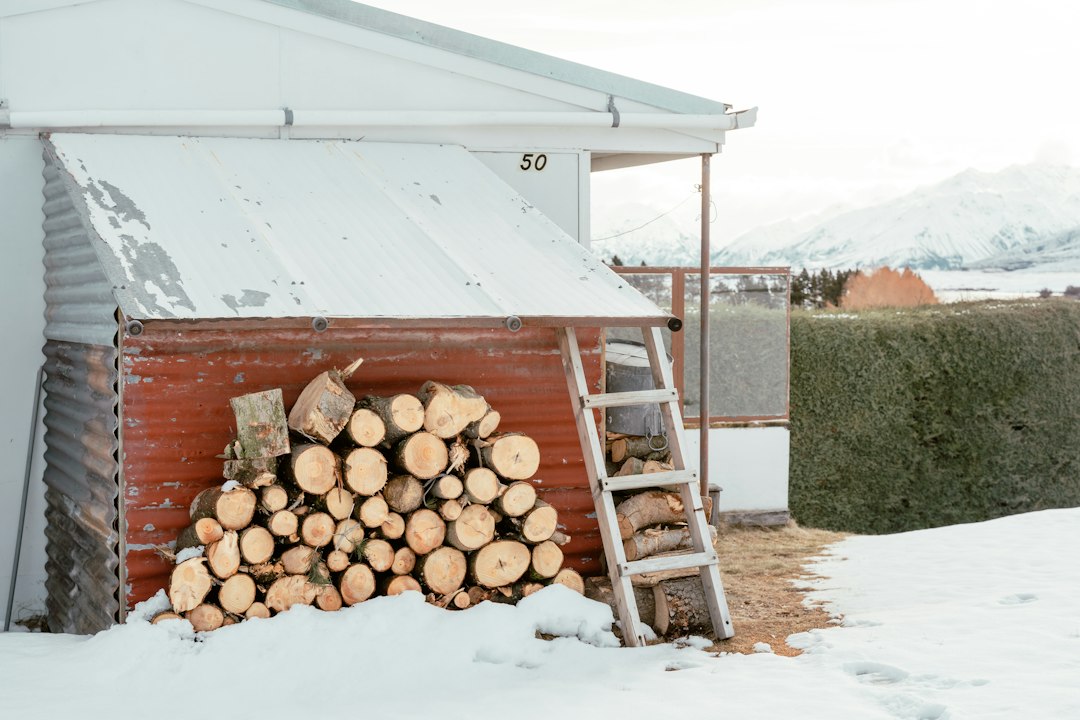
“Grandmother Zuya, who stacked your firewood so neatly overnight?”
November 4th, light snow. Aunt Luka’s voice came sailing over the fence like a pebble dropped into the still water of my morning. I pushed open half the window and saw Grandmother Zuya standing at her door in a gray scarf, shaking her head in bewilderment—though the corners of her mouth kept curling upward. “I don’t know. When I got up, they were already there.”
Ninety years old, long past being able to grip an axe handle. I made the first entry in my diary: The woodpile has grown by itself.
November 9th. The wind had died, and the sky was scrubbed clean.
The woodpile had grown half again taller. And that wasn’t all: the steepest, most treacherous stretch of slope before her door had been swept clear before dawn; the courtyard gate, creaking for half a year, had suddenly gone mute. The snow held only a line of small, quick footprints—little boots, more than one pair, deep and shallow, racing off toward the edge of the village.
That autumn, the village boys had gone strangely quiet. After school in the evenings, they no longer gathered behind the mill to play marbles. One by one, like fledglings returning to the woods, they vanished in an instant.
November 15th. Clear, and cold enough to crackle.
I rose before dawn and waited behind the curtain, determined to see what manner of hands these were. By the time my breath had fogged the glass, there was nothing on the snowfield but light—not a single figure. Yet in the moments I turned to put the kettle on, the freshly fallen snow was swept into a clean path down the slope once more.
I hadn’t heard a thing. They had come down like snow, and like snow, quietly melted away.
November 21st.
The old woman thought of her own way. At night she set a loaf of fresh-baked bread on the step, covered it with a clean linen cloth—the way one might lay an offering of flowers.
In the morning the bread was gone, and in its place stood a little bird carved of wood: wings slightly spread, tail feathers etched one by one, as if about to fly, yet loath to. She held the bird in her palm and gazed at it a long, long while, her eyes bright. “They won’t take my thanks, and they won’t take a single word.”
She set the bird on the windowsill. Later two more joined it, lined up in a row—a small squad of soldiers who refused to give their names.
December 2nd. A blizzard sealed the doors.
In the night the old woman developed a fever and could not get up. Aunt Luka waded through the snow to fetch the doctor from town; I hurried over as well. When we pushed open the door, we both froze on the threshold—the fire was roaring, the whole room warm as an early spring, oat porridge still steaming in the pot, and freshly split wood stacked in a neat little pile beside the hearth.
Someone had come in during the night, built the fire, laid in the wood, and gently pulled the door shut behind them.
The snow was falling so heavily. Whoever came in had erased even their own footprints for the world.
December 5th.
Rumors spread through the village. Some said it must be the forest warden; some said a traveling craftsman passing through; others said it was someone the old woman had helped in years past, come back to repay her kindness. She only laughed when she heard, and wiped the wings of her three wooden birds yet again.
The boys kept walking past with their schoolbags, heads down, not looking at one another—but their ears were red.
December 10th. Dusk blue as deep water.
In the end, I did see them.
Four children slipped out from behind the old woman’s backyard, tools over their shoulders, like a string of shadows chased by the twilight. Seeing me, they froze to the spot—four little animals, utterly still.
I called out no names. I only raised a finger to my lips.
They all burst out laughing at once, a laughter that set the snow-mist trembling, then turned and ran into the dusk. The last one was a step too slow—and I saw that hand: scarlet, cracked with fine fissures, wood shavings ground into the nail beds that no washing would remove.
So the invisible hands had a color after all. Frost-reddened, roughened by work. Hands like every thirteen-year-old’s hands, and yet unlike all other hands.
December 24th. Christmas Eve.
A thin snow had settled on the old woman’s windowsill; the three wooden birds stood shoulder to shoulder, snow on their backs, as if carrying a whole silent autumn on them. I sat with her over tea, and at last couldn’t help myself: “You know who they are, don’t you?”
She took a sip of tea, candlelight pooling in the creases of her smile. “Known for ages. The knife-work on those birds is exactly like what’s displayed in the school’s glass case. But if I’d called them out by name, they’d have been too embarrassed to come again.” She paused, her voice soft as ash settling over the fire. “A child’s kindness is shy. Someone has to close the door gently behind it.”
Suddenly I understood: there is more than one pair of invisible hands in this world. The hands that receive a kindness—and take care never to startle it—are invisible too.
The following March, at the thaw, meltwater dripped from the eaves like little bells.
The town paper, Youth World, ran a small notice: in a neighboring countryside, a group of teenagers had long been quietly caring for elderly people living alone. No one could find their names, so the paper called them “the Wanderers”—those unseen hands.
The paper made a full round of the village, and no one asked any questions. The old woman simply scattered another handful of millet by the windowsill, for the real birds. The real birds landed beside the wooden ones, hopped, pecked—and neither found the other strange.
And I, yesterday at dawn, quietly swept the snow from the doorstep of Vera, the widow across the river, and straightened her leaning fence, tamping it firm. The snowlight glared; there was no one around. No one saw me.
Closing my diary, I understood at last, completely: hands do not need names. They need only reach out when someone is in need, and withdraw before anyone can say thank you.
Just as snow falls into snow, without a sound—yet it makes the whole winter turn soft.
(Adapted from true events; all names are pseudonyms.)
Based on a true story