The Long March Went Up Into the Sky
“Son, when that rocket flies so high, can you see it up in the sky over Lake Yihai?”
The first time Mga Apu asked me this was last autumn. He had just finished sweeping the steps in front of the memorial hall, his broom leaning against the doorframe, and he stood in the sun with his head tilted back.
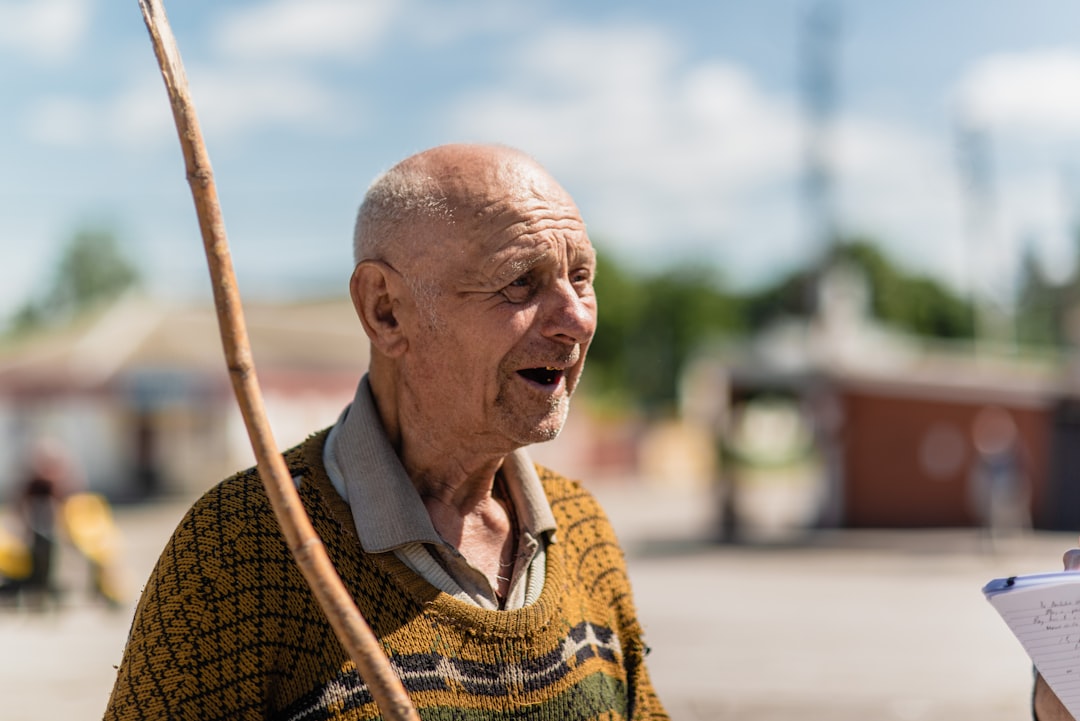
I’ve been a guide at the Yihai scenic area for two years now. Mga Apu was the first caretaker of the Yihai Alliance Memorial Hall—thirty years of keeping watch. Even after he retired, he still came every day. The registration ledgers in the hall stack up half as tall as a person; more than two million visitors have passed through. He had spent a lifetime telling people about the Long March—about the flag, about the lake, about that May of 1935.
That day I couldn’t answer him. The sky is so vast—who had ever looked after Yihai’s little corner of it? He didn’t press me. He just nodded and said, “You can see it. Mountains can’t block the sky.”
That old story, I’ve heard him tell dozens of times, and it sank deeper into me with every telling. When he began, his voice would drop low.
In May of 1935, the Red Army came into the mountains from Daqiao Town. My great-grandfather—he always said it this way, “Apu,” which means grandfather in the Yi language—was sixteen that year, herding sheep by the lake. This army was nothing like the soldiers who had passed through before. They didn’t barge into villages, didn’t touch the grain, spoke gently, faces weathered by the road but eyes full of light.
May 22nd, by Lake Yihai. The water was flat as a slab of stone. The Red Army commander and the chief of the Guoji clan, following the old custom of the Yi people, dripped chicken’s blood into a bowl, mixed it with lake water, raised it, and drank. A blood oath of alliance. Then the commander took down a flag: red cloth, yellow characters—Chinese Yi People’s Red Army Guji Detachment—with a five-pointed star stitched at the corner.
“My Apu stood outside the crowd, watching over two rows of shoulders.” When Mga Apu told this part, his voice sank low, as if afraid of disturbing the lake. “He said the red on that flag wasn’t like the sun. The sun is gone once it sets behind the mountain. That red was seared in—seared into the cloth, and seared into people’s hearts.”
For the decades after, the flag stayed hidden in the village. In those years of chaos and war, the flag could not see the light. It was sewn into a felt cloak, stuffed into a crack in the wall, wrapped in cloth layer upon layer. The old man, dying, passed it to his son; the son passed it to his grandson. What they passed down wasn’t an object—it was a sentence: Yi and Han are one family, and someone must keep watch over this family’s promise.
Later still, the flag was given to the state. What hangs in the memorial hall is an exact replica; the real flag went to a higher place, watched over by better hands. That was when Mga Apu entered the hall. He told the story for thirty years, and the eight characters he loved most were: A single spark can start a prairie fire. A small flame, he said, has nothing to fear—fire is a thing that grows brighter the more it is passed along.
The year before last, his nephew came back from Guangdong and took a job at the scenic area. The young man learned to speak in his uncle’s tone: “Out there you earn money. Here you keep the roots.”
Mga Apu had one wish, spoken of for years: to see a rocket launch, once. He’d seen them on television, he said. That doesn’t count.
“The road that army marched back then was called the Long March,” he said. “And the star that goes up to the heavens these days is also called the Long March. Same name—it’s all one road. I ought to go see it off.”
This June, the chance came. The county, the scenic area, and the comrades over in Xichang together made his dream come true. My supervisor asked me: son, will you accompany the old man? I said yes.
June 15th, the car left the mountains. He spoke little the whole way, a cloth bundle hugged in his arms. Inside were handwritten notebooks—thirty years of tour scripts, the page edges worn to fuzz—and one faded photograph: his young self standing at the memorial hall’s entrance, the flag behind him.
On the 16th, at the viewing ground outside the launch site. A great crowd, a deep blue sky. In the distance the launch tower stood quietly, like a tree that hadn’t yet put out leaves.
“That’s the place?” he asked.
“That’s the place.”
The loudspeakers announced the name first: Long March 3B. He mouthed it softly after them. The countdown came through the speakers, each number falling like a stone striking the earth. He stood; he wouldn’t sit. I said, Apu, sit down. He waved me off, eyes never leaving the tower.
Ignition.
Light arrived first—a flash of white, as if a bolt of cloth had been torn open beneath the tower. The sound came chasing after, rolling over from beyond the hills; the ground underfoot went soft, and my chest went numb. The rocket rose, slowly at first, then faster and faster, a plume of white smoke trailing behind as it plunged straight into the sky.
The crowd was shouting, snapping photos. I didn’t move. I watched Mga Apu.
His right hand pressed over his left breast, he stood ramrod straight. His lips were moving—silent at first, and then the sound came. He was singing. The melody was old and steady:
“The Red Army is our own dear brothers; the Long March fears no road however long…”
It was “Deep Affection, Lasting Friendship.” A Yi melody. He didn’t sing loudly—word by word, like reporting the road up to heaven.
The wind lifted his white hair. The rocket shrank to a bright point in the sky, then to nothing. He kept gazing, hand still pressed to his chest, as if holding down something that might leap out. The water in his eyes traveled down the creases of his face. He didn’t wipe it away.
Mountains can’t block the sky. That day, I believed it.
On the ride home, he never slept. As we neared Yihai, he spoke.
“That day, my Apu stood by the lake and watched that flag walk into the village,” he said. “Today, I stood at the foot of the mountain and watched it go up into the heavens.” He paused. “Same truth. Both are walking toward the light.”
I rolled down the window. The wind came in, carrying the smell of the lake.
The next day, before closing, he wiped down the exhibition hall one more time. In the glass case, the replica flag lay quiet in its red cloth, the five-pointed star facing the door. Visitors came in asking about the Yihai Alliance, and he tipped his chin toward me: “Let the boy tell it. He tells it well—he can keep telling it.”
So I told it. About the flag, the lake, that bowl of blood wine in May 1935; about ninety-one years of road, from the alliance stone by the lake to the launch tower—step by step, from the earth, up into the sky.
A single spark fears no long road. It only fears that no one takes up the walk.
And as far as I can see—someone is walking.
Based on a true story