The Door Will Open
Before I started writing, I sat in my rented apartment for half an hour. It was eleven at night, and Shenzhen’s neon was still blazing away, blazing with total confidence. This city has at least ten million lights, but my mind held only one other—out at the foot of the Kunlun Mountains, a village so small you’d need two fingers pinched together to find it on a map, and the streetlight at its entrance.
It isn’t this bright. Yet it outshines every light here.
I thought about it for a long time and decided on the clumsiest approach: a letter, handwritten. I typed it out on my phone three times and deleted it three times. The words always came too fast, too quick to hold what happened that night.
Dear Brother Bakhtiyar:
Seeing these words is like seeing my face. I’d only ever read that phrase in other people’s letters; only when it was my turn to use it did I understand its weight.
You’ve probably long forgotten us—that night in late June, when five dust-covered Shenzheners stood at your door like five stones rolled down from the mountains. But for those five stones, everything from that night is carved deep, so deep that three months later we still had to pick up the pen.
First, the background. We’re motorcycle riders, headed west from Shenzhen. The plan was neat and tidy: route, fuel, lodging, all laid out clean in our phones. Then we entered the Kunlun Mountains, and a landslide smashed every bit of that tidiness to pieces. A detour, then another detour; the GPS wandered the mountains like a lost child. We rode fourteen straight hours, our tanks nearly dry, the road hemmed by a river valley on one side and a cliff on the other, and the night dark with no room for negotiation.
Fourteen hours. In Shenzhen, that’s enough time for three overtime shifts, two meetings, a whole season of a show. In the Kunlun Mountains, it was only enough to teach us one thing: how small a person is.
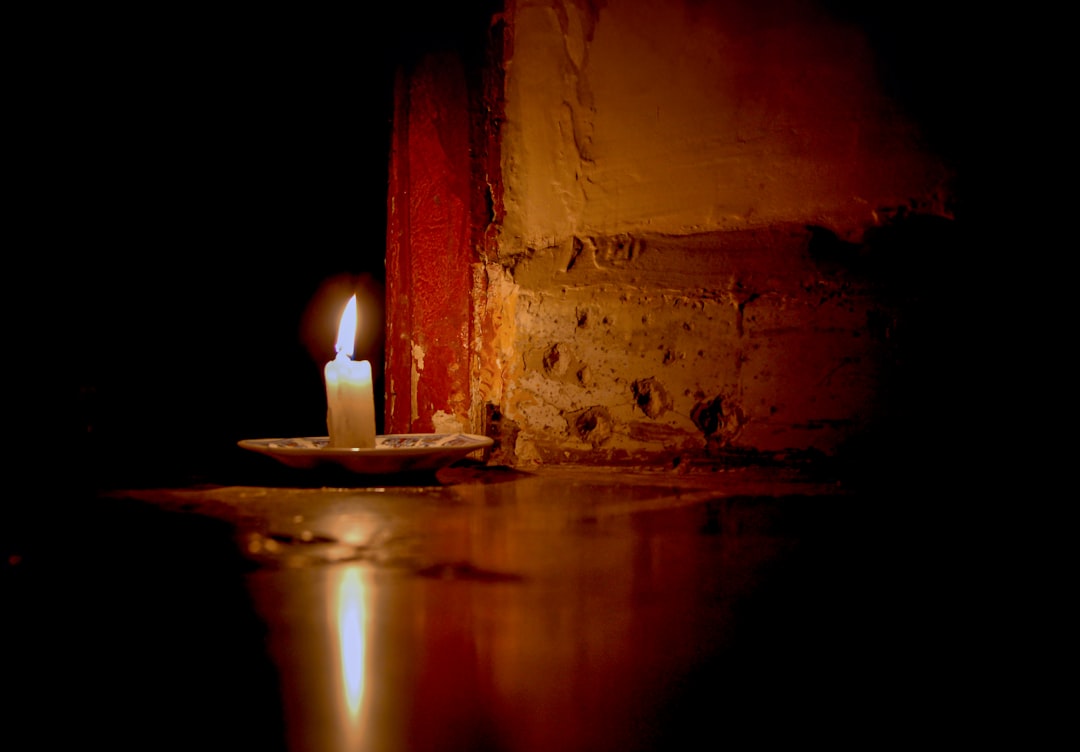
At two in the morning, we saw that light at the entrance of your village.
Everything around was black; only it glowed, like a hole burned through black paper, and behind the hole lay all of the human world.
We hesitated before knocking. Knocking on a stranger’s door at two in the morning—in Shenzhen, we wouldn’t dare. But in that moment we had no choice, so we chose to trust.
You opened the door.
You didn’t ask who we were, where we came from, what we were doing at that hour of the night. You first stepped aside to let us in, then turned to boil water. The hot water came out, then the naan, still fragrant from the oven’s fire when you broke it open. You said there was fruit in the house too, told us to help ourselves. We grown men, stubbled and covered in dust, felt in that moment like schoolboys just let out of class.
You gave up your child’s room. Where your own child slept that night, you never said, and we never dared to ask. You simply laid down an extra quilt and said the nights are cold in the mountains. I slept on that quilt, atop your child’s bed. I have never slept in a bed so soft—not because the quilt was soft, but because my heart was.
Later that night, your younger brother Maiergan came over. He’d served as the village Party secretary for years. We were still stiff and formal at first, but the moment he spoke, all that stiffness scattered: “I’m a Communist Party member. You can trust me.”
Brother, we five have brought up that line many times since returning to Shenzhen. Not because it was earth-shattering, but precisely because it was so plain. Deep in an unfamiliar night, a sentence that stakes one’s entire self on it is worth more than any guarantee. That night, in the depths of the Kunlun Mountains, on utterly foreign ground, that one sentence alone turned the place into family.
What weighed on us even more came afterward.
Old Chen and I got altitude sickness, heads pounding too hard to sleep, and we’d need fuel by dawn. But there was no gas station in the village; the nearest was in the county seat. Your neighbor Nuer was already on his way home that day, but when he got the call, he turned around without a word and headed for the county. At four in the morning, he hauled twenty liters of gasoline to your front door. We reached for our wallets; he waved us off, waved so firmly, as if what we were handing him was a fallen leaf.
Brother, those twenty liters of gasoline—half burned in the fuel tank, half in our hearts.
Back in Shenzhen, we pooled some money and mailed it along with our thank-you letter. You sent it back. We sent it again; you sent it back again. Back and forth, like two stubborn old friends fighting over a bill. In the end we gave in: some debts can’t be settled with money.
So we changed our minds—come visit us in Shenzhen.
Come see the sea. You’ve guarded the snow line and the pastures all your lives; it’s time you saw the sea. I’ve looked it up: from your mountains to Shenzhen, a bus ride then a flight, two days’ journey. Five of us for five of you, spots already assigned—don’t any of you be polite about it. When it comes to “waving off refusals,” we can’t out-practice you; but when it comes to hosting a meal, we Shenzheners have confidence.
By the time this letter ends, dawn is near. The neon is fading; the sky is a pale gray. I think again of that early morning: five stones rolled up to your door, and you opened it. Just that simple. Many of the world’s hard problems, it turns out, have simple solutions—someone knocks, someone opens.
The Kunlun Mountains run deep, and the night is long. But somewhere a light is always on, and somewhere a door will open. We wrote this line in our first thank-you letter, and now I write it again. Written to you, and to everyone still traveling through the dark: the light is real, the door is real—and once it opens, don’t be afraid.
We’ll be waiting for you. The next door, it’s our turn to open.
Respectfully yours—
We discussed it seriously and decided on this old-fashioned phrase. Only it was worthy of you.
“The Bespectacled One” from Shenzhen Writing on behalf of four brothers September 17
(This piece is adapted from true events; all names are pseudonyms.)
Based on a true story