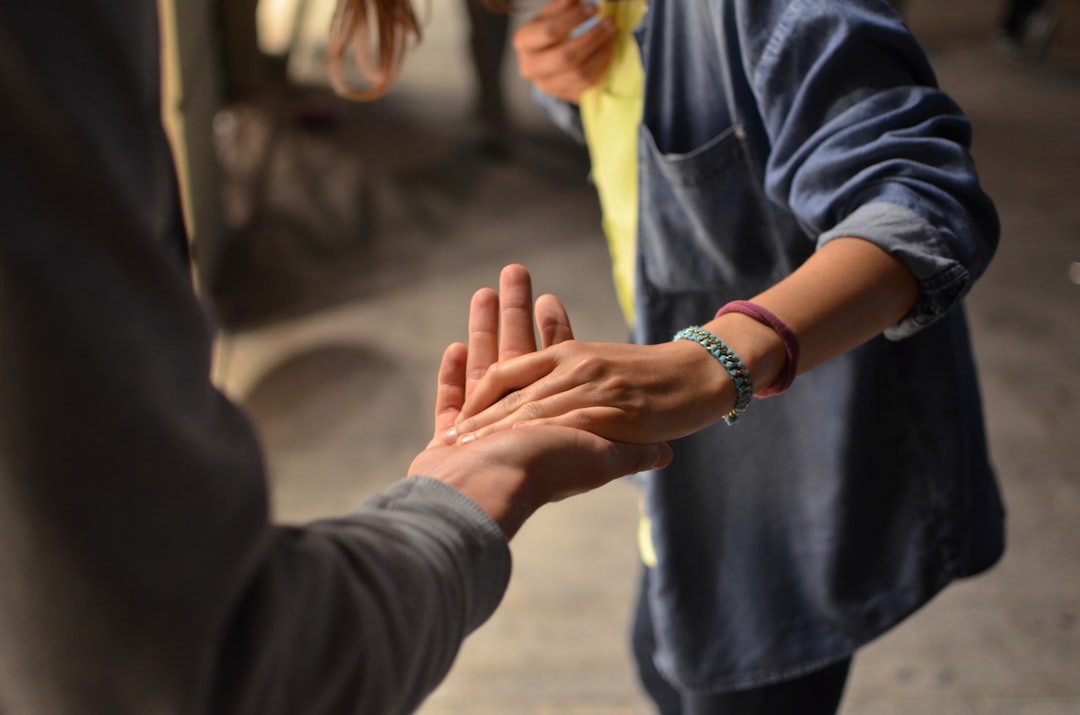
Can't Just Walk Away
What were they really after?
When you asked yourself that question, you had already been sitting in your hotel room in Jingning for an entire evening. A dozen openings had been crossed out on your notepad, and all that remained was the circle of yellow cast by the desk lamp. The awards ceremony had been the afternoon before yesterday, yet those four words still rang in your ears—couldn’t just walk away. The woman who said them had her trouser legs rolled up, and when she went on stage, her hands didn’t know where to go, so she just kept rubbing them together, like someone just pulled out of the water, still not dried.
The truth was, you had been carrying that question for thirty years. Thirty years without daring to say it out loud—because saying it would drag up that river.
The afternoon before yesterday, the hall was packed. The big screen ran through one hundred and fifty names, and the emcee read out the citations slowly, as if afraid that reading too fast would shortchange someone. The honorees went up one after another, and not a single one could give a pretty speech.
There was an old man honored for helping others. Asked how many years he’d been at it, he said he couldn’t remember, then added: “If there’s half a mouthful left in the bowl, you pass it to someone else first.” His tone was as casual as if he were describing what he’d had for breakfast.
There was a woman honored for bravery. The emcee asked her whether she’d been afraid when she went into the water. She rubbed her hands, thought a moment, and said: yes, she was. Then how did you bring yourself to jump in? She wiped her hands on her jacket: “A child thrashing in the water—who could just stand there?” A beat of silence in the audience, then someone began clapping, and the applause would not stop. The emcee pressed on: and if it happens again? She thought for a long time—so long the microphone seemed to fret on her behalf—and finally said only: “I couldn’t just walk away.”
Four words, and she said them lighter than anyone.
In the audience sat others too: those who had kept a single promise for decades, those who had done one thing down to their bones—one who couldn’t let go of a lighthouse, one who couldn’t let go of a lectern, one who couldn’t let go of a mountain road. A teacher who had guarded a mountain school for thirty years smiled at every question and said, in the end, just one thing: “The kids call me teacher—that’s all.” And there was the man who had lived out the words “you raised me small, I’ll see you old” as his every single day. Asked whether it was hard, he froze for a long moment and shot back: how does that count as hard?
The short film showed their hardships too. Someone had been falsely accused of causing an injury and sat on his doorstep half the night; someone had asked herself in the dark what she was really after. When the lights came up, those people sat below the stage, no grievance on their faces. Dawn came, and out they went again, same as ever. You, who make a living recording things, know how much weight is pressed into the words “same as ever.”
But that still isn’t the river you came here to write about.
Thirty years ago, in summer, you were nine.
The river was wider than you remember. What you remember is the cold—the cold that shot up from the soles of your feet in an instant; the sound of water rushing into your ears; the sky wavering on the surface, wavering into a blur. You thrashed, couldn’t cry out. Shadows flickered on the bank, and no one dared come down.
Then it was a pair of arms that caught you. The hands were rough, and as they dragged you toward shore you clutched that soaked collar for your life. On the bank, the person pressed the water out of your belly, and when they saw you start to sob, they rubbed their hands—rubbed them just like that—and mumbled something, then turned and walked away.
Your mother went along the river with a basket of eggs, looking. She never found them. The villagers all said they didn’t know anyone like that—must have been just passing through.
What that person said at the time, you’ve turned over in your mind a thousand times over the years. Now you know. It was surely just that one line: a child thrashing in the water—who could just stand there?
Your life was fished out from beneath those four words: couldn’t just walk away. But that person was not on the list.
In the middle of last night you sat back down at the desk, still unable to write. Then suddenly you understood where the problem lay: you had been trying to wring an answer out of the question “what were they after?”—but they couldn’t give you one. Their answer wasn’t in their mouths; it was in their days—the half mouthful in the bowl, the thirty years on the mountain road, that one moment in the river.
This morning you went to the corner for beef noodles. The morning market was in full swing. At one stall, half a crate of apples had collapsed, apples rolling everywhere, the woman hawking them crouched down in a flustered scramble. You went over and set the crate upright first, then helped her gather the apples back in one by one. One pair of feet after another stopped—a few helped hold the scale steady, someone handed over an empty cardboard box. Nobody said anything. When it was done, everyone went their own way.
An electric scooter zipped past you, a scrap of tarp bungeed to the back, weighed down with half a brick. And you thought of what the film hadn’t captured: the person who held an umbrella over a stray cat in the night rain; the one who lifted a fallen old man under the streetlight; the one who shoved their umbrella into a stranger’s hands and ran off soaked. No one saw. It didn’t need to be seen.
One hundred and fifty names on the list. The river beyond the list—you saw it this morning at the market.
Back at the hotel, you finished the piece. The first sentence was:
“They all said it was nothing.”
You wrote that river from thirty years ago into the piece too, and the person who left no name behind. And only as you wrote the final line did you truly understand: a single firefly’s light doesn’t carry far. But when fireflies fall into a river, one after another after another, the river lights up—and the ones crossing it are no longer afraid.
You hit send.
Outside the window, the sky had gone fully bright, and the sounds of the morning market rose up in waves—very much like the sound of water.
This piece is adapted from true events; all names are pseudonyms.
Based on a true story