A Little Closer
One. The Plastic Sheeting
The wind rose at dusk, and the plastic sheeting began to slap and slap against the tent.
The moment Tamar heard that sound, she thought of the tiles of the old house.
When it rained on the old house, raindrops struck the tiles—sparse at first, then dense, like someone scattering beans across the roof. Grandma would call from the kitchen: Tamar, come inside, the rain’s about to shut the door. And she would run in from the rain, her cloth shoes splashing high through the puddles.
But this was not the old house.
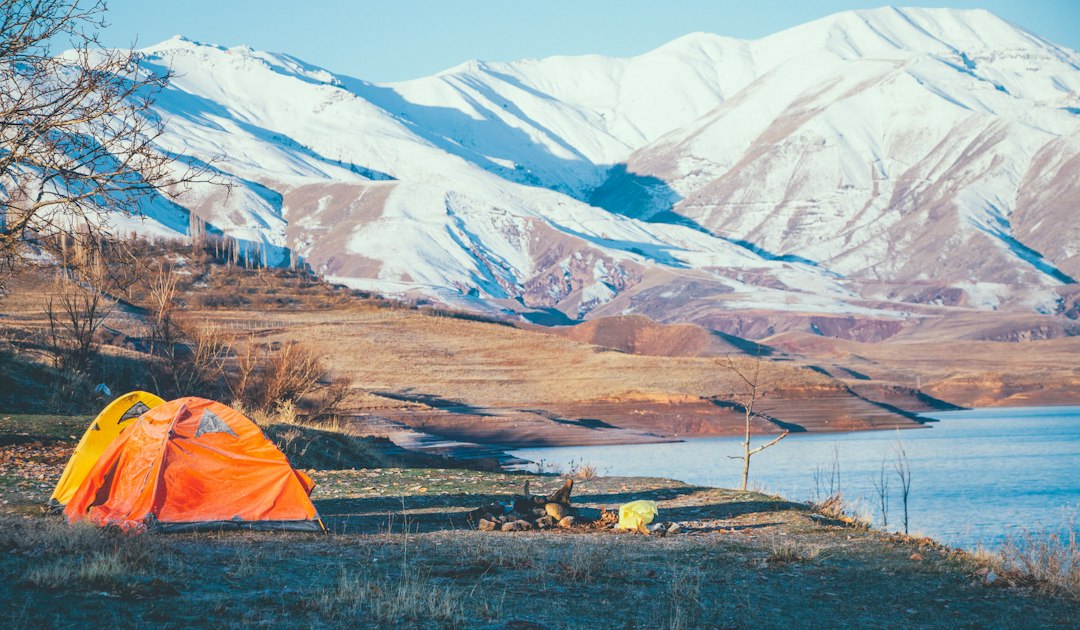
This was a tent in the Beqaa Valley. Outside the tent, fields; beyond the fields, a road; beyond the road, more tents, one pressed against the next, stretching far into the distance. Farther still, two ranges of mountains—the nearer one wore snow on its peak from the first days of winter.
Her mother crouched at the tent flap, pasting strips of cloth cut from an old banner over the tears in the plastic. The paste was made from boiled flour, thick and white, stretching in threads from her fingers as she pulled.
“Hold that end,” her mother said.
Tamar held it. The wind lifted a corner of the sheeting, and the two of them pressed it down together. Her mother smoothed the strips flat, one by one, carefully even.
“Freezing tonight,” someone called from the next tent. “Radio said so.”
Her mother didn’t answer. She smoothed the strips two more times, then rose and set a stone on top.
Freezing. Tamar knew what freezing meant.
Freezing was breath turning white in the air; was the water in the jug growing a thin skin of ice by morning, needing a tap of a finger to break; was Lina curling her little feet up before slipping into bed at night, refusing, for the longest time, to put them down.
Lina was four. Her brother Karim was six. She herself was thirteen.
The wind passed again, and the plastic sheeting slapped, slapped.
She stood at the tent flap a while, listening. And as she listened, the sound became raindrops on tiles again—sparse at first, then dense.
“Come in,” her mother said. “There’s work inside.”
She went in. Life, after all, had to go on living first.
Two. The Kettle
A kettle sat on the stove.
The stove was half an old oil drum—their father had hauled it back from the scrap heap, cut out a stove door, fitted on a length of chimney pipe that pierced the plastic sheeting and curved at the top to keep out the rain. The fire was small, and the fuel smaller—firewood was precious; they burned dry branches and corncobs their father gathered from the fields, and the flames burned quietly.
The kettle began to sing, thin at first, then loud.
Lina sat on the felt mat hugging her knees. Her two little braids had been tied by Grandma on the day they left home, and never undone since; the red strings had faded to pink. Karim lay beside her. He’d been coughing since nightfall.
Cough, cough, cough. The sound wasn’t loud, but each cough landed somewhere in the chest.
“Come here.” Her mother set down her work, gathered Karim onto her lap, and cracked the kettle lid ajar. White steam billowed out. “Breathe it in. Breathe the steam—loosen that throat.”
Karim breathed in the steam. It had no taste at all, only heat.
Tamar poured half a cup of hot water and handed it over. There was little sugar in it—sugar was counted out by the spoonful, and her mother’s spoon always dipped shallow and rose shallower.
“How many spoonfuls?” Lina asked.
“One,” Tamar said.
Lina believed her. She was only four. Tamar watched the faint trace of dissolved sugar on the side of the cup and didn’t say that the sugar jar was nearly scraped bare.
The wind walked outside; the chimney pipe moaned; firelight flickered on the tent walls, swelling and shrinking. In the pauses of the fire, her mother took inventory: a bit less than half a bag of flour, one bowl of rice, two fingers of oil left. She counted slowly, and when she finished, she tied each sack and jar shut.
The kettle kept singing. Karim breathed the steam, sip by sip, and the coughing thinned away.
Three. The Field Ridge
Their father ate his supper on the ridge between the fields.
Tamar carried it to him: two flatbreads wrapped in cloth, still warm, and a small handful of roasted beans. The potato harvest was finished; nothing remained but ridge after ridge of earth. The first snow was due in a few days, and the work in the fields was nearly done.
These days their father hauled sacks. Potatoes being loaded onto trucks, fifty jin to a sack—he bent, straightened, and the sack landed on his shoulder. He padded the shoulder with an old fertilizer sack, but where the padding failed, two calluses had hardened.
He squatted on the ridge, rubbed the dirt from his hands—two rubs, a wipe on his trouser leg—before taking the bread.
His hands were cracked. A split across the web of his thumb, several across his knuckles, like a dried-up riverbed; in the deepest cracks ran a thin line of red.
“Papa, put some paste on them tonight,” Tamar said.
“Paste is for the sheeting.” He bit into the bread. “The paste is for the plastic.”
“We’ll save some for you too.”
Her father smiled and said nothing, took another bite, and tore half the flatbread for her.
Behind him were the mountains. The near one was white at the summit—the snowline had crept a little lower these past days. Farther on, beyond it, was where Grandma lived. Her legs were bad; she hadn’t come, and stayed at her aunt’s house. Their last phone call was a month ago. Grandma’s first question: Is the plastic sheeting pulled tight? Second question: Do you have the kettle? Only third came everything else.
Grandma had a saying Tamar remembered: When the fire is small, people move a little closer.
As a child she hadn’t understood—she thought it was about the stove. When the stove fire was small, the whole family sat around it, pressed together. Later she understood a little. Later still, a little more.
In the old house in winter, Grandma dried orange peels on the stove. After the oranges were eaten, the peels weren’t thrown out; they were laid in a circle around the stove mouth to bake, filling the whole room with the scent of orange. When dried, they went into a tin box, and anyone who caught a chill got a handful steeped in a bowl of hot water. When that bowl sent up its steam, it smelled of orange—and of fire.
Before darkness settled, their father gathered his empty cloth bag. “Let’s go back. The wind’s picking up.”
Father and daughter walked the field ridge, one ahead of the other. The wind pushed at their backs, set their old shoes swishing.
Four. The List
The list had been registered two days before.
That day a small white vehicle had come, blue lettering on its side. A woman stepped out wearing a knit cap, a clipboard under her arm, a sheaf of papers flipping in the wind.
She went tent to tent, family by family, asking: how many people, how many children, what ages. When it was their family’s turn, Karim was coughing.
“My name is Rima.” She crouched down first, so that she was shorter than the children. “We’re from the children’s fund, here to register names. Winter supplies are coming.”
She took out a soft measuring tape, measured Karim’s height, then pressed the back of her hand to his neck, his forehead. Finally she asked Tamar: “And you? How old?”
“Thirteen,” Tamar said.
“Thirteen.” She wrote it down in square, careful letters. “Have you been to school?”
Tamar didn’t answer. Her mother answered for her: “Two years now.”
Rima’s pen paused. She looked up. “In spring there’ll be classes in the big tent—math, reading. At thirteen you should be in middle school.”
Tamar said nothing. At her old school she’d been best at math, and she’d loved drawing even more than math. Her old notebooks were half equations, half little figures.
When Rima finished the last name and closed her clipboard, she glanced back at the tent’s plastic sheeting and said to the mother: “Patch any tears right away. The wind shouldn’t blow straight onto the children.”
“We’re patching,” her mother said. “Every day.”
“Good,” Rima said. “Hard days—you patch them every day.”
At the tent flap she added one more thing, to no one in particular, like a pledge: “Before the cold snap comes, we’ll deliver the winter things. Coats, boots, blankets—all of it. Remember: we’ll beat the snow.”
“Before it snows?” Tamar asked.
“Mm—before it snows.” Rima smiled and got into the vehicle. The white car raised a little dust at the end of the field road.
Tamar watched the dust settle and thought: so snow has an order after all. First the people come. Then the snow.
Five. The Long Night
The wind grew stronger at night.
The plastic sheeting slapped and slapped, as if something outside were striking it, blow by blow. The chimney pipe shrieked, rising and falling. Her mother ringed the base of the stove with old clothes; her father nailed down the loose corner of the bed board with two nails, hammering softly so as not to wake Lina.
The family of five burrowed under one big quilt. Lina’s feet were ice cold; they pressed against Tamar’s legs.
“A hot water bottle,” Tamar said.
“Who has a hot water bottle,” her mother said. “We have a kettle.”
So the tin kettle was wrapped in an old shirt—that was the hot water bottle—and pushed under the covers. Lina hugged it and was soon fast asleep, her breath light and even.
Karim coughed all through the second half of the night. Cough, cough, cough—heavier than at dusk. Her mother sat up, lit the lamp, and put the kettle back on. White steam rolled out, and she fanned it toward Karim with a piece of stiff cardboard—one fan, and a little steam drifted his way.
“It’s nothing,” their father said from the dark.
“Steam helps,” her mother said—not clear whether she was answering him or herself.
Tamar held Karim and patted him the way her mother did, once, once. Little by little the coughing quieted; his forehead pressed against her collarbone, hot.
The wind crossed the mountains in gusts, sounding far away and then near. Tamar counted the whistling of the chimney pipe, and lost count.
In the darkness, her father suddenly spoke. “When I was small, your grandfather watched the orchards in winter, and it was just this cold. On the coldest nights, half the village crowded into the village office—two rooms, more than twenty people.”
“And then?” Karim opened his eyes.
“Then nothing.” His father’s voice. “A fire can’t burn big forever. When the fire is small, people move a little closer.”
Something stirred in Tamar’s chest. That was Grandma’s saying too. So the words had been passed down through the family—from grandfather’s mouth to grandmother’s, from grandmother’s to her father’s, and now to hers.
“Does moving closer make you warm?” Karim asked.
“Moving closer makes you warm,” his father said. “Sleep.”
Six. The Pencil Stub
In the small hours, Tamar couldn’t sleep.
She reached under her pillow and took out two things: a pencil stub and a piece of cardboard.
The stub was shorter than her thumb, its tip worn round by stone. The cardboard was cut from a packing crate, its edges trimmed straight with a kitchen knife. On the cardboard was a drawing of a house.
The house had a door, windows, a grape trellis in the courtyard, and a chimney. The chimney was drawn over many times—she had added those lines later, and with each stroke the smoke grew denser.
That was their old house exactly. In the courtyard stood a fig tree, and beside it Grandma’s bamboo chair. In summer Grandma sat in the chair shelling beans, the pods popping, pop, pop.
The grown-ups never spoke of why they left. Tamar remembered only that on the day they went, the chimney gave off no smoke.
As the car turned out of the alley she looked back once. The trellis was still there, the tree still there, the house still there. Only the chimney wasn’t smoking. She worked it out for herself later: no smoke meant no fire; no fire meant the people were gone. And if the people were gone, that was good. If the people were gone, everyone was safe.
That is how a thirteen-year-old reasons, sometimes: you have to build yourself a little step to climb down, or you’ll never fall asleep.
She put the cardboard back under her pillow and closed her fist around the pencil stub. The pencil was short. But it could still draw.
Outside—no, beyond the plastic sheeting—the wind was still walking. She thought: when the wind tires itself out, the snow will come.
She didn’t know which would arrive first—the snow, or the people.
Seven. First Snow
At daybreak, Lina was the first to shout.
“White! It’s white!”
Tamar sat up, crawled to the tent flap, and lifted the plastic.
It had snowed.
Not much—the flakes came down sparse and unhurried. One landed on Lina’s eyelashes, and Lina held her breath, not daring to move, afraid of breathing it away. The field ridges were white, the tent tops were white, the outline of the far mountain blurred into haze.
Karim coughed twice—lighter than in the night. Her mother lifted the kettle’s lid: a thin skin of ice had formed on the water. She cracked it with the back of a spoon and set the kettle on the fire.
At the water point, people came and went with yellow jerry cans, trampling strings of footprints across the snow, crossways and lengthways, like a page of homework written out and crossed off. Old Abu Salim from the next tent was sweeping snow. A few sweeps, a sentence: “The snow’s come early this year.”
Tamar’s heart tightened.
Before it snows—that’s what Rima had said. But now the snow had come first. And the people?
“Grandfather, are the roads still passable?” she asked.
Abu Salim leaned on his broom and looked down the field road. “Passable. Last year was worse than this—they came even in the rain, wheels half-buried, and they still got through.” He pointed into the distance. “That white truck doesn’t break its promise.”
Tamar looked where he pointed. The field road lay white, no tire tracks yet.
She stood at the tent flap watching. Lina watched with her; Karim, wrapped in the quilt, poked his head out too. Three children watching one road.
Snow fell on the field ridges, on the tents, on their eyelashes. No one spoke.
Then her mother came out behind them and laid a blanket over each child’s shoulders. “Waiting for the truck?”
“Mm,” Tamar said.
“Then wait,” her mother said. “I’ll go heat water. The truck can’t outrun a boiling kettle.”
Eight. The White Truck
The engine sound came at half past ten.
First the sound, then the shadow. The white truck appeared at the end of the field road, driving slowly, hugging the inner edge. Snow still falling, a layer of white on its roof, wipers sweeping left and right.
“They’re here!” Abu Salim was the first to shout, swinging his broom faster. “They’re here—!”
Tents opened one after another, plastic sheeting thrown back, people spilling out, children running first, running and shouting. Karim forgot to cough and ran out in his slippered feet until his mother caught him and stuffed his feet into his shoes.
The truck stopped in the open ground at the center of the camp. The cab door opened; the first men out wore thick padded jackets and jumped into the snow with a soft thump. Others climbed down from the truck bed—Rima among them, knit cap pulled low, the same clipboard under her arm.
“We’re sorry, we’re sorry.” The men bowed to the people waiting, brushing snow from their heads. “The snow came early, the mountain roads iced over, we had to drive slow.”
No one complained. Abu Salim waved a hand. “You’re here. That’s what matters.”
They began to unload. Cardboard boxes passed down from the truck bed, hand to hand, like water passed up from a well. The boxes were heavy, landing with a thud. Whole cartons of boots, whole cartons of coats, blankets in rolls, and great bolts of waterproof felt—heavy enough to need two people.
Their father was in the chain too. He stood in the middle, and the boxes passed over his hands, over the cracked skin of his hands, one after another.
Tamar squeezed in as well. The big boxes were beyond her, so she passed the small ones—the boot cartons, box by box, from the truck’s tail to the stack. Those who took the boxes said thank you; she said don’t mention it, and blushed at herself—the words should have gone the other way around.
Rima opened her clipboard and began reading names. One name, and one family stepped forward.
“The Hanan family—”
“The Abu Salim family—”
Tamar waited. She held Lina’s hand; Lina stood on tiptoe.
“The Khaled family—”
Her father stepped forward. Their family. In the camp, people called him Abu Tamar, but on the list he was still Khaled.
The box opened. Coats, folded neat and square. Their father reached in, drew one out, and shook it open.
Orange.
Nine. Orange
The coat was orange.
A true orange—not leaning red, not leaning yellow. The color of a flame. The color of the orange peels Grandma laid around the stove mouth to dry.
“Try it on,” Rima said.
Tamar put it on. The zipper ran all the way up; the collar was fleece, soft against her neck, and the warmth poured down from there at once, as if something had wrapped itself entirely around her.
“Does it fit?”
“It fits,” Tamar said.
She hadn’t worn new clothes in two years. Last winter’s padded jacket was a hand-me-down from her cousin at her aunt’s house, the sleeves extended by one section, the added cloth a shade darker. She always pulled the cuffs down over her hands so no one could see the patch.
Rima looked her up and down, nodded, then took another package from the box beside her: boots, thick socks stuffed inside. And another: gloves, a hat.
“Your father’s hands are cracked. The adults’ cartons have fleece gloves—make sure he wears them when he works,” Rima said.
Tamar was startled. “How did you know?”
“Your mother spoke with our nurse this morning at the water point,” Rima said. “We keep track. What each family needs—we keep track of it all.”
Tents opened one after another, children running through the snow in their new coats, knots of orange here and there, like fires lit across the snowfield.
Then Rima gave Tamar one more thing: a sketchbook and a box of pencils.
“I’ve seen you drawing. There are pencil shavings on the ground outside your tent,” Rima said. “I told you—classes in spring. Practice your hand in the meantime, so you won’t fall behind when school starts.”
Tamar took it. The sketchbook’s cover was smooth and cool to the touch. She opened it: the pages were very white. Whiter than snow.
“Where did all this come from?” she asked.
“From very far away,” Rima said. “From many, many people you’ve never met, gathered together little by little.”
“Farther than beyond the mountains?”
“Farther.” Rima smiled. “Farther than you can imagine.”
Tamar hugged the sketchbook and thought: Grandma was beyond the mountains, and that was already the farthest place she knew. So from somewhere even farther, hands had reached out to her.
“Are there many children like me?” she asked.
“Many,” Rima said. “More than can be counted. That’s why we come, trip after trip.”
Ten. The Syrup
The nurse set up a small table at the edge of the open ground, a white box on top.
She had Karim open his mouth and say “ah,” pressed the stethoscope—cold—against his back, and he flinched. “Breathe in—and again—” She listened to the left side, then the right, and straightened up.
“A little inflammation. Nothing serious.” She took down a bottle of syrup and wrote on the label. “Three times a day, one small measure each time. If he sweats at night, change into dry clothes before he sleeps—nothing damp. He’ll be fine in a few days.”
Her mother took the syrup in both hands, as if carrying a bowl filled to the brim.
“Thank you,” her mother said.
“Don’t mention it.” The nurse packed up the white box. “Take good care of him. If anything comes up, come to the mobile clinic on Wednesday. We’re here every Wednesday.”
Karim hugged the syrup bottle like a treasure of untold worth.
“Three times a day—got it?” her mother asked.
“Got it.” A pause. “Is the medicine sweet?”
“Medicine isn’t candy.”
“I asked if it’s sweet,” Karim said.
The nurse laughed. “A little. That’s so children will drink it.”
Karim let out a long breath, like a man who had finally gotten his way. Tamar watched from the side and wanted to laugh, but for no reason she could name, her eyes went hot.
She turned her head away and looked toward the mountains. The snow was still falling there.
Eleven. The Snowball Fight
In the afternoon the snow stopped, and the sky brightened a little.
The children could not be held back another minute—they charged out tent by tent and turned the open ground upside down. Snowballs flew, shouts rose, knots of orange darted through the snow, east and west.
Karim wanted to join in. His mother held him back. “You’re coughing.”
“I’m all better!”
“Stand at the edge and watch. No rolling in the snow piles.”
So Karim stood at the edge. At first he only watched; then he began directing the battle; then directing wasn’t enough, and he grabbed a handful of snow and threw it at the biggest boy. The snowball scattered midair, never even brushing the boy’s sleeve, and Karim doubled over laughing first.
Lina stood in the snow, head tipped back, mouth open, catching snowflakes.
“Snow doesn’t have any taste!” she reported to Tamar.
“No taste is a taste too,” Tamar said.
Even so, the children dragged her into the fight. The new coat’s shell was smooth—snow landed on it and fell away with one pat. As she bent to grab a handful, the fleece inside her gloves lay soft against her palms, and she suddenly remembered: these gloves had been her father’s.
But her father had come out too. He wore his new gloves, clenched his fists, clenched them again, and silently packed a snowball—very large, very lopsided—and threw it. It flew high and far and landed square on top of Abu Salim’s cap. The old man slapped the snow off his hat and chased him two steps, laughing and cursing, then gave up, leaning on his broom and laughing.
Her father laughed too, louder than the children.
Tamar stood in the snow watching. In all the year and more since they’d left home, it was the first time she had seen her father laugh like this.
The sun dropped behind the mountains, and the snowfield slowly turned blue. People drifted back to their tents, and chimney pipes rose one by one, smoke going straight up, because the evening wind had died.
Smoke. She stood there watching for a long time.
Twelve. New Felt
There was bustle until evening.
Her father and Abu Salim laid the waterproof felt. Everything came out first, the ground was swept clean, a layer of felt spread and pressed flat, then a layer of cotton wadding, pulled tight. The things were carried back in and set in place, and the tent floor was no longer ice. Lina lay down on it to test it, rolled over once, and refused to get up.
The roof got new plastic sheeting; the ropes were new, tied to the stakes in dead knots, with a second pass for good measure. Her father went along the edges with stones—one stone set, a stomp of the foot, then the next. The days of patches on patches: today, for the first time, there were no patches.
Her mother hung the new blankets. Thick, gray-blue, smelling of sun—though in this weather, that smell was probably sealed in at the factory.
Karim sat on the felt drinking his syrup—one small measure, gulped down, lips smacked. “Sweet.”
“Medicine isn’t candy,” her mother said.
“Medicine is sweet too.” He held up the bottle. “One more measure.”
“Three times a day.” She took the bottle away. “It says so on the label.”
Her father put on the new gloves, clenched his fists, clenched them again. The gloves were thick; the fleece lay against the cracks and no longer bit. He said nothing—just went out for a while, and came back with a shovel, clearing a path from the tent door to the field road, clean and thorough, so that his work boots wouldn’t get wet tomorrow.
Lina refused to take off her new boots. Even climbing into bed, she wanted them on. Her mother said no; Lina said yes. The stalemate held a while, until her mother said: fine, sleep in them then—new boots, let’s see if they keep you warm.
Lina fell asleep. Two feet in new boots stuck up under the quilt like two little hills.
The wind was still walking; the plastic sheeting still slapped. But Tamar could hear the difference—the sound had changed, muffled now, felt underneath it, like the volume turned down one notch.
The kettle began to sing on the stove again. This time there was sugar in the tea. Her mother’s spoon went down deep.
Three spoonfuls. She was counting.
Thirteen. A Little Closer
After supper, Tamar spread open the new sketchbook.
The new pencil was sharpened to a fine point; its tip whispered across the paper. First she drew the old house: door, windows, the grape trellis, the fig tree, Grandma’s bamboo chair. And the chimney.
She added the smoke. One line, another, denser and denser.
On the next page she drew the tent. It was small, and she drew it carefully: the stove, the chimney pipe, the kettle on the stove, the chimney pipe smoking too. Outside the tent she drew the white truck, snow settling on its roof.
Between the tent and the old house, she drew a long, long road. The road climbed over the mountains, wound around the snow, and joined the two together.
Lina leaned in to look. “What’s this?”
“Grandma’s house.” Tamar pointed to the first page. “And this is our home.”
“Where are we?”
“Here.” Tamar pointed at the tent. “You’re here.”
Beside the tent she made a tiny dot. The dot had two little braids.
On the last page, she thought for a moment, then wrote two words: Thank you.
The letters came out a little crooked. She looked at them and didn’t erase them. This drawing she would describe to Grandma over the phone, and show her when they met. She would tell her: she had a new orange coat now, the color of the orange peels drying at the stove mouth; Karim’s cough was better, and the medicine was sweet; the tent floor wasn’t ice anymore, and in spring there would be classes—math.
And one more thing, saved for saying face to face.
Grandma—when the fire is small, people move a little closer. You were right. But there’s a half you never said.
The fires of the world’s households are not so small after all.
Outside, the snow was falling again, fine and slow. The tents stood across the snow, one against the next, each one leaking a little yellow light. The mountains were invisible in the distance; all that could be seen was snow, and light.
Tamar thought: so this is how many people were moving a little closer.
Those they knew, those they didn’t. The near ones, the far ones. All gathered around the same fire, moving closer, and closer still.
The kettle sang on the stove. Karim coughed once—just once, very lightly—then rolled over and sank into deep sleep.
The quilt was warm, the boots were new, and tomorrow there would be syrup, and snow, and the blank pages of a sketchbook not yet filled.
She fell asleep.
This story is adapted from real events. All names are pseudonyms.
Based on a true story