Hold On · Chapter 8: Sweet's Wishes
“Dad, are you supposed to make a wish right when the moon comes out?”
Half the lights in the hospital ward corridor were already off, but the little patient in bed seventeen showed no sign of sleep. She sat cross-legged, waiting for her father to finish his rounds and come back. The window was open a crack; the early-autumn night breeze squeezed in, carrying a hint of chill and the not-quite-blooming sweetness of osmanthus.
Chen Dashan sat on the edge of the bed. “Make a wish whenever you have one. Don’t wait for the right hour.”
Tiantian lowered her voice, as if discussing a matter of great importance. “The nurse said my surgery got moved up. It’s next month now.”
“Mm.”
“Is moving it up good, or not good?”
“Moving it up is good. Get it done early, get it over with.”
“Okay then.” She rolled the corner of the blanket into a point and closed her eyes, her lashes trembling. “First wish: the surgery goes smoothly. No shots, and—no, shots are fine too. Just smooth.”
Chen Dashan made a sound in his throat. That “mm” was steady, steady as a ballast stone. What lay pressed beneath the stone, the small figure on the bed didn’t know.
“Second wish: Dad doesn’t take orders on rainy days, so he never gets soaked.”
At this one, the stone cracked. Chen Dashan reached out and smoothed the rolled-up blanket corner flat. “That second wish is too expensive. Your dad can’t afford it.”
“Then the third wish—” Tiantian opened her eyes, suddenly a little embarrassed. “I’ll make a money-saving one. My deskmate is getting a new backpack next term, the kind with reflective strips. I’m not getting a new one. Mine’s still good.”
The room went quiet for a moment.
“You’re getting the backpack,” Chen Dashan said. “The kind with reflective strips. On a rainy night, drivers can see you from far away.”
“Dad—”
“That’s an order.”
Tiantian pouted, but gave in. After a while, she edged closer, her voice even lower. “Dad, there’s something I can’t remember. The noodles you used to cook—what did they taste like? I just can’t remember.”
Chen Dashan didn’t answer.
“All I remember is the tall stool, so tall, so very tall, and you lifting me up onto it. Then the steam, one big white cloud that swallowed me whole. And you calling out from the steam: Tiantian, watch closely, and then what?”
“And then, the noodles were done.”
“But after that I can’t remember.” She was anxious now, her brows knotted into a little bump. “How could I forget something from when I was four?”
“Forgetting is fine,” Chen Dashan said. “What you can’t remember, you’ll watch from the beginning. Once your surgery heals up, you’ll sit right back on that stool, and see it all in one go.”
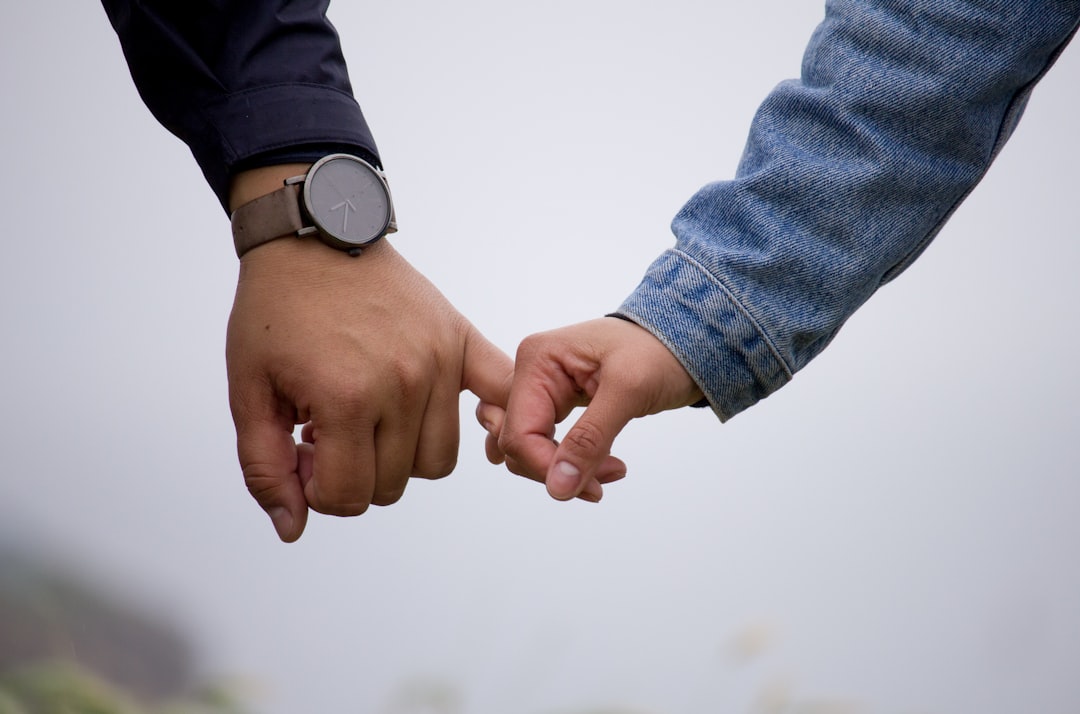
Her eyes lit up at once. She stuck out her pinky from under the covers. “Pinky promise.”
“Pinky promise.”
“Cross my heart.”
“A hundred years.”
“Not a word less.”
After Tiantian fell asleep, Chen Dashan walked out of the ward and sat down on the bench at the end of the corridor.
In this life, he’d done business with numbers twice. The first time was at the noodle shop, when numbers meant money in and money out, a little up, a little down, all of it the bright color of ordinary days. This time, the numbers were bones, laid one by one across his throat.
The surgery estimate was folded in his pants pocket, its crease worn white. After insurance, the out-of-pocket cost was just over seventy thousand. He had twenty-four thousand in the bank. The gap: fifty thousand. Time: forty-one days.
He took out his phone and checked the weather for the day after tomorrow—rain. Then the week after that—rain again. He flipped the phone face-down on his knee and closed his eyes to calculate: take every night shift, grab every order in the rain, grab the hospital-route surcharges. Three hundred a day in turnover, forty days, twelve thousand. Still thirty-eight thousand short.
The shortfall he couldn’t calculate. The corridor lights glared white; he stood to go back to the ward and, without realizing, walked the wrong way, only turning back when he reached the stairwell.
That’s how it is with people sometimes: the finer you tally the accounts, the shakier your footing gets.
At noon the next day, the delivery station break room.
Xiaofei held his phone up high. On the screen was a finished draft, the title in four big characters: “The Dad Who Holds On.” The photo was one he’d snapped—Chen Dashan straddling his e-bike, gnawing a cold steamed bun, his helmet hanging off the handlebars, still dripping.
“Bro, I finished the whole page. Just need your ID number.” Xiaofei said. “Three days after it goes live, I guarantee—”
“Take it down,” Chen Dashan said.
Sister Zhao pushed a cup of cool tea toward him and said slowly, “Dashan, I’ve looked into it thoroughly. It’s a proper platform; once the paperwork’s in, you’re set. This isn’t begging. This is—”
“I know.” He cut in gently. “Sis, last time, with Uncle Kang, you remember how that storm got started. We all got caught in it. Good intentions are a good thing, but once they go online, they’re out of the hands of the people who meant well. Where the wind blows, who it knocks down—nobody’s in charge of that.”
Xiaofei grew anxious. “This time I’ll be watching, reading every single comment, deleting anyone who talks nonsense—”
“Xiaofei.” Chen Dashan gave him a look, the gaze not heavy. “Last time, that page got turned. Don’t carry it on your back again.”
Xiaofei choked, and his eyes reddened first.
Sister Zhao’s voice hardened. “And what about Tiantian’s surgery? Fifty thousand is fifty thousand, not five hundred times a hundred! Even at three hundred a day, rain or shine, you’ll be running deliveries until New Year’s!”
The break room went quiet. Outside the window a rider called “Order up!” twice, and no one answered.
Chen Dashan looked down at his own hands. Knuckles thick, calluses all over the webs of his thumbs, an old scar on his right wrist from when the soup pot burned him at the noodle shop, years ago.
“Sis,” he said slowly, “my girl, her life is tough and her heart is good. When she grows up, that scar on her chest—she’s going to know how it got there. Carried out by her dad, order by order, through wind and rain. Not scraped together by kind strangers across the country, a hundred from you, a hundred from them.”
He paused. “The first thing I don’t want her learning is how to bow her head and take money.”
No one replied. After a long moment, Sister Zhao swore: “Stubborn.”
Then her voice softened. ”…Fine. We won’t do it.” She stood and headed for the door, stopping at the threshold. “But rain orders and hospital orders—I’m putting you at the front of the queue from now on. The surcharges are high; that’s yours to earn, and you don’t get to refuse.”
”…Yes, ma’am.”
That one syllable rang louder than everything said before it.
Sister Zhao went downstairs and stood a while in the stairwell. A forty-year-old’s tears are worthless; she wiped her face, pulled out her phone, read “The Dad Who Holds On” from beginning to end—and then deleted it.
Before deleting it, she thought: those four characters really don’t belong on a fundraising link. They belong over the door of his shop.
That afternoon, Station Chief Zhou posted the new schedule on the wall: hospital route, first line, Chen Dashan. In the corner was a small note: rainy days, leave permitted.
Institutions learn to hurt people long before they learn, instead, to be kind—no. Institutions learn to be tender usually starting with learning when to shut up.
Two days later, on a weekend noon, Kang’s Eats was roaring with voices. Ever since the public backlash had turned, the whole street seemed to have made a pact: everyone called out “Uncle Kang” at the door before ordering.
Wanqing came in hugging a roll of proofs, a thermal bag slung over her shoulder. “Uncle Kang, the menu proofs are here. I just came from the hospital—bringing my dad his soup, so I passed by.”
The new signboard was in that roll of proofs too. Of the old plaque reading “Kang’s Eats,” she hadn’t changed a single character—only brightened the strokes and added a line underneath: Est. 1998. Made fresh, sold fresh.
Uncle Kang studied it for a long while, then curled his lip. “A bit rustic.” He paused, then pulled the scroll closer to his chest. “But it’s my kind of rustic.”
The aroma of beef broth drifted out from the kitchen. Ever since Chen Dashan had helped him fix the syrup and, while he was at it, simmered half a pot of soup base, Uncle Kang hadn’t slept a whole night, dead set on adding a noodle dish to the menu. Today was Chen Dashan’s day off, yet there he was crouched at the stove again, adjusting the broth. When the lunch rush ran short-handed, he shrugged off his jacket, tied on an apron, and stepped up to the wok.
Uncle Kang ladled out the first bowl and pushed it in front of Wanqing without asking. “Taste it! Old Chen’s craft had a name back in the day!”
Wanqing took one polite spoonful.
The moment the broth touched her tongue, her chopsticks stopped.
A winter night from six years ago rose up out of that spoonful.
She was a senior then, the day the graduate exam results came out. She’d missed the cutoff by seven points. She walked out of the study room into a sky as gray as a wrung-out rag. Linjiang Road in the university district, first shop past the bridge, ten yuan for a bowl of beef noodles. She sat in the innermost seat, tears dropping one by one into the bowl. The owner asked nothing. He slipped an extra poached egg into her bowl and ladled the broth to the very brim—then raised a hand and pointed to a wooden sign behind the counter, its paint peeling.
Two characters on the sign, their strokes lean and hard, like two old carving knives that had stood for many years.
She stared at those two words and swallowed her tears down with the noodle broth, mouthful by mouthful. When she left, the sky was still gray, but she walked fast.
Later she graduated. Later she heard the whole of Linjiang Road had been redeveloped, and that noodle shop was never found again.
“Master Chen,” she heard her own voice go slightly unsteady, “did you used to… have a shop on Linjiang Road?”
The motion at the stove paused for half a beat.
Uncle Kang came in from the front carrying a tray, his voice arriving first. “Of course he did! Old Chen’s Noodles! First shop past the bridge! The lunch line used to reach all the way to the bus stop! And then—”
“And then the shop was gone.” Chen Dashan picked up the sentence, his tone flat, like he was commenting on the weather. “Your noodles are going soft. Eat.”
He took the ladle, came around the counter, and added another half-ladle of broth to her bowl, filling it to the brim.
“The soup’s free,” he said. “All you want.”
Wanqing lowered her head. She’d heard those words once before, the year she turned twenty-two. This time, she buried her face in the rising steam, and no one saw her tears.
Uncle Kang opened his mouth to say more, but a single look from Chen Dashan stopped him. He shuffled off to wipe a table that was already spotless.
Wanqing ate that bowl of noodles slowly. One strand, then another, until at last she drank the broth down to the last drop and set the bowl upside down. She thought of the money she’d tried to give him four times, four times returned—how some people take a hundred yuan like taking a stone, and it sits on your chest. But when he’d ladled the broth to the brim, his hand had been so steady, so steady it had no room for a trace of pity. She couldn’t repay the money. She could repay in craft.
She set down her chopsticks and looked up, her eyes a little red, her voice steady. “Uncle Kang, let me rework the menu. This noodle dish of yours deserves the best spot on it.”
By the stove, Chen Dashan said nothing. The ladle in his hand tapped lightly against the rim of the pot.
That night at home, Wanqing slid a note out of the lining of her wallet—the one she’d kept for half a year.
“I switched you to the big bottle of cola. Don’t pay me back. Take care of yourself.”
She’d read the handwriting on that note many times. Tonight, looking at it again, the strokes were lean and hard, like two old carving knives standing upright.
Something in her chest began knocking. Thud. Thud. Knocking at a door.
The door hadn’t opened yet. She smoothed the note, clipped it back in place, and decided she would go to Linjiang Road tomorrow.
In that same night, in a rented room in the urban village, Tiantian fell asleep, then opened her eyes again. “Dad, did you make a wish today?”
“I did.”
“What did you wish?”
“That every one of your wishes comes true.”
Tiantian was satisfied. After a while, a small voice came out of the darkness. “Dad, that tall stool—do you still have it?”
“I do.”
That was the truth. He’d never had the heart to throw out that tall stool. He kept it wiped clean, tucked under the bed. And on top of the wardrobe sat a wooden sign, wrapped in three layers of old bedsheet.
Tiantian stuck out her pinky, half asleep. “Pinky promise…”
Chen Dashan hooked his pinky around hers, gently. “A hundred years. Not a word less.”
Outside the window, the city’s lights dimmed layer by layer, then lit up again layer by layer. Fate never announces itself when it lays its threads: a bowl of noodles six years ago, a bottle of cola half a year ago, a wish tonight—the ends of all those threads, it turned out, were held in the same pair of hands.
He tucked the blanket around his daughter and said softly, “Go to sleep. However big the trouble—”
“Hold on,” Tiantian finished the sentence in her dream.
This story is adapted from real events. All names are pseudonyms.
Based on a true story