Wishes Rise with the Tide
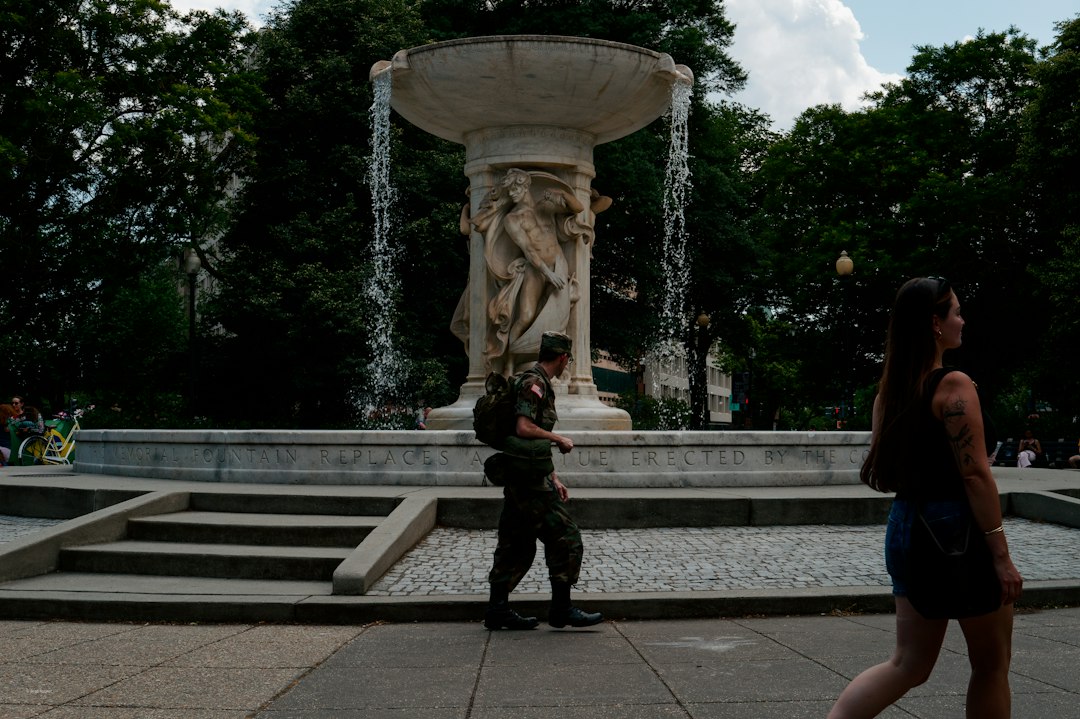
The people of this city have an old habit: when they pass the fountain, they toss a coin into the water in exchange for a wish. The coin rings once and sinks, and ripples spread outward in widening circles, as if the water were remembering something on their behalf.
Old Lei loved to sit by the fountain and watch the water. No one watched more closely than he did—which coin had landed in the seam of the third tile, which one leaned against the basin wall—he knew them all. People took him for just another homeless man on a bench, but in truth he was the fountain’s most devoted audience. He owned nothing, yet he held a whole pool of wishes.
On a September afternoon, the autumn sun had bleached the plaza white. The revolving doors kept disgorging waves of people, and no one noticed a black backpack lying in the corner beside the bench, its zipper open just a crack.
Old Lei bent down to pick it up and turn it in to the police. The moment his hand touched the strap, he saw what was showing through the gap: thick stacks of bills, crisp-edged, as if fresh from the bank.
Forty-two thousand dollars. That was the number the police told him later. He didn’t know it then; he only knew that this money could buy everything he’d never dared to dream of.
The tide came flooding in.
The first wave: a bed. Not a bridge underpass, not a bench—a bed with a roof over it, a lock on the door, hot showers. The second wave: hot meals, a whole year of hot meals, meat at every one. The third wave: a winter coat, a pair of shoes that didn’t leak. The fourth wave was the fiercest: save what remained, and from then on he would no longer be “the homeless man”—he could have a name again, an address, somewhere to be tomorrow.
The waves rose higher and higher, nearly over his head.
But Old Lei’s hands were steady. They were dirty hands, with grime ground into the nails that no washing could remove, yet they held to one simple rule: what isn’t yours doesn’t go in your pocket. He remembered how, many years ago, his mother would fold up any change given to her by mistake and walk three extra blocks to return it to the corner store. Being poor is nothing, she used to say—but keep your hands clean.
He zipped the backpack shut, as if shutting the tide outside the door. Then he gathered it in his arms and walked, step by step, through the crowd toward the police kiosk at the far end of the plaza.
“Sir, there’s forty-two thousand dollars in here.”
“I didn’t touch it. Didn’t count a single bill.” Old Lei pushed the bag across. “Money that isn’t mine to count, I don’t look at.”
The young officer froze for a few seconds, then suddenly stood up and solemnly extended his hand. That handshake made the news the next day.
※
Nick heard the story on the radio, stuck in rush-hour traffic. It said: a homeless man found forty-two thousand dollars and turned it in to the police without touching a cent.
Nick’s hands tightened on the wheel. He stared at the river of brake lights stretching ahead and thought, suddenly: this man had nothing, and he let go. What about the rest of us, who have everything? He had his own pile of bills to pay—but once the thought surfaced, there was no pushing it back down.
That night, he started a fundraising page online. He rewrote the title again and again, until only one line was left: The man who returned forty-two thousand dollars is homeless. Can we show him that kindness doesn’t end up on the street?
The goal was modest: five thousand dollars—enough to get him through the winter, enough to rent a small room.
And then, the tide began to rise.
Ten dollars, five dollars, twenty-five, wave after wave. Someone left a message: “When I hit bottom last year, someone helped me. Today it’s my turn.” A child mailed in half a year of saved-up allowance, with a scrawled note: “Thank you for not taking it.” Someone else wrote: “You gave forty-two thousand dollars back to the world. The world is giving more back to you.”
Overnight, five thousand became fifty thousand—and fifty thousand kept climbing. Strangers reached out from every direction, like the sea after it has receded, a thousand waves hurling themselves back at the shore.
※
The donations far exceeded expectations. Someone handed over the key to a little house. The woman who ran the corner restaurant came looking for him too: “Can you make coffee? I could use a hand here.” The police also found the owner of the backpack—someone who had spent a sleepless night sick with worry, and whose tears fell before any words of thanks could.
Old Lei accepted it all, and accepted it solemnly, the way one accepts coins sinking one by one to the bottom of a pool.
The night before he moved into the little house, he came back to the fountain. The lamplight floated on the dark water, shattered into fragments. He fished a coin out of his pocket—the only one he’d saved all these years—and tossed it.
The coin arced through the air in a bright curve, rang once, and sank—landing exactly in the seam of the third tile, settling in among his old friends.
The ripples spread outward, circle after circle, farther than they ever had before.
And he understood, all at once, that the wishes in this pool had never sunk in vain. They were only waiting—waiting for someone with clean hands, waiting for a thousand hands reaching out at once. Then the tide would come, spilling over the rim of the pool, returning every coin ever tossed in, principal and interest together, back to the city.
Wishes sink, and wishes rise with the tide.
So does kindness.
(The End)
Adapted from true events. All names are pseudonyms.
Based on a true story