The Seed Doesn't Ask About the Soil
What is home?
The day she received that piece of paper, Mireille asked herself this question in earnest for the first time. The paper was light, printed with her name, and with one word: temporary. “Temporary protected status”—like a stretch of clear weather borrowed from the rainy season, liable to be taken back at any moment.
Beyond the sea lay a starting point she could never return to; on this side of the sea, a destination she could never reach. She stood between the two points, like a shell pushed back and forth by the tide.
She rarely spoke to anyone about the journey off the island. Some seas must be crossed with an entire heart. She only remembered that the rains on the island grew heavier year after year, the harvests lighter, and that when her mother divided the last half bag of rice into five portions, she looked at her the way one looks at a seed that must leave home.
“Go,” her mother said. “Staying alive matters more than roots.”
Winter in this unfamiliar city was colder than she’d imagined. She found work in the kitchen of a bakery, kneading dough at half past four in the morning, watching it slowly rise in the warmth. That was the most reassuring moment of her day: no matter what soil it landed on, good things will always find a way to grow.
The bakery’s owner couldn’t understand her island accent, but she understood her dough. The dough Mireille kneaded was unusually supple, rising high and soft. The owner gave her a thumbs-up: “Those hands of yours brought good craft with them.” Mireille smiled and looked down. Flour doesn’t ask where you come from, only whether you’ve given it your heart—and on this, every oven in the world agrees.
Every Sunday evening, she called her mother. The signal crossed the Atlantic, stitching two rooms together. Her mother always reported good news from the other end: the mango tree had shot up again, the neighbor’s little one had learned to sing, a new pump had been installed by the well. Before hanging up, her mother said: “Child, don’t turn your days into waiting.”
Back on the island, the old mother would set down the phone and sit a while under the mango tree. Her heart was clear: letting her daughter go didn’t mean letting her wither in waiting—it meant letting her bloom.
Days grew longer on this side, one by one. Her daughter Tia was born here, speaking English as naturally as breathing, yet before sleep she would only accept lullabies in Creole. One evening, little Tia suddenly tilted her face up and asked: “Mama, where is home?”
Mireille couldn’t answer at once. In truth, the answer had long existed in little Tia’s heart: home was the hand that held hers crossing the street, the place where the smell of flour mingled with lullabies. But she still wanted to hear her mother say it aloud.
Mireille swallowed the question, the way one swallows an unpeeled mango pit.
For those two years, she lived like a guest. The suitcase stood under the bed, never emptied, as if she might be summoned away at any moment. Every time her papers came up for renewal, she queued outside the office, a line full of every kind of accent, people softly exchanging the names of their islands and mountains, like exchanging a small handful of seeds carried out in their pockets. When someone received a new date first, they would turn back and gently say: “Don’t be afraid. Your turn will come.” In the long waiting, strangers broke their courage apart and shared it, and everyone got a small taste.
News from the island always weighed more than the monsoon. She sent money back, remittance slip by thin remittance slip, like little bridges wide enough only for longing to cross. There were nights she couldn’t sleep at all, the shadows of unfamiliar buildings swaying across the ceiling, and she lay with her eyes open, tracing the shape of the island in her heart again and again: the reefs of the northern shore, the fishing lights to the south, her mother’s flowered blouses drying on the line. As she traced, dawn would come, and off she went to knead dough. The days pushed forward without asking permission, and people followed.
The turning point came on a winter night. Volunteers from the community house brought thick coats and a bag of rice and flour, and the young woman placed them in her arms, saying earnestly: “This isn’t charity. This is a welcome.” Mireille stood in the snow holding the bag of rice, and suddenly she wept. So a single word—welcome—could be warmer than any coat.
That weekend, she made a big pot of Haitian pumpkin soup: cloves, garlic, a pinch of chili, the fragrance climbing up the old stairwell. Mrs. Hill from across the hall came with her bowl in hand, eyes red: “That smell reminds me of my mother.” In truth the old woman’s memory reached further back—she too, once, on a cold night in a foreign land, had accepted half a bowl of hot soup from a stranger’s hands. Kindness has always been an ember passed from hand to hand.
When the soup was finished, the pot still held the warmth of tomorrow. People in the building began calling that stairwell “the little island”: if a child had a fever, if someone needed a chair, one call, and there was always an answer. Mireille taught the children lullabies, and halfway through teaching one she began to laugh herself—so homesickness, too, can be a lively thing.
On the first day of spring, she finally emptied the suitcase under the bed. Half its contents she mailed back to the island, half she folded into the wardrobe. The moment it emptied, she heard a soft click inside her, like a door left ajar for years finally willing to close—and finally willing to open.
On the phone, her mother said this year’s mangoes had come in thick and fine, and ended with a instruction: “Don’t throw out the mango pits when you’re done eating. Bury them in soil—they remember how to grow.” Mireille said: “Mama, when you come, we’ll watch it bloom.”
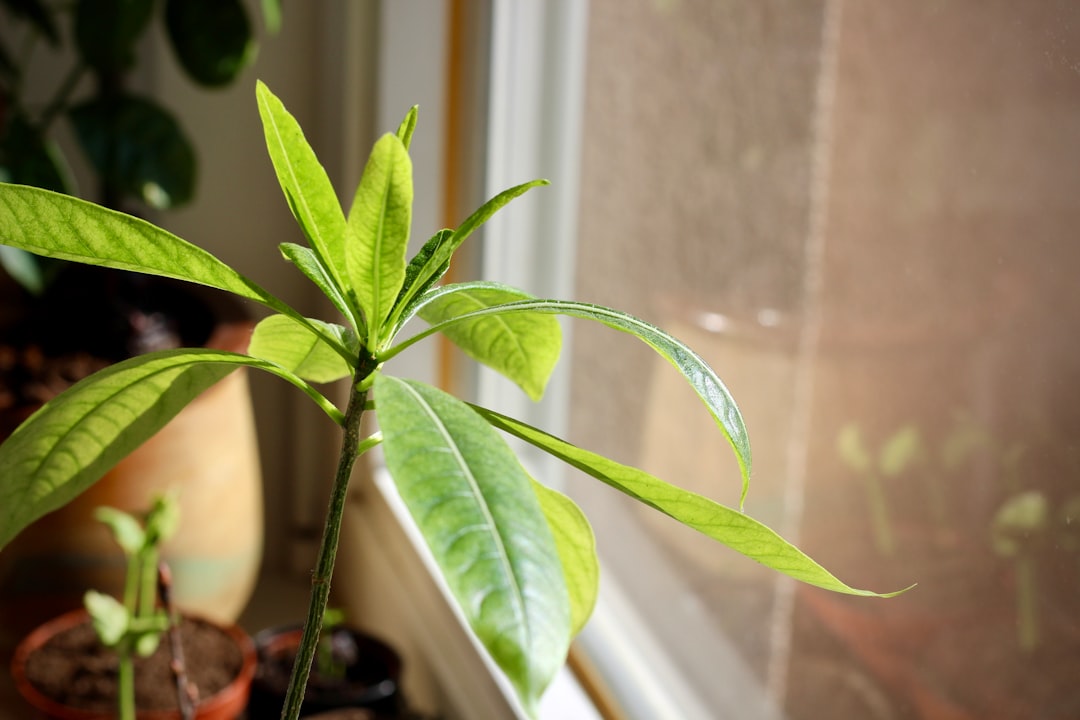
She did as she was told. An old flowerpot, a handful of soil dug from the edge of the park, the pit pressed down, watered, set on the south-facing windowsill. Little Tia lay beside it every day counting the days: “Mama, when will it grow into a home?”
Half a month later, one morning, two tender leaves broke through on the windowsill, half facing the lamplight, half facing the sky.
Mireille crouched at the window and watched for a long time, and suddenly she understood. She could answer her daughter now, and she could also answer the woman she had been, walking out of that office:
Home is not a place you can return to or arrive at. Home is something you plant: wherever you plant it, there it takes root; and the deeper the roots sink into your days, the higher the branches reach toward the sky. As for the starting point you can’t return to and the destination you can’t reach—there’s no need to stand between them anymore. She now stood on this one point she had planted with her own hands, growing upward.
Outside the window, the sea carries people away, and carries seeds in. The little sprout on the windowsill understands nothing of such large truths. It simply, earnestly, grows green toward the light.
(The End)
This story is adapted from real events. All names are pseudonyms.
Based on a true story