A Million Mornings
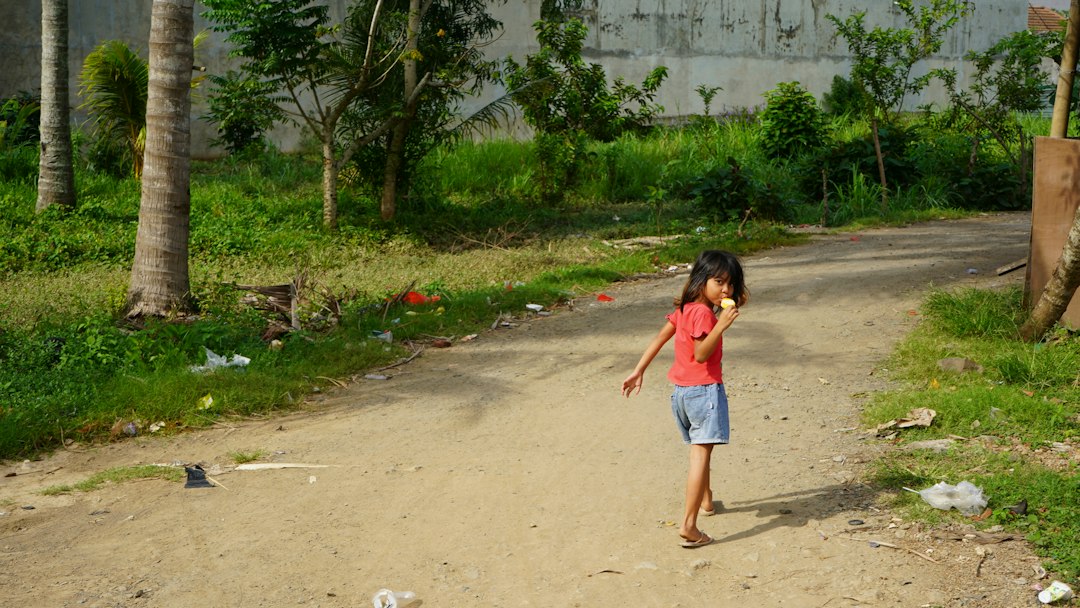
The red dirt road in the dry season was like a river run aground. Mara walked it with her medicine kit on her back, dust rising from her heels and hanging in the air a long time before settling, like the slow breathing of the earth.
From far off, children were calling her name. Not “Mara”—the name the villagers had given her, the one that meant “morning dew.” Barefoot, they came tumbling down the slope and crowded around her, clamoring to see what her medicine kit held today.
Ten years ago, she had never seen this road. Back then she was eighteen, living in a small rain-soaked town on the other side of the world, fresh out of high school, picking out sheets for her college dorm bed.
It all began with a photograph. In her final year of school, while volunteering at the library shelving old magazines, a photo slipped from between the pages: red earth, tin-roofed shacks, a thin child clutching a chipped bowl. She tucked the photo into a textbook, put the textbook back on the shelf, and that should have been the end of it. But that summer, a community group was organizing a short-term volunteer trip abroad, and she signed up. When her mother saw the address on the application, her spatula paused for a second.
The four weeks of volunteering ended. On the flight home, the cabin lights dimmed, her fellow volunteers fell asleep, and Mara pressed her forehead to the window. Below the clouds lay a deep blackness, and now and then a single light flickered in it, like a child in some house still awake. She thought of the boy with the bowl, thought of how he’d frozen for a moment when she handed him the oatmeal, then smiled, showing the gap where his front tooth was missing. He ate the porridge so slowly, as if trying to memorize every mouthful.
That night she didn’t sleep. Back home, there were many nights she didn’t sleep.
A week before the semester began, the whole family sat at the dinner table. Her father talked about tuition, her mother about majors. When it was her turn, she put down her fork and said: I want to go for a year first.
The table went quiet. Her father’s brow knitted; her mother lowered her eyes to a printed flower on the tablecloth. That night, passing her daughter’s room, her mother saw a thin line of lamplight leaking through the door. She didn’t push it open. She just stood outside, listening to the faint sound of pages turning. She remembered how, as a little girl, her daughter would stuff her saved pocket money into the hat of a street performer, then come home and make her promise not to tell Dad. She stood there a long time, and as she turned back to her room, she said to herself: you can block a decision, but you can’t block a person.
Her father, in the end, made only one condition: after one year, come back and study.
One year became many years.
Life on the high plateau was not the unrelenting hardship of that photograph. On dry-season evenings the sky burned mango-colored; on rainy-season nights the frogs rose like a tide over the rooftops. Mara learned to balance a pot on three stones, learned to haggle with the women at the market, learned thirty children’s names and thirty kinds of laughter. The children taught her too: taught her to sing, where singing off-key earned no one’s mockery; taught her the stars, and that the brightest one in the sky was “the star that watches over home.”
There were times she couldn’t go on. In her second rainy season she came down with malaria and lay alone on a bamboo cot under the tin roof, feverish enough that the mosquito net swayed above her. That night she began a letter to her mother, and halfway through, her tears soaked the paper. She asked herself: what can one person, this small, ever change?
The next morning, the rain had stopped. On the windowsill lay a four-o’clock flower, and beside it seven eggs wrapped in banana leaves, still warm from other people’s homes. She learned later that the village women had gathered them house by house. They had no fine words; one old grandmother just held her hand and said, over and over: child, what you have given us, we remember.
Mara tore up the half-finished letter and started over: Mama, this place lacks many things, but it doesn’t lack love. I’m only gathering it together.
Change didn’t happen in a day. It was a well—she saved for eight months, and the day water came gushing up, the women of the village laughed and wept while the children dipped their hands into the bucket and pulled them back out, saying they had to wash first, hygiene matters. It was a schoolroom—tin roof, mud-brick walls, a blackboard of painted planks—where on the first day of school seventy-two children squeezed in, their reading so loud it startled the sparrows from under the eaves. It was an old pickup truck that went over the mountain every week for medicine, its bed carrying teenagers who stood ramrod straight. It was the tree behind the school that she had planted with her own hands at nineteen, whose shade now covered half the playground.
Meals are cooked one at a time. The boy with the chipped bowl now runs the kitchen, his apron tied with meticulous care, and whenever he ladles porridge for the younger children he presses down an extra half-spoonful—just as someone once did for him. Two years ago, he was accepted into a teachers’ college. The day he left, he said to Mara: you gave us our mornings. I’ll pass them on.
Last year, a journalist came from far away and did the math for her: ten wells, four schools, children vaccinated on schedule, meal after steaming meal of beans and corn porridge, and the young people who had left this place and returned to still more villages. In the article, the journalist wrote: this number is roughly one million.
A million children. Mara had never counted. It was too big a number for her. She only knew how to count mornings—every sunrise, children rubbing their eyes and running in from villages all around, their laughter arriving before they did. She had counted ten years of such mornings, and never missed a single one.
Now, on the red dirt road, dawn light was spilling over the hillside. The children crowded around her, all talking at once, and the smallest tugged at her sleeve, tilted his face up, and asked: Mama Dew, will you come tomorrow?
Mama Dew.
She crouched down and wiped the dust from the tip of his nose, her heart soft and bright—just as it had been many years ago, when her mother stood outside her door, listening to her turn the pages.
“Tomorrow,” she said. “And the day after tomorrow, too.”
The wind came across the plateau, past the well, past the schoolroom windows, past the tree. Under its shadow, another group of children ran off, schoolbags bouncing.
There are many, many mornings still to come.
This story is adapted from true events. All names are pseudonyms.
Based on a true story