On the Way
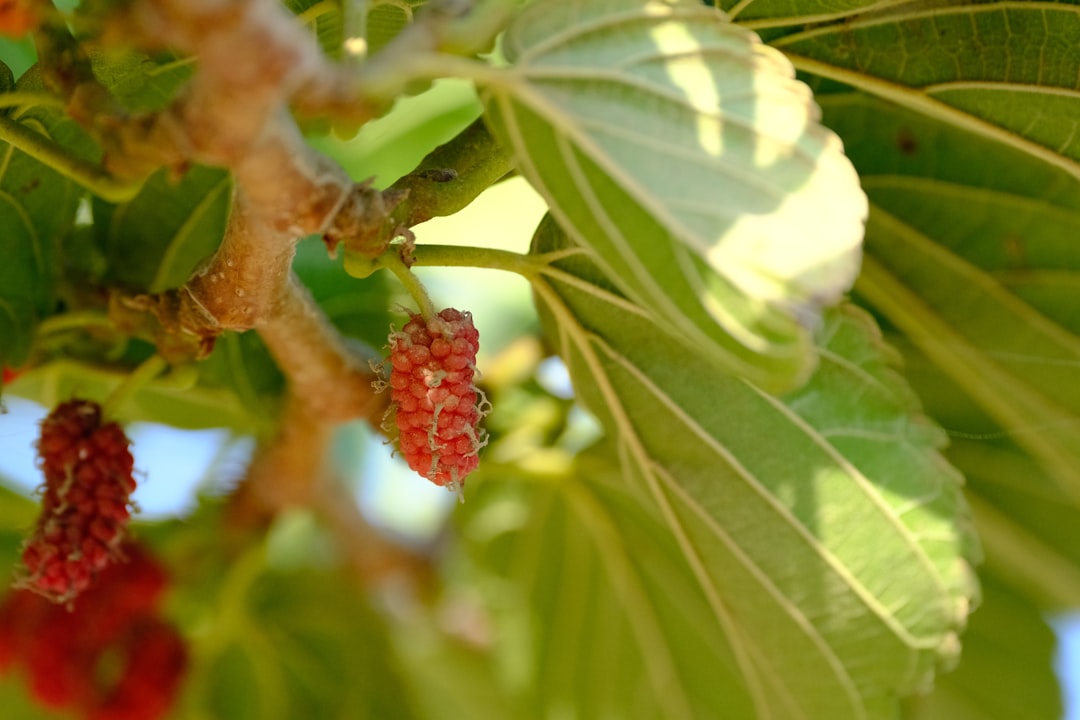
At the end of the street stood a mulberry tree—the only one on the whole street, older than Lin Bo himself. In his hometown, people called the mulberry and catalpa trees at the village entrance “sangzi,” and sangzi meant home. Lin Bo had lived on this foreign street for thirty-seven years and worked as a tailor for forty. In those years, half the clothes on the street passed through his hands: a hem taken up, a waist let in—people called him Tailor Lin. Later his eyes grew dim, the shop closed, but he remained. Whenever he went out, he would glance at the mulberry tree first. One look, and it was as if he had made a trip home.
When A-Xiu was alive, the two of them walked to the mulberry tree and back every dusk. In the two years since she passed, the street had shrunk to a single window, and one pair of eyes watching the street from behind it.
When those things happened, it was late winter. The television said that in times like these, people with a face like his should take extra care on the streets. He didn’t believe it. He believed it at the post office door. Someone with a hat pulled low shouted a long string of words at him. He couldn’t catch it all, but he understood one sentence: Go back where you came from. A gob of spit landed at the tip of his shoe, like a drop of very heavy rain. Having shouted, the person walked away.
He didn’t mention it at home. Who would he mention such a thing to?
From then on the curtains stayed drawn tight. The mailbox filled up; the milk sat on the steps overnight. Once, at noon, he summoned his courage and opened the door—two teenagers down the street burst out laughing. The laughter had nothing to do with him, but he retreated inside, locked the door again, and the gap in the curtains narrowed by one more thread. His daughter called from another city: “Dad, keep the door locked.” He said, “All right.” After hanging up, he did indeed lock the door very well. Outside the curtains, the mulberry tree was budding; he didn’t see it. On the day of Grain Rain, the rice jar hit bottom, and so did the medicine box.
At four in the morning, when the dark was solid and no one would be on the street—he timed his outings to that hour. Before opening the door, he would peer through the gap in the curtains. The street was empty; the mulberry tree stood black and silent.
He didn’t know that the light across the street always came on at that same hour. Martha had been getting up early for half a month; her basket of greens passed his curtains every day. That morning she set down the basket and hurried across the street.
“Lin, I’m going your way—hop in, I’ll give you a lift.” She patted her little cart. Its wheels squeaked and creaked in the dawn light.
Martha’s grocery was at the west end; the pharmacy was at the east end. The trip detoured through three streets. When Lin Bo walked slowly, she pushed slowly. From then on, whenever he came for his medicine, the person behind the counter would ask first: “Picking up for Mr. Lin?”
The second time it was Tommy, the newspaper boy, a Black teenager of seventeen whose eyes curved when he smiled. “Mr. Lin, I’m going that way anyway.” The papers had long since all been delivered; he folded his own route back on itself to walk alongside him. Tommy’s cuff had split at the seam, and Lin Bo beckoned him inside, bringing out his sewing basket. Forty years of craft—stitches so fine you couldn’t see them. The boy stared, amazed. “It’s like magic,” he said. Lin Bo pointed out the window: “Not magic. Mulberry. The mulberry feeds silkworms; silkworms spin silk; silk becomes thread. Thread can join cloth together—and it can join people too.”
Tommy didn’t fully understand. But he told his mother. The next day, his mother sent back a plate of flatbread, still warm.
The third time it was Maggie, a retired schoolteacher. She had studied Chinese for three months and knew only one phrase: “Good morning, Mr. Lin.” Every day she said it to a curtain drawn shut for good. One day, the curtain opened halfway. She went home and drew a little flower on her calendar. Later she learned a second phrase: “The wind is lovely today.”
Later, a piece of paper came through the door slot. Eight names, eight phone numbers, and beneath them a line of wobbly Chinese characters: If anything happens, call any one of us. The handwriting was Xiao-Feng’s—a girl from the flower shop, second generation born here, her grandfather from Guangdong, now in law school. Xiao-Feng said it was called a neighborhood watch group; the name in English was long and Lin Bo couldn’t remember it. He only remembered the eight names on the paper. On the back, one more line had been added: About what happened that day, if you ever want to tell it properly, I’ll go with you.
Small things kept appearing by his door: a little bag of oranges, a jar of jam, a freshly cut flower. No one knew from whose house. The mulberry tree saw all of it. The mulberry tree said nothing.
Lin Bo held that piece of paper in his hand for three days. On the fourth morning, he went. He left in darkness and returned in full daylight. That hat pulled low never appeared again. What he met instead were people buying groceries, jogging, walking dogs—people nodded to him, and he nodded back. Nodding—a thing he had let lie fallow for an entire spring.
After that, his door stood ajar during the day. He sewed buttons for the neighbors, replaced zippers; he taught the children to write their names with a brush: Martha, Tommy, Maggie. So many strokes—they grimaced as they wrote, then held their work up high. One little girl pointed at the character “林” and asked what it was. He said, “It’s trees. Many trees growing together—that’s home.” A small table stood under the mulberry’s shade, and the teapot A-Xiu had left behind was refilled, over and over.
His daughter called again, asking how he bought his groceries, how he picked up his medicine. He said, “Folks are on the way—there’s always a neighbor going my way.” On the other end, his daughter laughed.
On the day of Grain Buds, the mulberries ripened fully, purple-black fruit dropping over the ground, staining the stone steps in shades of deep and pale. At dusk, an elderly woman newly arrived moved in at the east end of the street, come to live with her son. She spoke no English and kept to her window all day—like someone who once sat behind another window on this very street.
Lin Bo carried a small basket of mulberries, walked over, and knocked at her window. In his hometown dialect, he said:
“Going my way? I’m off to the market—shall we walk together?”
It wasn’t on the way at all. She lived at the east end; the market was at the west. But he said it so naturally—in Martha’s tone, in Tommy’s tone, in the tone of every name on that piece of paper.
The old woman’s curtains opened all the way the next day.
There was never any “on the way.” Lin Bo understood now: it is simply someone willing to take your road as their own. Walk like that long enough, and the road smooths itself out—and the street becomes sangzi. Becomes home.
Dusk gathered, and the streetlights came on one by one. The mulberry tree laid down its shadow, spreading across the whole street—like a palm reaching over from his hometown, across thirty-seven years and an entire ocean.
This story is adapted from real events. All names are pseudonyms.
Based on a true story