Black Windows
The package arrived on a day when you were racing to finish the ending of a love story.
A kraft paper envelope, no sender, the postmark worn beyond reading. Inside was a stack of photocopied pages, their edges curled, as if someone had turned through them many times. You thought it was a letter from a reader. You opened it, and could never close it again.
Photocopies of a court verdict. The date was from many years ago. A school for the deaf, in Gwangju. You didn’t dare think too deeply about what was on those pages, and yet you couldn’t stop thinking. Tucked into the last page was a child’s drawing: a school building, two stories, many windows—every one of them colored black. The crayon had been pressed hard; the paper was frayed. Only a narrow slit in the middle had been left white.
You turned off the desk lamp and sat in the dark for a long time.
You told yourself this had nothing to do with you. You wrote about love, about the warmth of convenience stores, about hands held together on the last subway home. Your manuscript was due next week. Before dawn, you said this to yourself three times.
The fourth time you said it, dawn came.
Among the copies was a phone number. You called it, and an old woman’s voice answered, so soft, as if afraid of waking something. She had once managed the dormitory at that school, for nineteen years. She said she had said everything she could back then, reporting it up and up the chain, until at last everyone urged her: better not to make trouble. She had resigned, copied out the verdict, and mailed it to someone who wrote stories.
“I’ve waited a long time,” she said. “Write it. Even if it’s only one sentence—that the children were afraid of the dark at night, and I always left the light on in the dorm keeper’s room. That part is true.”
You went to Gwangju in the spring.
The school had a new sign; the walls had been painted white. You stood outside for a while and did not go in. In a small park nearby, you met the person who had drawn that picture. She was fifteen, with two short braids. Her grandmother sat at the far end of the bench, spreading her notebook open for her.
Her name was Daeun. She wrote in pencil: Who are you?
You wrote: I write stories. I want to write down what happened to you, so many people can see it.
She read it for a long time. Her pencil tip pressed into the paper, making a deep dark point. Then she wrote: What good does seeing do?
You wrote: I don’t know. But if no one writes it, there’s no good at all.
She lowered her head, crossed out a sentence, wrote another, crossed it out, wrote again. At last her grandmother turned the notebook around. The line had been revised three times; what remained was simple:
Then write it. Don’t write our names. Write about the windows.
As you were leaving, you made a gesture, clumsily. Daeun smiled, raised her hand to correct you, and taught you a new one: both hands raised above your head, waving gently together.
“What does that mean?” you wrote on paper.
“Applause,” she wrote. “This is how deaf people clap.”
The book took you a year to write.
Some passages you wrote and deleted and wrote again, until only a single short line remained. It wasn’t that you didn’t want to fill them in—it was that you couldn’t bear to. Some things, once written down, are knives. You left them blank, like the white slit in that drawing. What you wanted was not to make people hurt, but to make them see—that kind of seeing when, after the pain, the eyes light up.
Before publication, someone advised you: it’s all in the past, why suffer for it. You thought of that white slit in the drawing. Daeun had told you later what it was—a crack of light under a door. “When it’s pitch black, you can’t see anyone coming,” she wrote. “Leave a crack open, and wait for someone to come.”
The book was not heavy. The heavy things all lived in the blank spaces.
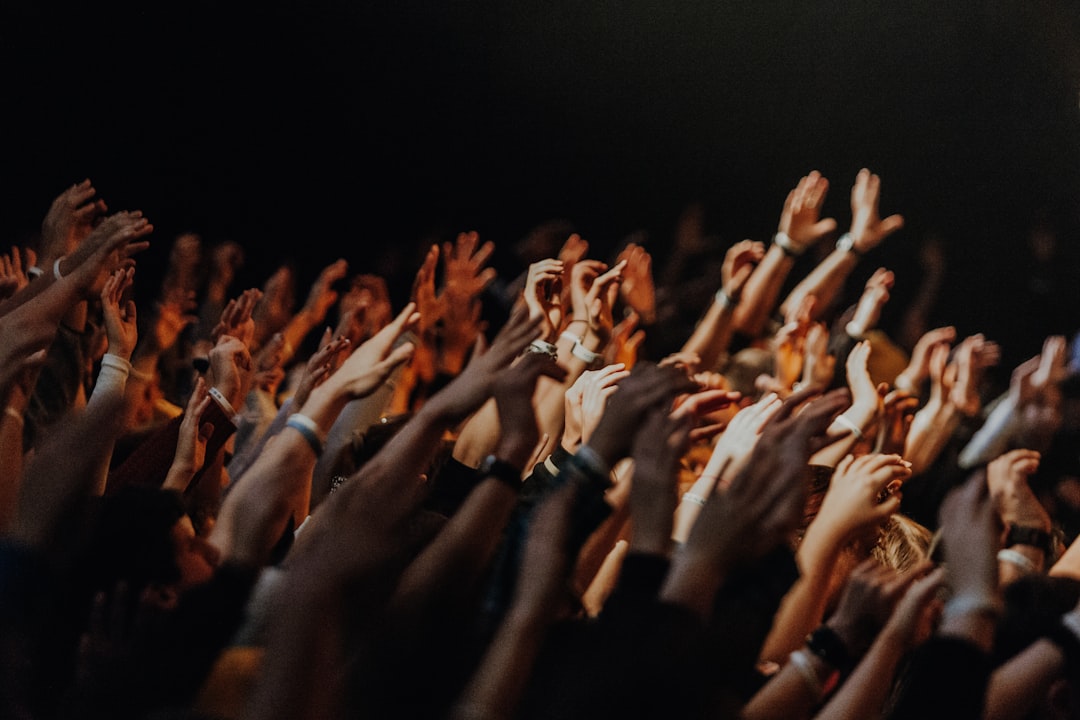
The book became a film. On the day of the premiere, the theater was full of deaf audience members. When the lights came up at the end, no one spoke. They raised their hands above their heads and waved them. Hundreds of hands waving in the air, silent, like an entire field of wheat swept by wind.
You sat in the dark and buried your face in your hands.
On the ninth day, an online petition appeared, calling for the investigation to be reopened. In the first month, a hundred thousand signatures. By the third month, a million. People queued in the snow, the line bending around the corner. The banner bore a single line: Having seen, we can no longer pretend not to.
That winter, a new law passed. People called it by the film’s name. The newspapers said that from that year on, every adult around every disabled student would carry a pair of eyes that must stay open.
Many years later, you received another envelope. Again no sender; inside was only a drawing.
The same school building. This time, every window was colored yellow—colored slowly, evenly, the crayon pressing the imprint of sunlight into the paper. The slit that had once been left white was now drawn as an open door, and in the doorway stood two small figures, hand in hand.
On the back was a line of writing, the strokes now an adult’s:
The windows are all lit. Next month I start teaching at the school—teaching the children to draw. The first lesson will be windows.
You pinned the drawing above your desk. On days when the words wouldn’t come, you looked up at it for a while.
You can’t say exactly how large a story can grow. You only often remember that dawn: sitting in the dark, telling yourself three times that it had nothing to do with you—and then the sky lightened, and you sat up, and turned on the lamp.
That small window in a person’s heart, once opened, stays open forever.
(This story is adapted from real events. All names are pseudonyms.)
Based on a true story